Cuba Says Talks With U.S. on Reducing Tensions Are Preliminary
Cuba's top U.S. diplomat Josefina Vidal called talks with Washington "very preliminary" as Trump's threatening rhetoric darkens any prospect of a new opening.
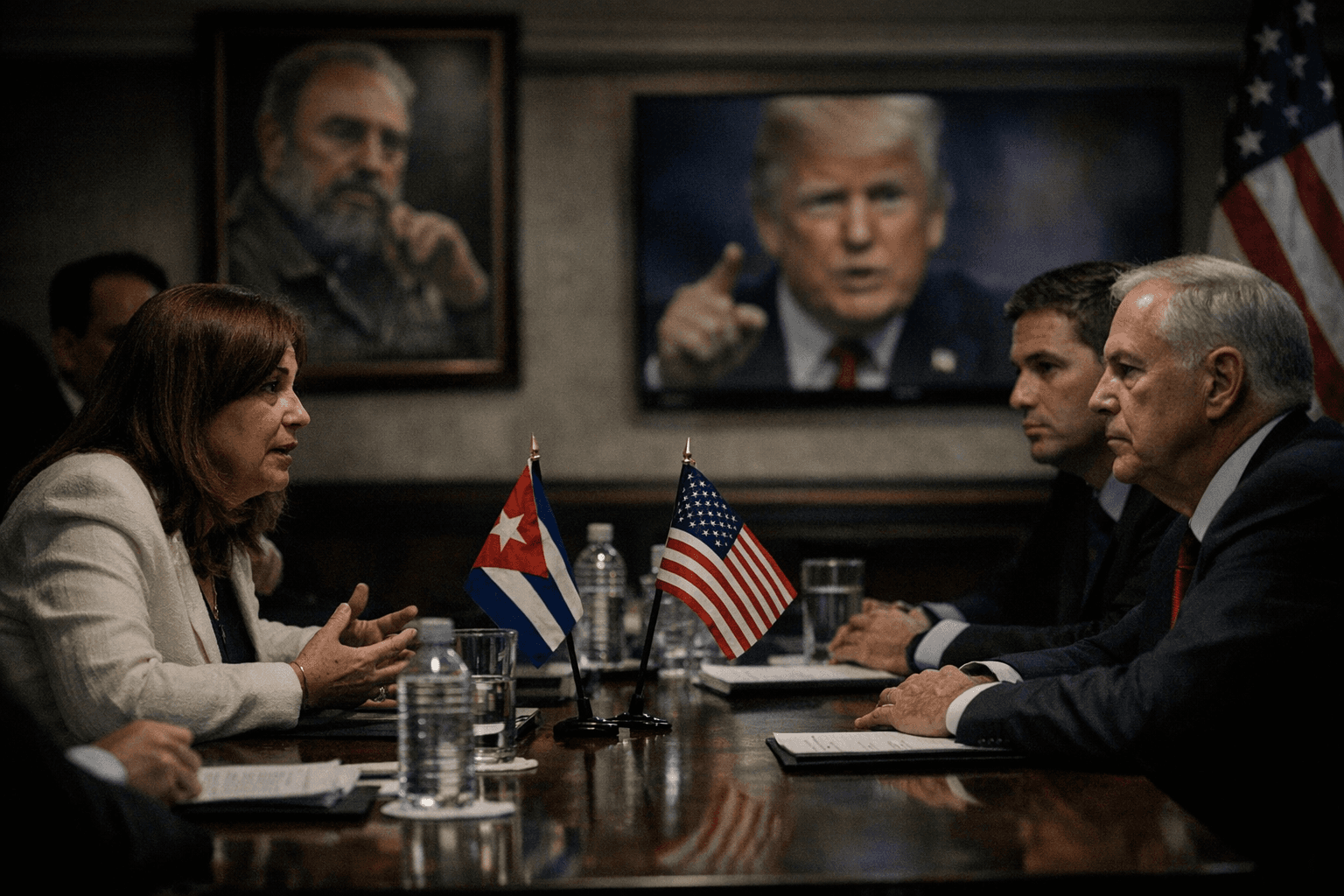
Josefina Vidal, Cuba's Deputy Foreign Minister for U.S. Affairs and the diplomat who secretly negotiated the historic 2014 normalization with the Obama administration, described current discussions with Washington on reducing bilateral tensions as being at a "very preliminary stage." Her phrasing carries particular weight: this is the same official who sat across from U.S. counterparts in the backchannel talks that produced the simultaneous announcements by Barack Obama and Raúl Castro on December 17, 2014, ending more than five decades of diplomatic estrangement. When Vidal calls something preliminary, she knows precisely what a non-preliminary process looks like.
That earlier process moved quickly once it took hold. The U.S. and Cuba reopened their respective embassies on July 20, 2015. Obama visited Havana in March 2016, becoming the first sitting U.S. president to set foot on the island since Calvin Coolidge made the trip in 1928. As part of normalization, the Obama administration removed Cuba from the U.S. State Sponsors of Terrorism list in May 2015, reversing a designation that had been in place since 1982.
That opening did not hold. Trump reversed much of what Obama had built during his first term from 2017 to 2021, tightening the embargo and, in one of his final acts before leaving office, re-designating Cuba as a State Sponsor of Terrorism in January 2021. The Biden administration, despite four years in office, never removed the designation.
The SST label carries concrete consequences: it deters third-country banks and financial institutions from engaging with Cuba, compounding the effect of the U.S. embargo, which has been in place in various forms since the early 1960s and is now codified in the 1996 Helms-Burton Act. That law requires an act of Congress, not executive action alone, to be fully lifted.
Cuba has been absorbing those combined pressures for years. Since at least 2021, the island has experienced near-daily rolling blackouts, severe shortages of food and medicine, and record levels of emigration. The Cuban government attributes those conditions largely to the embargo and the SST designation, which together restrict the financial pathways the country needs to function. Now, with the Trump administration signaling threatening rhetoric toward Havana, any meaningful diplomatic movement looks structurally difficult even before talks progress past the preliminary stage.
Vidal has navigated the full arc from the secret Obama-era backchannel to the rollback of Trump's first term to Biden's four years of inaction on the SST list. Her caution is institutional memory: any opening Havana has accepted under a U.S. administration has already proven reversible, and the legal architecture of the Helms-Burton Act ensures that even a willing executive cannot dismantle the embargo alone.
This article was produced by Prism’s automated news system from verified source data, official records, and press releases, then run through automated quality and moderation checks before publishing. The system is built and supervised by the people who set the standards it runs under. Read our full AI policy.
Did this article answer your question?