Cuba Solar Capacity Surges 350%, Powered by Surging Chinese Imports
Cuba's solar capacity surged 350% since 2024 as China shipped $117M in panels last year, connecting 49 new parks and lifting solar from 5.8% to over 20% of the grid.
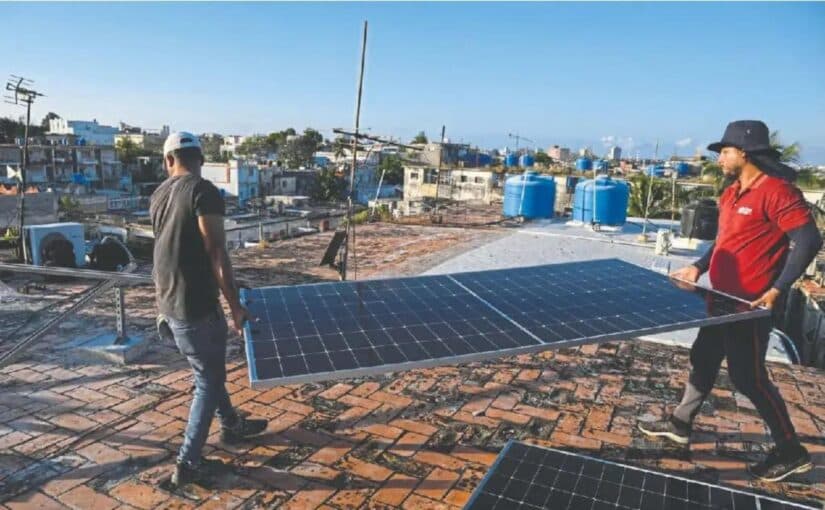
Cuba's solar capacity has surged 350% since 2024, driven by a volume of Chinese equipment that repositioned the island's energy mix faster than almost any developing nation on record, with the Financial Times citing energy analysis center Ember data to document the scale of the shift.
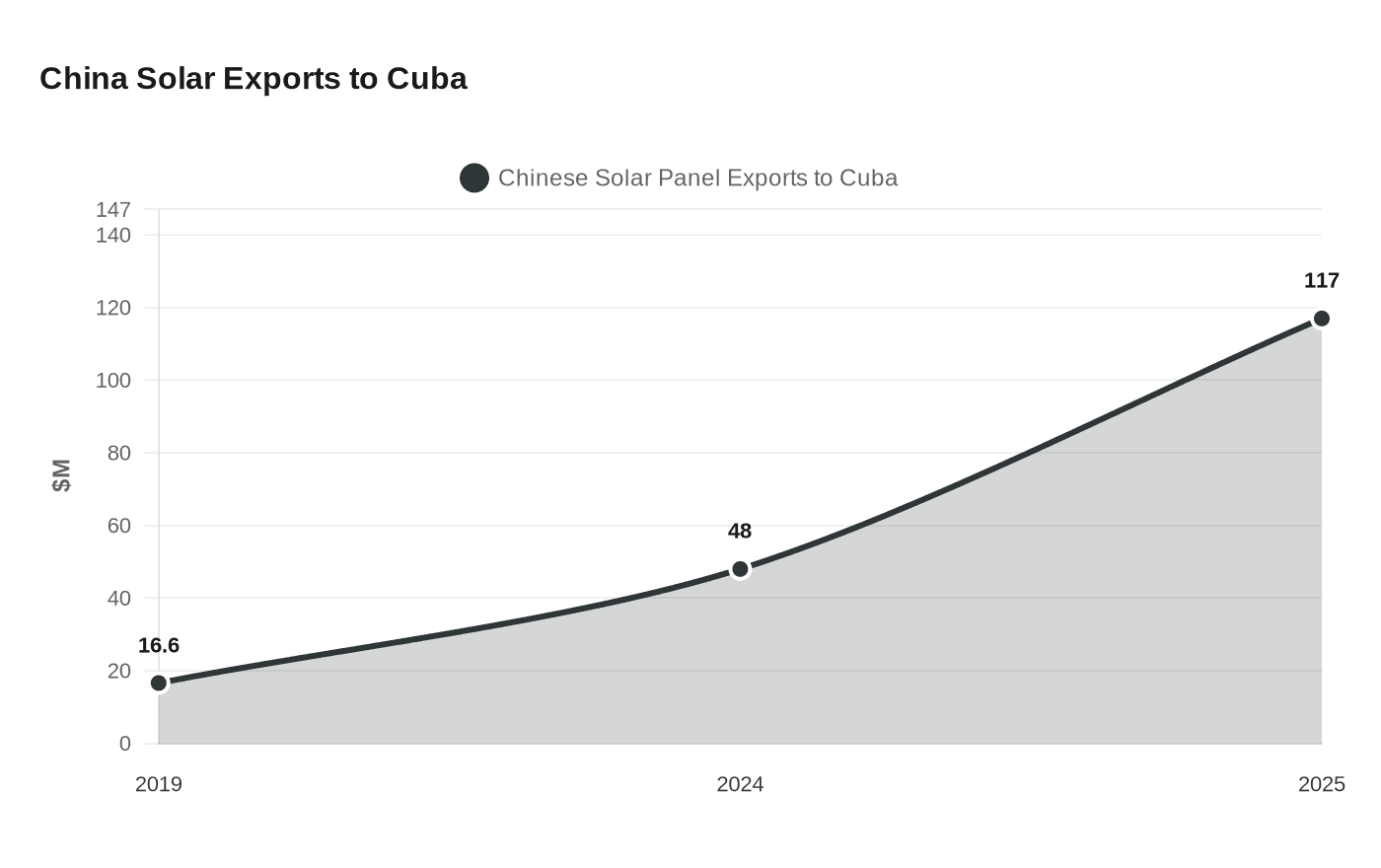
The import numbers tell the sharpest part of the story. China exported $117 million in solar panels to Cuba in 2025, up from $48 million in 2024 and just $16.6 million in 2019. That pipeline delivered one full gigawatt of photovoltaic panels to the island in a single year. Between early 2025 and early 2026, Cuba connected 49 new solar parks to its national grid, adding more than 1,000 megawatts of capacity. Solar's share of total electricity generation climbed from 5.8% to over 20% in roughly twelve months, one of the fastest renewable transitions ever recorded by a developing country.
The speed of change showed up in real time in February 2026, when Cuba's Ministry of Energy and Mines announced the grid had generated more than 800 megawatts of solar power in a single afternoon. Cuba broke its own record the very next day with 900 megawatts.
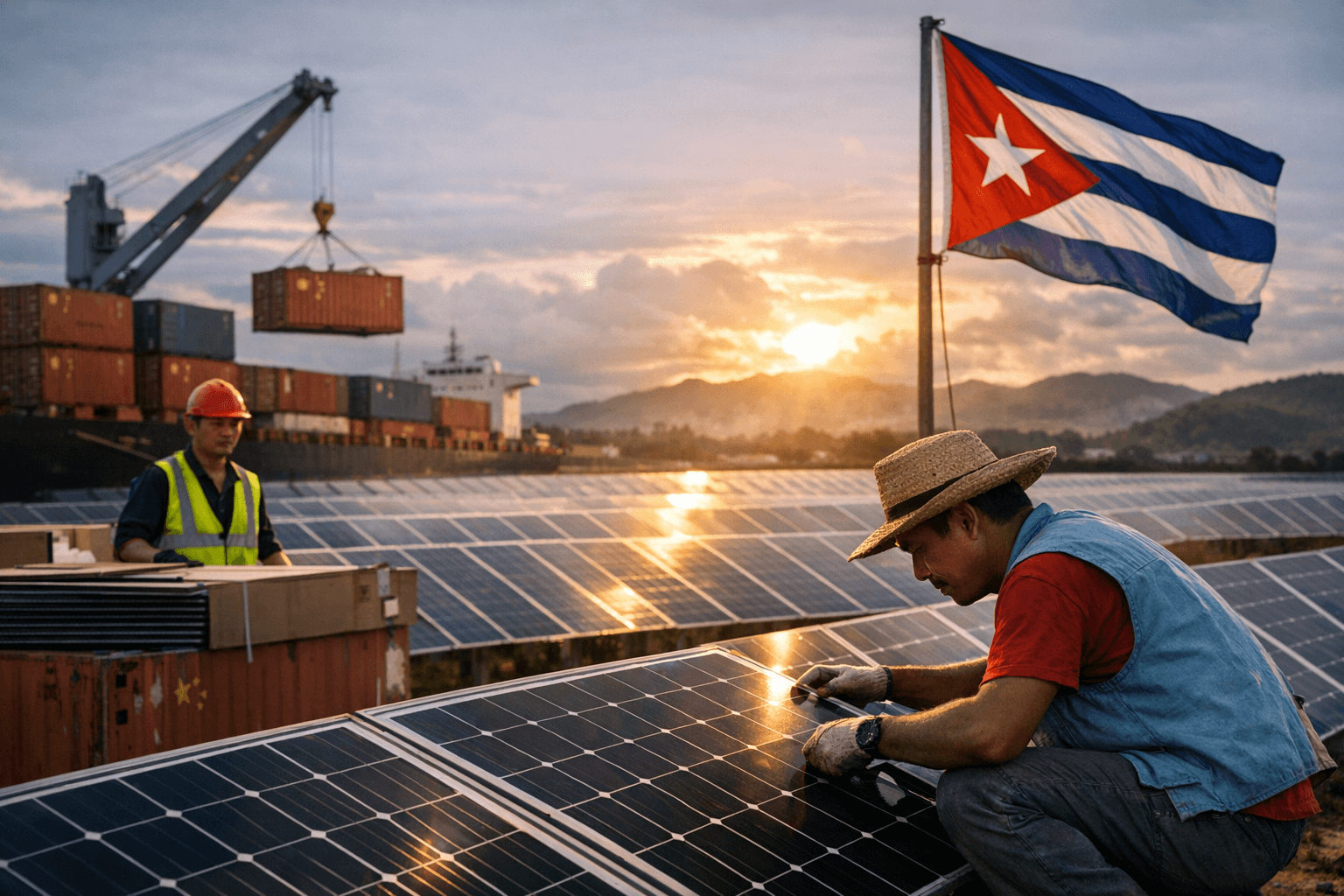
The build-out was not limited to utility-scale parks. In late 2025 and early 2026, more than 10,000 photovoltaic systems were installed across homes, hospitals, and critical community facilities. Cuba's Communist Party announced through the official newspaper Granma that an additional 5,000 panels donated by China would go to maternity homes, senior citizen homes, and neighborhood health clinics: precisely the institutions that have suffered most when the national grid collapses.
None of this is happening in a political vacuum. Trump's oil embargo has strangled the fuel imports that Cuba's Soviet-era generating plants depend on, cycling the country through complete national blackouts and forcing a government-mandated four-day work week for state entities. That fuel blockade accelerated Havana's turn toward Beijing: between April 2024 and April 2025 alone, Cuban imports of Chinese solar panels grew 34-fold, faster than any other country in the data set.
Cuba and China formalized the partnership in December 2024 with agreements for seven solar parks carrying 35 megawatts of combined capacity. A broader commitment calls for 92 parks to be operational by 2028, targeting two gigawatts total. Ramses Montes, director of national energy policy and strategy at Cuba's Ministry of Energy and Mines, has stated the goal of reaching 17% renewable generation by the end of 2026. Given that solar already crossed 20% of the mix, that target looks less like a ceiling and more like a floor.
This article was produced by Prism’s automated news system from verified source data, official records, and press releases, then run through automated quality and moderation checks before publishing. The system is built and supervised by the people who set the standards it runs under. Read our full AI policy.
Did this article answer your question?