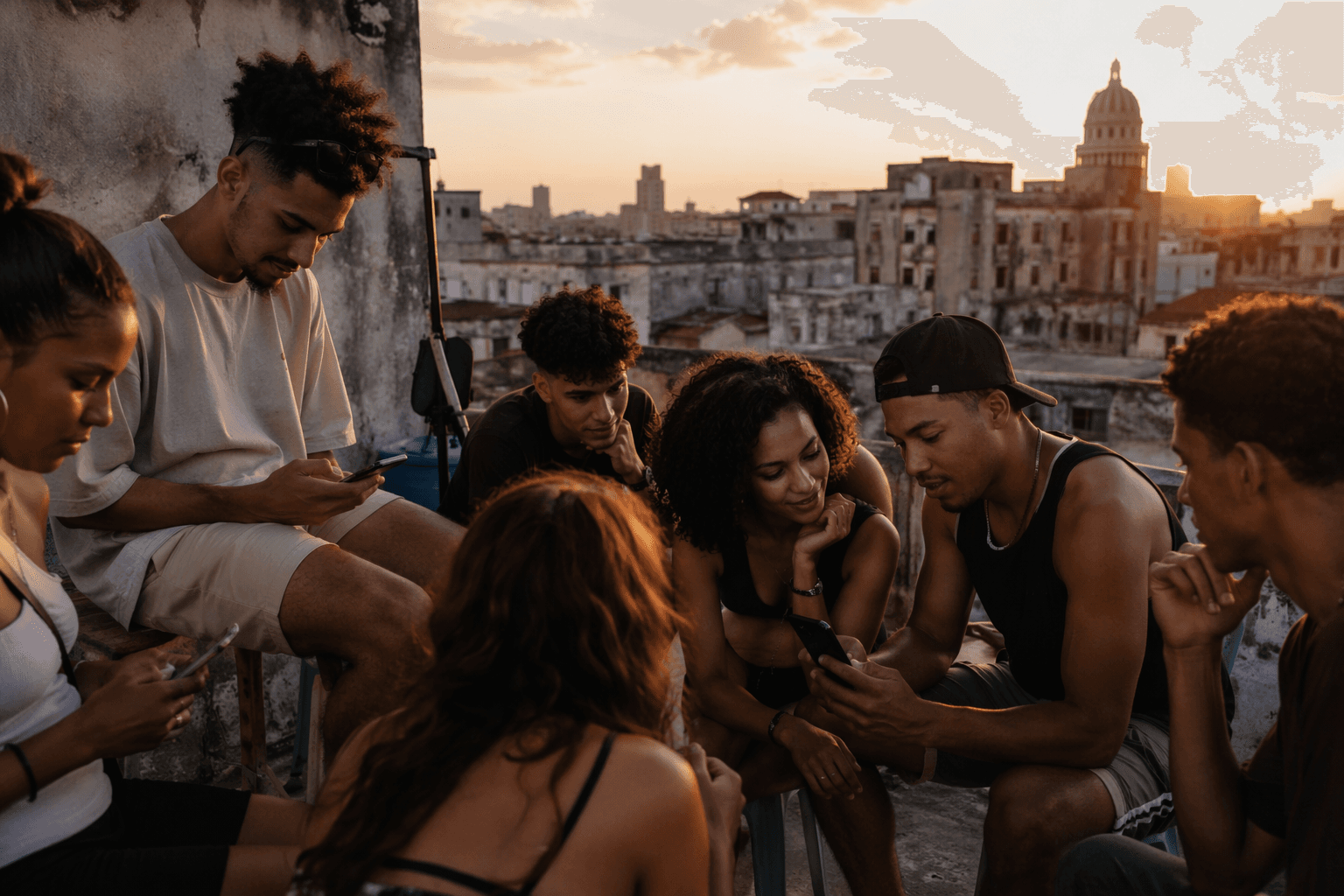
Cuban town questions fair access as blackouts deepen local hardship
In Aguada de Pasajeros, blackouts are becoming a test of fairness, with one circuit getting predictable power and another left dark for 72 hours.
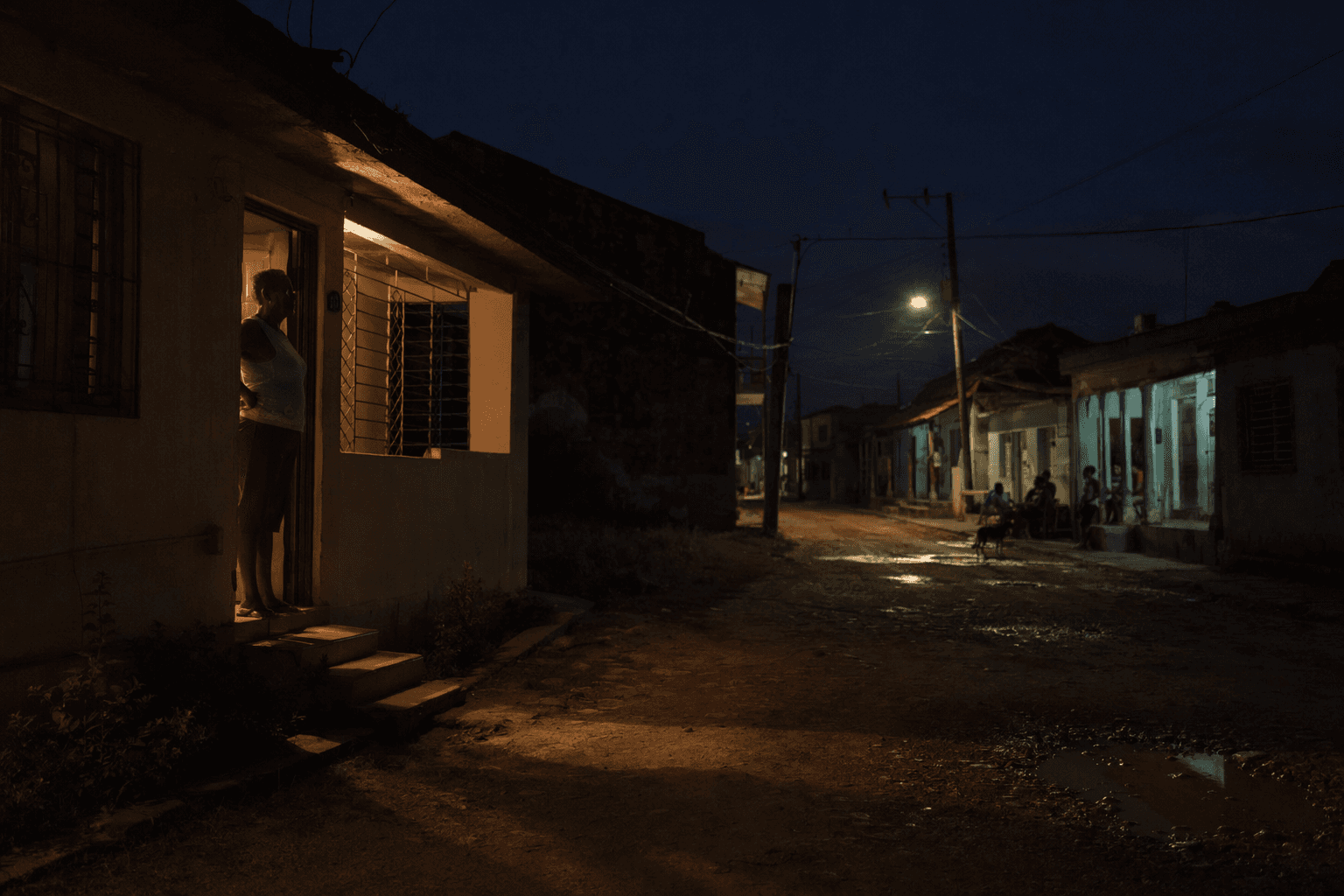
Fairness is now part of the blackout
In Aguada de Pasajeros, the argument is no longer only about how little electricity Cuba has. It is about who gets to stay lit, who gets left out, and why the same shortage feels manageable for one street and humiliating for another. The town in Cienfuegos province has become a sharp example of how blackout policy is not just technical; it is social, and residents are judging the distribution of suffering as closely as the outages themselves.
That matters in a municipality of 31,279 people, where the impact is large enough to shape daily life but small enough that everyone can see who is doing better than whom. The result is a local mood that goes beyond inconvenience. People are reading the blackout schedule as a map of privilege and power.
Three circuits, three very different experiences
Aguada de Pasajeros is divided into three electrical circuits, and that structure now defines the town’s hierarchy of hardship. One circuit includes the hospital and key medical services, so it is treated as a priority. Another includes the aqueduct, which keeps basic water service from collapsing entirely. The third has borne the harshest cuts, and that is where the fairness dispute becomes impossible to ignore.
The differences are stark. In practice, one area can receive about eight hours of electricity followed by eight hours without power. Another can go as long as 72 hours in the dark. That is not just an inconvenience gap; it is a split between households that can plan around outages and households that cannot plan at all. In a place where the blackout schedule is already a daily fact of life, predictability has become a form of privilege.
Residents are not just frustrated by the length of the cuts. They are reacting to the feeling that the system rewards some streets and punishes others. When power is rotated unevenly, the blackout stops looking like a shared crisis and starts looking like a local judgment call.
What the outages do to everyday life
The damage reaches into every corner of routine life. Food spoils. Children miss school. Elderly people struggle to cook because charcoal is expensive. Heat keeps people outside at odd hours because they cannot sleep indoors. These are not abstract side effects; they are the immediate consequences people notice first, and they explain why the blackout debate in Aguada de Pasajeros has turned emotional so quickly.
The hospital circuit shows how even protected services are improvising rather than operating securely. When outages hit, the circuit still relies on mobile phones, a reminder that backup systems exist, but only barely. That detail captures the fragility of the whole arrangement: even the part of town meant to stay functional is leaning on workarounds.
For families, the social consequences are just as severe as the electrical ones. School attendance falls when mornings are too chaotic or nights too sleepless. Food loss makes already tight budgets worse. Heat, darkness, and uncertainty make ordinary life feel unruly, and the sense that some neighborhoods are being spared while others are sacrificed only deepens the resentment.
A local crisis inside a national collapse
Aguada de Pasajeros is not facing this in isolation. Cuba’s electricity crisis has been severe and recurring, with Reuters and other major outlets reporting multiple island-wide blackouts within a year in 2025. IEEE Spectrum said the government could meet only about 50% to 70% of daily electricity demand on an average day that year, which helps explain why rotating outages have become a normal governing tool rather than an emergency measure.

Cienfuegos province has already been under special strain. Local coverage in April 2025 said blackouts there could last up to 25 hours straight because circuit rotation could not be maintained. Officials pointed to simultaneous maintenance at the local thermoelectric plant and a severe fuel deficit, a combination that made the grid even harder to balance. That background is essential to understanding why Aguada de Pasajeros has ended up with such uneven service. When the system cannot meet demand in the first place, every decision about rotation becomes a political decision as well as a technical one.
The local generating base matters too. The Carlos Manuel de Céspedes Thermoelectric Plant is central to Cienfuegos’s supply, and outages at its unit 3 were reported in May 2025 as worsening the province’s energy crisis. Nationally, the Antonio Guiteras Thermoelectric Power Plant in Matanzas has repeatedly been described as a major weak point in the grid, with failures there helping trigger island-wide blackouts. Together, those vulnerabilities show why Cuba’s blackout problem is not a single broken station or one unlucky town. It is a system-wide fragility that keeps pushing the burden downward onto communities.
Why Aguada de Pasajeros matters as a signal
What makes this town story important is not just the hardship itself. It is the way residents are talking about the rules. Once people start asking who gets light and who gets darkness, the blackout becomes a referendum on trust. If the hospital is protected, the aqueduct is spared, and one circuit is left to endure 72 hours without power, then residents naturally ask whether the burden is being shared fairly or simply assigned to those with less influence.
That is why Aguada de Pasajeros works as a microcosm of Cuba’s broader energy crisis. It shows how shortages turn into arguments about dignity, local authority, and social hierarchy. Electricity is the immediate problem, but fairness is the deeper one. In towns like this, the real damage is not only that the lights go out. It is that people begin to believe the darkness is being distributed by power, not by need.
This article was produced by Prism’s automated news system from verified source data, official records, and press releases, then run through automated quality and moderation checks before publishing. The system is built and supervised by the people who set the standards it runs under. Read our full AI policy.
Did this article answer your question?