Cuban Women March in Havana Demanding End to U.S. Oil Blockade
Hundreds marched in Havana on Vilma Espín's birthday demanding the U.S. end its oil blockade, as Deputy FM Vidal declared "this policy of abuse has to stop."
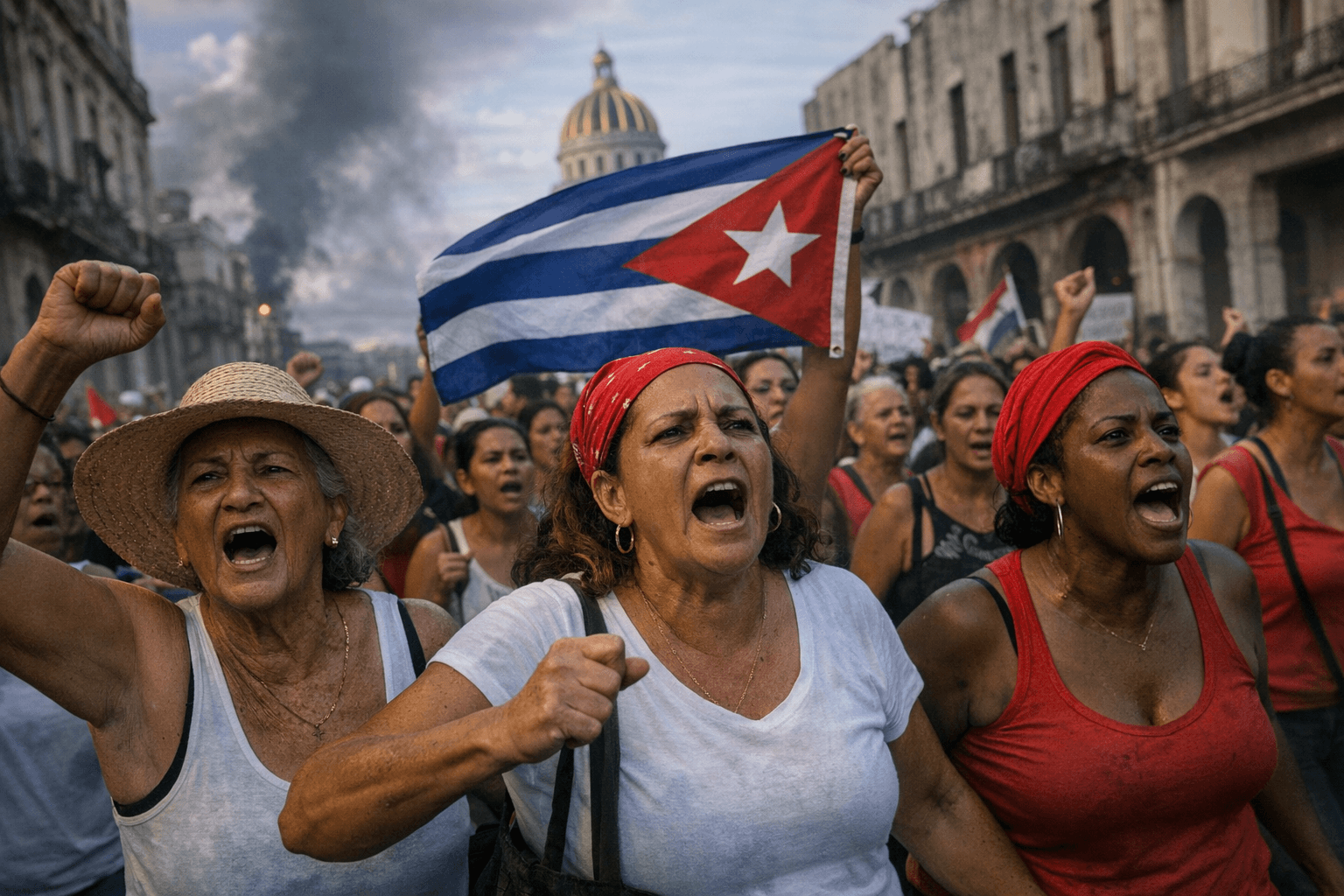
Hundreds of Cuban women took to central Havana's streets Monday under banners reading "Tumba el bloqueo" (Tear down the blockade), in a government-organized demonstration that brought together civil-society supporters and senior officials to demand an end to what Cuba calls a U.S.-led oil blockade.
The April 7 march was timed to coincide with what would have been the 96th birthday of Vilma Espín, the revolutionary figure whose legacy the government invoked as a rallying symbol. Deputy Prime Minister Inés María Chapman and Deputy Foreign Minister Josefina Vidal both marched alongside participants, with crowds amplifying the call under the hashtag #NoMasBloqueo.
Vidal delivered the march's sharpest public statement: "This policy of abuse has to stop." She and other officials framed U.S. restrictions not as standard sanctions but as collective punishment, with consequences rippling across electricity, transport and basic services on the island.
The demonstration came against a backdrop of sharply deteriorating U.S.-Cuba relations. U.S. actions in January 2026 effectively disrupted Cuba's access to foreign oil supplies, and a late-January executive order targeted third-country shipments to the island. Cuban authorities say those moves have significantly reduced incoming fuel and destabilized energy production, deepening blackouts that have already strained daily life.
Monday's march was part of a broader pattern of government-organized mobilizations in recent weeks. President Miguel Díaz-Canel joined related actions himself, including earlier processions conducted on bicycles and electric vehicles, a signal that leadership intends to sustain public pressure rather than pursue quiet diplomacy.
The dual audience for these events is clear. Domestically, mass mobilization shifts blame for Cuba's energy crisis squarely onto Washington. Internationally, the imagery targets sympathetic governments and multilateral institutions that Havana hopes will push back against U.S. restrictions. With Washington expected to dismiss the state-organized rallies as propaganda, the rhetorical confrontation between the two governments shows no signs of cooling.
This article was produced by Prism’s automated news system from verified source data, official records, and press releases, then run through automated quality and moderation checks before publishing. The system is built and supervised by the people who set the standards it runs under. Read our full AI policy.
Did this article answer your question?