Cuba's children grow up learning scarcity, migration, and survival
Cuba’s children are learning remittances, blackouts, and shortages as part of daily life. School, sleep, and family routines now run on survival, not stability.
Scarcity is the first thing many children learn
In Cuba now, a child can grow up hearing words like remittance, MLC, blackout, and dollars before those words fully make sense. That is the real lesson of prolonged crisis: not just hunger, but the normalization of improvisation, where breakfast, school, sleep, and family contact all depend on whatever the day allows.
The sharpest change is how ordinary this has become. Hunger is no longer treated like a break in the system. It sits in the background of the day, alongside empty shelves, expensive phone top-ups, and the constant calculation of where to find cheaper cooking oil or whether bread has arrived yet. For a generation coming up inside that rhythm, survival is not a dramatic event. It is the routine.
Food, sleep, and the blackout schedule
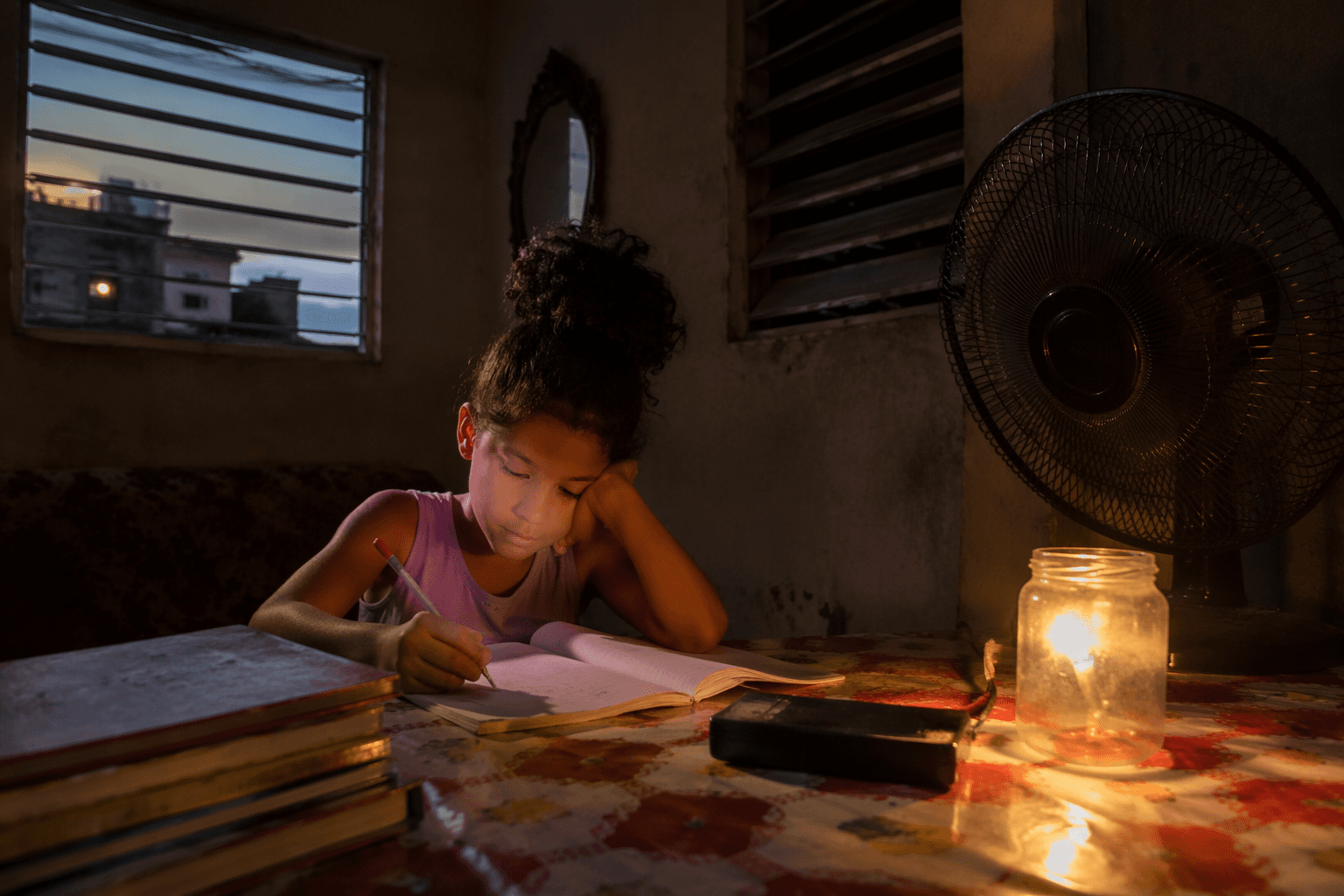
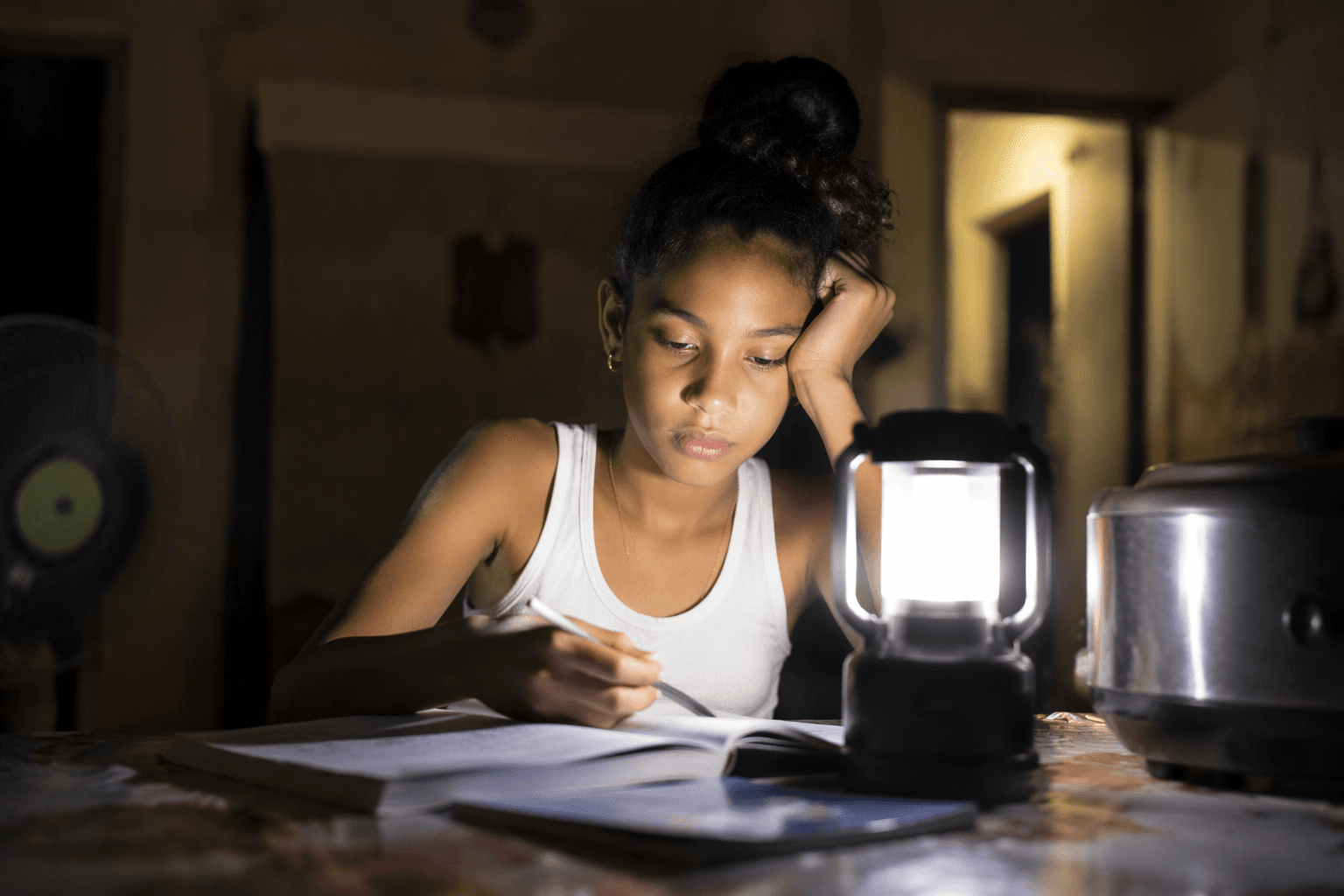
Children do not experience this crisis in abstract terms. They live it in the heat at night, in mosquitoes buzzing through a powerless apartment, and in the fatigue that follows a blackout that stole sleep before school even began. Human Rights Watch said some Cubans endured blackouts lasting up to 20 hours a day, and that the October 2024 nationwide blackout affected 10 of Cuba’s 11 million people, with some areas left without electricity for as long as 70 hours. Reuters also reported that schools closed and non-essential workers were told to stay home after a major power-plant failure triggered widespread outages.
That matters because childhood is built on repetition. If power fails at night, children wake already tired. If the fridge cannot hold food, meals shrink and become less predictable. If the lights go out often enough, playtime, homework, and even the ability to rest turn into negotiations with the grid.
The shock is not just that blackouts happen. It is that children are growing up learning how to plan around them.
School is still open, but the ladder is wobbling
The school day still exists, but it no longer looks like a reliable path upward. UNICEF’s 2024 Cuba annual report said there was a shortage of 24,000 teachers at the start of the school year, and Havana Times reported that authorities estimated 85% teacher coverage nationwide, patched together with temporary contracts and redistributed teaching loads. Another report on the 2024–2025 school year said the system had 156,000 teachers plus 12,000 returning retirees, and still needed about 24,000 more, with the worst gaps in secondary and pre-university exact-science tracks.
That shortage shows up in the classroom as fewer adults, more strain, and more empty desks. It also shows up in the way children arrive to school already worn down by home life. When nights are disrupted by heat and outages, attendance becomes an effort, not a default. When teachers leave for better-paying jobs or emigrate, the message children absorb is blunt: even the classroom is not immune to the same pressures hollowing out the rest of the country.
This is why the education crisis feels so corrosive. It is not only a staffing problem. It is a credibility problem. Studying no longer feels like a sure ladder to a better future when the adults meant to hold that ladder are disappearing.
Families are being reorganized by migration
The family story is just as stark. Many children are being raised by grandparents because mothers and fathers have left the island to keep the household afloat from abroad. That means migration is not only about labor or dollars. It is changing who sits at the kitchen table, who helps with homework, and who is there when a child is sick or scared during a blackout.
The distance is often reduced to frozen video calls and badly timed phone recharges. A parent abroad can become a voice on a screen that keeps breaking up, or a missed call because the battery died before the line connected. The result is a new emotional grammar for childhood, one shaped by absence and interruption.
The scale of that exit is not small. Human Rights Watch said U.S. border authorities apprehended more than 97,000 Cubans between January and August 2024. A Columbia-linked demographic analysis says Cuba’s population fell by about 307,436 people from 2021 to 2024 after correcting for migration omissions, a cumulative decline equal to 24% of the estimated 2020 baseline. The same analysis says Cuba recorded 71,374 births in 2024.
That is happening in a country the World Health Organization listed at 11,019,931 people in 2023, and the World Bank’s latest fertility figure for Cuba is 1.4 births per woman in 2024. Those numbers tell the same story from different angles: fewer births, more departures, and a shrinking base for the next generation.
Remittances keep households alive, but they also reorder childhood
Remittances are supposed to be a lifeline, and often they are. The World Bank defines them as money sent home by migrants and says global remittances totaled about $656 billion in 2023. In Cuba, they are part of the survival math that children hear about early, along with MLC and the price of a top-up. But remittances also deepen the sense that family stability now depends on geography. A child can be fed by money from abroad and still be raised in the absence of a parent.
That is the cruel efficiency of the system. It keeps households going just enough to make the rupture sustainable. Grandparents stretch pensions. Parents abroad send what they can. Children learn prices before they learn the reasons behind them.
A generation trained in crisis management
UNICEF’s 2024 report said hurricanes, earthquakes, the socioeconomic crisis, and nationwide blackouts significantly affected children’s well-being. UNICEF’s 2025 report says prolonged economic constraints, energy disruptions, and climate-related shocks continue to do the same work. In a country where WHO places Cuba in a higher-income category than many regional peers, the deterioration is especially jarring because it cuts against the old reputation for relatively strong public health and education systems.
That is what makes the present moment so unsettling. Cuba is not only losing people. It is losing the assumptions that once let children imagine adulthood as something more stable than the lives they are seeing now. The new vocabulary of childhood is remittance, blackout, MLC, dollars, and delay. For too many families, that vocabulary is already normal.
This article was produced by Prism’s automated news system from verified source data, official records, and press releases, then run through automated quality and moderation checks before publishing. The system is built and supervised by the people who set the standards it runs under. Read our full AI policy.
Did this article answer your question?