Cuba’s eVisa portal streamlines tourist visa applications, response within 72 hours
Cuba’s visa now starts online, but the 72-hour clock, passport match, and email delivery can still make or break a trip.
What changed for travelers
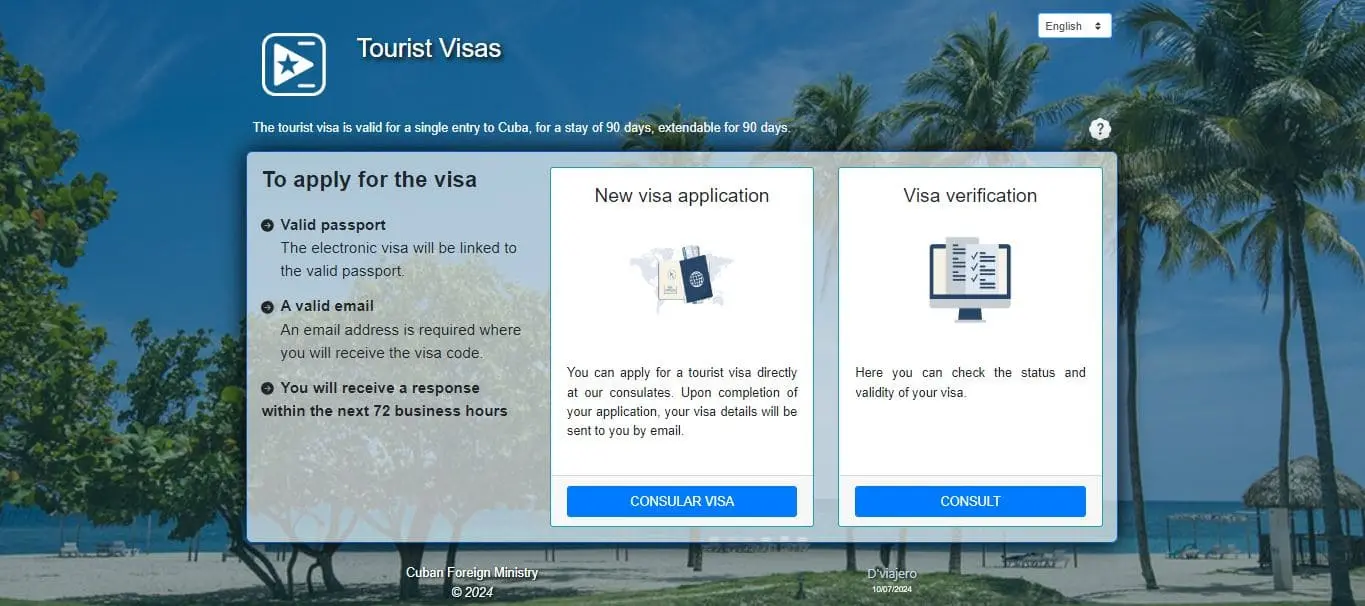
Cuba’s tourist visa is no longer just a consular errand you solve in person and forget about. The official eVisa-Cuba portal now handles the application flow online, and that shift changes the whole rhythm of planning a trip, from when you book flights to how carefully you guard your inbox. The system promises a response within 72 business hours, which sounds quick until you realize that a missed field, a bad browser, or a delayed email can become the difference between boarding a plane and scrambling to fix paperwork.

For visitors, the biggest change is transparency. The portal lays out the process step by step, shows the service cost, and even identifies the selected consulate and its contact information before you finish. That is a far cry from the old habit of treating entry paperwork like a black box. But the new ease comes with a sharper edge: the application now depends on accurate online completion, and the system will not help much if the data you enter does not line up perfectly with the passport you plan to travel on.
How the portal actually works
The live application flow is structured in five stages: details of the procedure, extra procedures, payment details, review data, and final confirmation and submission. That sequence matters because it tells you exactly where the process can slow down. You are not just filling out a form and hoping for the best. You are moving through a digital gate that asks you to pause, check, and confirm before it sends anything onward.
The first screen asks for basics that sound simple but are unforgiving in practice: nationality, passport number, surnames, given names, date of birth, email address, sex, and phone number. Then comes the country and consulate where the application will be handled. That means the portal is doing more than collecting identity details. It is routing your application to a specific office, which makes the selection of the right country and consulate part of the visa itself, not an afterthought.
The portal also notes that applicants should receive a response within the next 72 business hours, and that timing matters. If you are piecing together flights, hotel nights, or a package itinerary to Havana or the beach resorts, waiting until the last minute is asking for trouble. The process may be online, but the travel consequences are very real.
The details that trip people up
The most important field may be the one travelers underestimate: the email address. The portal says the electronic visa is linked to a valid passport and that a valid email address is required to receive the visa code. That means the inbox is not just a notification channel, it is part of the travel document chain. If you use an account you rarely check, or one that filters messages aggressively, you can create a problem that looks small on a laptop and enormous at the airport.
The passport match is just as strict. The visa is tied to a valid passport, so the form is not a place for nicknames, shorthand, or “close enough” spelling. That is especially important for diaspora families who may be organizing trips for relatives, coordinating multiple travelers, or booking around holidays when timing is tight. A tiny mismatch can turn a streamlined digital process into a frustrating delay.
The portal’s own manual reinforces that this is an operational system, not just a brochure. It says the application will show the service cost and the contact information for the chosen consulate, and that applicants must select a payment method from those available on the website. In other words, the system is guiding the traveler through cost, office routing, and payment in one run. That is helpful, but it also means one wrong selection can send you down the wrong path.
What the visa allows once you get it
The verification page on the same system makes the stakes clear. The tourist visa is valid for a single entry into Cuba and allows a stay of 90 days, renewable for another 90 days. That is a practical detail, not a footnote. If you are planning a longer visit, or stitching together time in Havana with family stays, beach time, or a broader island itinerary, that 90-day limit shapes the whole trip.
Single-entry status also matters more than many travelers expect. Leave the country and come back, and you are not looking at a casual return. The visa is built for one entry, so anyone with side trips or shifting plans needs to think ahead before booking. The digital system may feel modern, but the underlying rule is still very traditional in one key way: you are expected to know exactly what kind of stay you are asking for.
When you still have to go through a consulate
The portal does not replace Cuban consulates. The manual says travelers can apply for a tourist visa directly at Cuban consulates, and the public-facing instructions say visa information is sent by email once the application is completed. That creates a hybrid system, part online portal, part consular processing. For many travelers, that will feel like a real improvement. For others, especially anyone who prefers a human desk over a web form, the consulate remains a fallback route.
There is one group the portal flags plainly: travelers arriving by sea should contact the consular office directly. That is the kind of detail that can save a trip. Cruise and private-boat itineraries do not always fit neatly into a standard online flow, and the official instruction makes that clear. If your arrival is over water, do not assume the usual website path is enough.
Browser problems and language access
The system is multilingual, with Spanish, English, and French versions visible, which makes it more usable for a wider range of visitors and the Cuban diaspora. That is no small thing for a country whose travel ties stretch across language communities and family networks. Still, the site warns that it may not work properly without JavaScript and advises using a modern browser.
That warning is easy to miss and hard to ignore once the page stops behaving. A portal can look smooth on paper and still become a headache on an older phone, an outdated browser, or a device with settings that block scripts. In practical terms, that means the visa application is now part travel document, part tech check. If the website fails, so does your timeline.
Why this matters now
Cuba’s tourism pipeline is still under pressure. Travel Weekly reported in February 2026 that tour operators said Cuba trips were still running, even though clients remained wary. Earlier reporting from the same outlet described an industry hit by hurricanes, an earthquake, and power-grid problems. Add AP’s reporting that a formal U.S. tourism ban remains in place, and the picture becomes clear: making entry easier online does not erase the broader obstacles surrounding travel to the island.
That is why the portal matters beyond convenience. It gives travelers a clearer, faster route into Cuba, but it also demands precision at every step. The new system rewards the people who plan ahead, check their passport data twice, and keep their email access stable. For everyone else, the lesson is blunt: Cuba’s entry process is digital now, and the bottleneck has moved from the consular window to the browser tab.
This article was produced by Prism’s automated news system from verified source data, official records, and press releases, then run through automated quality and moderation checks before publishing. The system is built and supervised by the people who set the standards it runs under. Read our full AI policy.
Did this article answer your question?