Life in Cuba’s Escambray mountains, resilience amid isolation
In the Escambray mountains, staying is a daily calculation shaped by transport gaps, blackouts, theft, and water trouble. What endures is work, family, and attachment to the land.
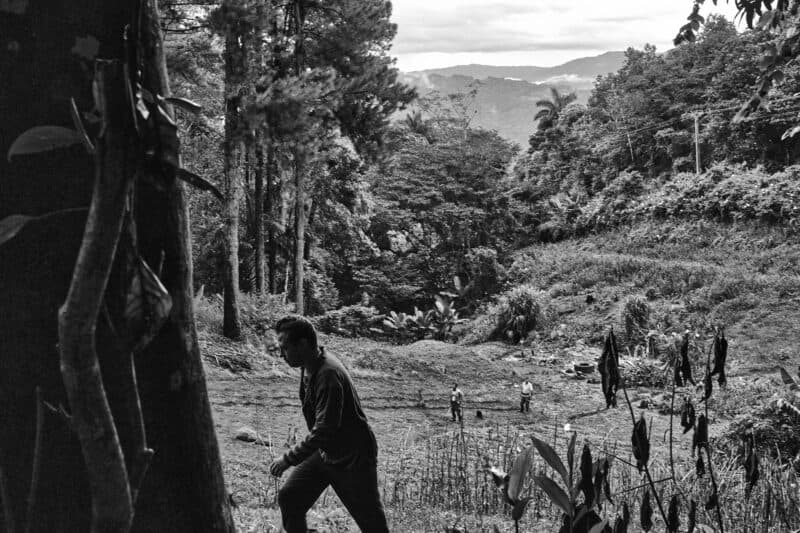
The people who have stayed in Cuba’s Escambray mountains are not living in a postcard. They are solving a daily logistics problem: how to move, how to work, how to keep animals fed, and how to hold a household together when transport disappears and electricity does too. Across Sancti Spíritus, Cienfuegos, and Villa Clara, that routine says more about rural Cuba than any polished national snapshot.
Life on the edge of the map
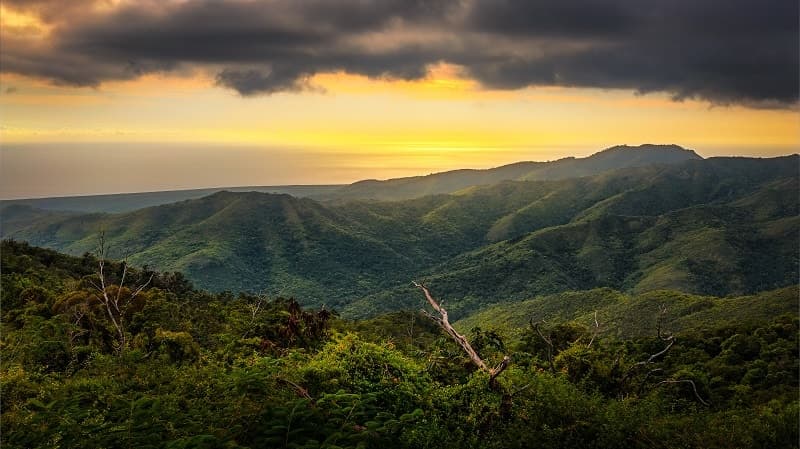
Escambray is a central Cuban mountain range, but it can feel much farther away than its map position suggests. Some communities go for days without transportation or electricity, which turns ordinary errands into planning exercises and makes isolation part of the operating conditions of daily life. A road that looks passable on paper can become a dead end in practice when there is no ride, no fuel, and no reliable way to know who is coming or when.
That isolation is not just scenic distance. It shapes whether food gets out, whether supplies get in, and whether a sick person can be moved quickly. It also explains why worn footpaths, occupied homes, and repeated routines matter so much in the mountains: when the road network fails to do the job, people build a working life around what still connects.
The practical pressures people deal with
The hardest part of Escambray life is not abstract poverty. It is the accumulation of small, punishing problems that never really stop. Crop theft and livestock theft cut directly into household survival, because a field or a herd is not a symbol here, it is income and food. Drinking-water problems, pests, and rainfall that can help one week and ruin the next all sit on the same ledger as transport failures.
Then there is the market side, where middlemen set low prices for agricultural products and farmers have little leverage. That leaves residents caught between the weather and the buyer, with thin margins on both ends. In that setting, persistence is not a slogan. It is the decision to keep planting, keep tending animals, and keep trying to turn a harvest into enough cash to stay afloat.

Why people stay when so many leave
The sharpest fact in the story is not that people leave the mountains. It is that some do not. Families keep going because of attachment to the land, and because their lives are already braided into places that have become more isolated from the rest of the country. Homes remain occupied, animals still have to be cared for, and routines built over decades do not disappear just because neighbors, relatives, and whole generations have moved away.
That is why the article’s quietest images carry so much weight. A footpath worn down by repeated use is a record of endurance. A house still lived in after others nearby have emptied out tells you something different from a dramatic exit story. In Escambray, continuity is often the more demanding choice, because it requires constant adaptation to scarcity rather than a single act of departure.
The electricity problem is part of the story
The mountain blackouts fit a wider pattern in rural Cuba. Havana Times has previously reported that some rural communities can go as long as a week without electricity after transformer failures, and that repairs often go first to circuits serving more people and more economic activity. That logic is important in the mountains, because it explains why small settlements can feel last in line even when the outage is not their fault.
Once you understand that hierarchy, the practical consequences in Escambray become clearer. A power cut is not just an inconvenience. It can interrupt water access, food storage, communication, and the basic rhythm of a household that already has limited transportation. When electricity is uncertain, every other part of rural life becomes harder to schedule and harder to protect.
What the official statistics can show, and what they miss
Cuba’s Oficina Nacional de Estadística e Información does publish population indicators by province, municipality, and zone of residence, along with national and territorial demographic tables. Those publications are useful for seeing where people live and how rural and urban populations are distributed. The 2024 demographic publication, closed on December 31, 2024, gives a recent official frame for understanding territorial change.
But the number that matters most in Escambray is still missing: no clear census or survey is asking how many rural Cubans would leave if they could, or what keeps them rooted if they stay. That absence is not a footnote. It is part of the problem, because communities can fall off the radar long before they disappear from the map.
Escambray’s history still shadows the present
The mountains carry political memory as well as hardship. Escambray was the site of the Escambray rebellion, an armed conflict that lasted from 1959 to 1965 between insurgent groups and the Cuban government. That history gives the region a place in Cuba’s modern political imagination, even now, when the more immediate story is one of households adapting to distance, scarcity, and repeated interruption.
The present-day Escambray is not defined by rebellion alone. It is defined by the people who stayed after neighbors, relatives, and generations moved on, and by the plain, stubborn calculations that make staying possible. In a place where transport can vanish, power can fail for days, and food production can be squeezed by theft and low prices, endurance is not romantic. It is the everyday work of keeping a life going where leaving is only one option among several, and not always the one chosen.
This article was produced by Prism’s automated news system from verified source data, official records, and press releases, then run through automated quality and moderation checks before publishing. The system is built and supervised by the people who set the standards it runs under. Read our full AI policy.
Did this article answer your question?