Rubio seeks to align Cuba hardline with Trump’s America First agenda
Rubio is pitching Cuba hardline as an America First win, betting Trump cares more about leverage, Florida politics, and migration than democracy talk.
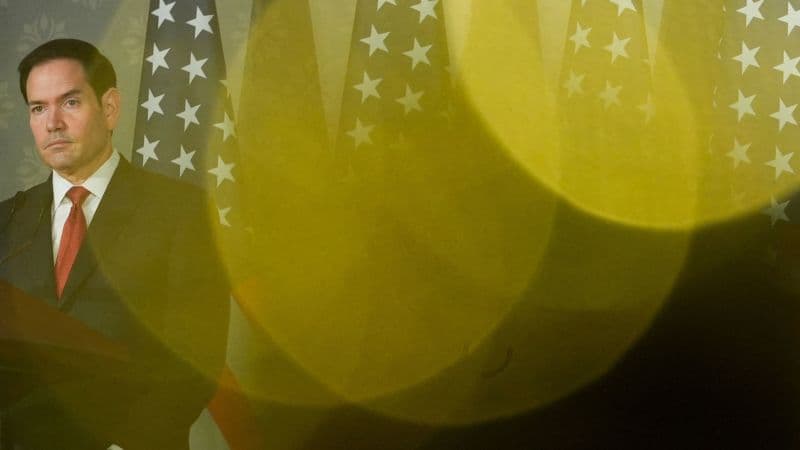
Rubio is trying to sell Cuba policy the way Trump likes to hear it: not as a lecture about democracy, but as a hard-nosed test of strength, border pressure, and political payoff. That is the real story inside this administration, because Rubio is not just running a familiar anti-Havana playbook. He is trying to turn it into a signature Trump-era win, with Miami politics and national-security optics doing as much work as human rights rhetoric.
Rubio’s case to Trump
Rubio’s first Cuba-focused statement as secretary of state, issued on January 31, 2025, made the opening move plain. The State Department said it had already acted within the first two weeks of Trump’s term to reverse Biden-era Cuba changes, and Trump had kept Cuba on the State Sponsor of Terrorism list on his first day in office. That is the template Rubio is using: speed, punishment, and visible reversal.
The point is not subtle. Rubio is trying to frame pressure on Havana as consistent with Trump’s brand of decisive action, not as a niche obsession of Cuban exiles. He is also carrying his own baggage into the job. As a Cuban-American politician with a long hawkish record on the island, he can sell the line that maximum pressure is both personal and politically useful. Inside Trumpworld, that makes him a rare figure who can translate hardline Cuba policy into the language of loyalty, toughness, and results.
Why Florida still has the loudest voice
Miami remains the biggest domestic pressure point in this fight. Cuban Americans are still one of the most important Republican blocs in South Florida, and AP reporting has noted that many backed Trump heavily. But the same community is also where the cracks are showing, especially after the administration moved against humanitarian parole protections affecting roughly 300,000 Cubans in March 2025.
That matters because Rubio is not selling to a theoretical constituency. He is dealing with a live political machine in Little Havana, where exile leaders expect movement, not drift. Marcell Felipe and Armando Garcia are part of a broader network that treats regime change in Havana as a generational project, and some exile leaders have spoken about it in almost historic terms, including one description of a “Berlin Wall moment.” That kind of language tells you the level of pressure Rubio faces from the hardline wing in Miami. They do not want symbolism. They want a crack in the system.

At the same time, immigration policy has made the coalition less tidy. Cuban Americans can be deeply anti-Castro and still recoil when Washington’s crackdown starts to hit Cubans already in the United States. Rubio has to keep both reactions in view, because the political cost of disappointing Miami can be real even for a secretary of state operating close to Trump.
What the administration has already done
The hardline is not just rhetorical. Trump signed NSPM-5 on June 30, 2025, to strengthen U.S. policy toward Cuba, and then went further on May 1, 2026, with Executive Order 14404, which imposed new sanctions on Cuban regime officials and broadened restrictions under the International Emergency Economic Powers Act. The State Department also announced additional Cuba sanctions on May 18, 2026, June 4, 2026, and other dates in May and June, targeting regime elites, entities, and individuals.
That is the kind of cadence Rubio can point to when he argues that Cuba policy is working in Trump’s terms. It is frequent, escalating, and easy to package as action. It also gives Trump a way to show he is not soft on a government Washington has treated as hostile for decades. The embargo itself dates to February 1962, when President John F. Kennedy proclaimed it, and it remains in place today. So the current administration is not inventing a new playbook. It is sharpening an old one.
For Cuba watchers, the important detail is that the pressure campaign now has both the old sanctions architecture and a newer White House that wants visible enforcement. That combination gives Rubio more room than a traditional State Department operator would usually have. He is not trying to normalize Cuba policy. He is trying to escalate it and make the escalation look like discipline.
The leverage points Rubio can actually use
The strongest argument Rubio has is not idealism. It is leverage. Migration remains central, because every surge, detention fight, or parole rollback turns Cuba into a domestic U.S. issue, not just a foreign-policy file. The March 2025 move against humanitarian parole for roughly 300,000 Cubans showed how quickly Washington can turn Havana into a question of enforcement and political optics.

He also has the broader national-security frame, which is where the administration’s tone matters. The State Department’s 2024 human-rights report cites arbitrary arrest and detention, severe limits on freedom of expression and media freedom, censorship, surveillance, and transnational repression. The 2025 Trafficking in Persons Report still rates Cuba Tier 3. That lets Rubio argue that the United States is not just punishing a government for ideological reasons. He can say the regime is abusive, repressive, and out of step with any serious security standard.
Havana sees the same moves very differently. Cuban officials have cast Rubio’s approach as personal and destabilizing, and Cuba’s foreign minister said in 2025 that Rubio’s “personal” agenda risked Trump’s peace claims. That line matters because it shows how closely Havana reads Rubio himself, not just the institution he leads. The regime knows Rubio is not a neutral broker. It sees him as the face of the pressure campaign.
Who will shape the real policy
If there is a faction battle here, Rubio is still in the stronger position than the people around Trump who would prefer softer optics or more flexibility. The policy paper trail already belongs to him and the hardliners: swift reversal in January 2025, NSPM-5 in June 2025, then EO 14404 and successive sanctions packages in May and June 2026. That is not the work of a camp looking for a thaw.
The more realistic tension is between Rubio’s Miami-facing politics and Trump’s instinct for blunt, transactional wins. The former wants regime pressure that satisfies Cuban exiles and looks uncompromising. The latter wants a policy that can be sold as strength, border control, and U.S. advantage. On Cuba, those two instincts overlap more than they conflict, which is exactly why Rubio has room to maneuver.
That is the real inside-baseball answer to the Cuba question. Rubio is not asking Trump to care about Havana the way a traditional democracy hawk would. He is asking him to see Cuba as a place where America First can mean maximum pressure, migration control, and a message to enemies in the hemisphere. If that pitch holds, Cuba policy will keep moving in the hardline direction, and the only real question will be how far Trump wants to push it.
This article was produced by Prism’s automated news system from verified source data, official records, and press releases, then run through automated quality and moderation checks before publishing. The system is built and supervised by the people who set the standards it runs under. Read our full AI policy.
Did this article answer your question?