Trump’s Cuban American base pressures White House to pursue regime change in Cuba
South Florida’s Cuban hard-liners are warning Trump that sanctions alone will not buy loyalty. They want regime change, and they are organizing to make that demand impossible to ignore.
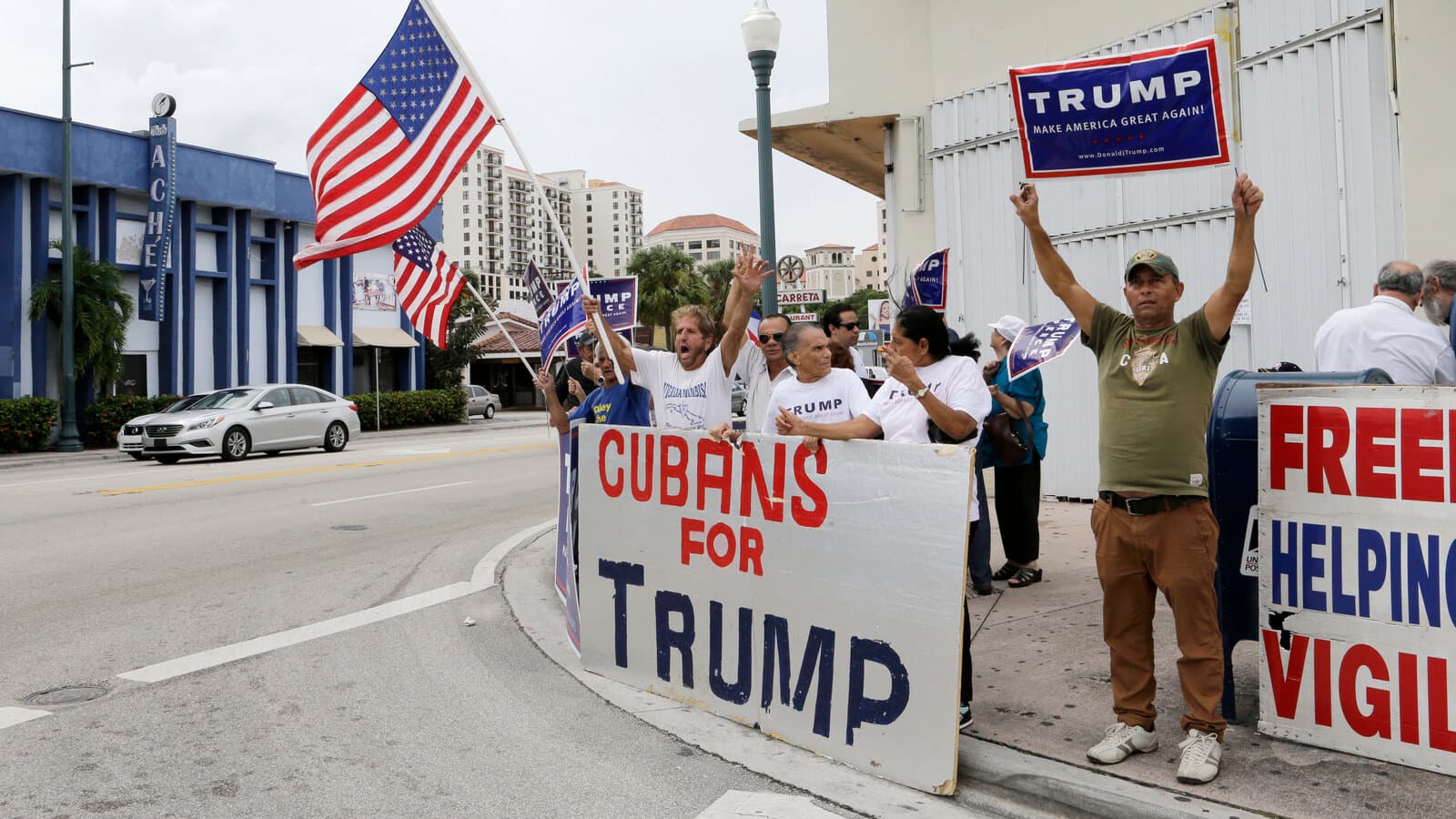
Trump’s Cuban American base in South Florida is sending a blunt warning to the White House: sanctions are not enough, and anything short of regime change in Cuba could split a constituency that has long been counted on as reliably Republican. The pressure is coming from activists, opposition figures, and elected voices who say the administration cannot settle for economic leverage or reform talks while Havana’s Communist leadership stays in place.
That message landed as the White House announced a new Cuba sanctions executive order on May 1, expanding pressure on officials tied to repression. At the same time, the administration has kept open the possibility of negotiating with Havana, a mix that has unsettled some Cuban American hard-liners who see any compromise as a retreat from the goal they have been demanding for decades: the overthrow of the regime.
Orlando Gutiérrez-Boronat, a leader in the exile community, said there can be no real economic change without real political change. He and other organizers have spent months pressing that argument through prayer sessions, car caravans through Miami, and a document they call the Freedom Accord, which sets out expectations for a transition to democracy and even post-regime planning, including working groups on future free elections. More than 30 Cuban opposition and resistance organizations signed the accord in Miami on March 2 at the National Shrine of Our Lady of Charity of El Cobre, and organizers said they notified the U.S. State Department about its contents.
The fight is rooted in a community that remains central to Florida politics. Florida International University’s Cuban Research Institute says Miami-Dade County had more than 911,000 residents of Cuban origin in 2023, in a county of 2,701,767 people counted in the 2020 Census. Downtown Miami’s Freedom Tower still carries that history. It served as the Cuban Refugee Center from 1962 to 1974 and helped more than half a million Cuban exiles over about 20 years, earning its nickname, the Ellis Island of the South.
That history has made Cuba policy a domestic loyalty test in South Florida, not just a foreign policy debate. Republican state Sen. Ileana Garcia warned that if the U.S. did not take military action or otherwise intervene to overthrow the regime, Trump’s future presidential library in downtown Miami could be seen as an eyesore beside the Freedom Tower. Rosa María Payá was among the March signatories, and the March 24 Hialeah rally that drew thousands showed how quickly Cuba politics still mobilizes the street. For Trump, the risk is clear: in a city where exile memory still shapes voting, hardline language without regime change may no longer be enough to hold the base together.
This article was produced by Prism’s automated news system from verified source data, official records, and press releases, then run through automated quality and moderation checks before publishing. The system is built and supervised by the people who set the standards it runs under. Read our full AI policy.
Did this article answer your question?