Bendable Plush Puppy Teaches Kids Yoga Poses and Calming Techniques
A $47.99 plush that bends into Downward Dog is cute, but doga families want to know if it actually prepares kids to share the mat with a real dog.
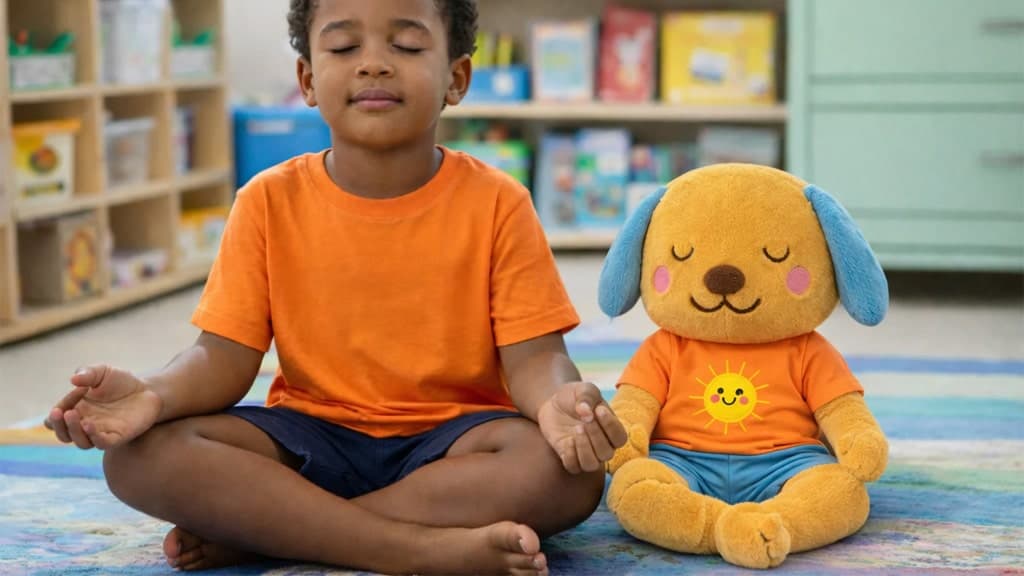
The plush dog sitting in a perfect Downward Dog on your child's floor is not going to lick anyone's face, bolt across the mat, or demand a treat mid-pose. That is exactly the point, and also exactly the limitation worth discussing before you add Puppypalooza to your cart.
What Puppypalooza actually is
Yogapalooza's Puppypalooza is a large plush puppy with fully bendable arms and legs, priced at $47.99 and aimed at children aged 3 and up. The toy ships with a printed "Puppy Yoga Pose Guide" that introduces poses including Mountain, Tree, Butterfly, and Downward Dog. It is also promoted alongside a companion picture book, Peaceful Puppy Palooza, making it a multi-format introduction to the mechanics and mood of a yoga practice. Reviewer Samantha Connell of The Toy Insider described Puppypalooza as a tool that lets children model poses by using the plush as both guide and play partner, positioning it as a bridge between play and mindful movement.
The bendable limb mechanic is the product's core innovation. Rather than asking a three-year-old to follow a verbal cue or decipher a flat illustration, you hand them a soft dog that can hold Tree pose while they try to mirror it. That tactile, visual feedback loop is developmentally appropriate and genuinely more engaging than a printed chart. Connell's review cited benefits including breathwork, gross motor skill development, and emotional regulation, all achieved through the repetitive, low-pressure act of following a plush puppy through a sequence.
The reality check: does it transfer to actual doga?
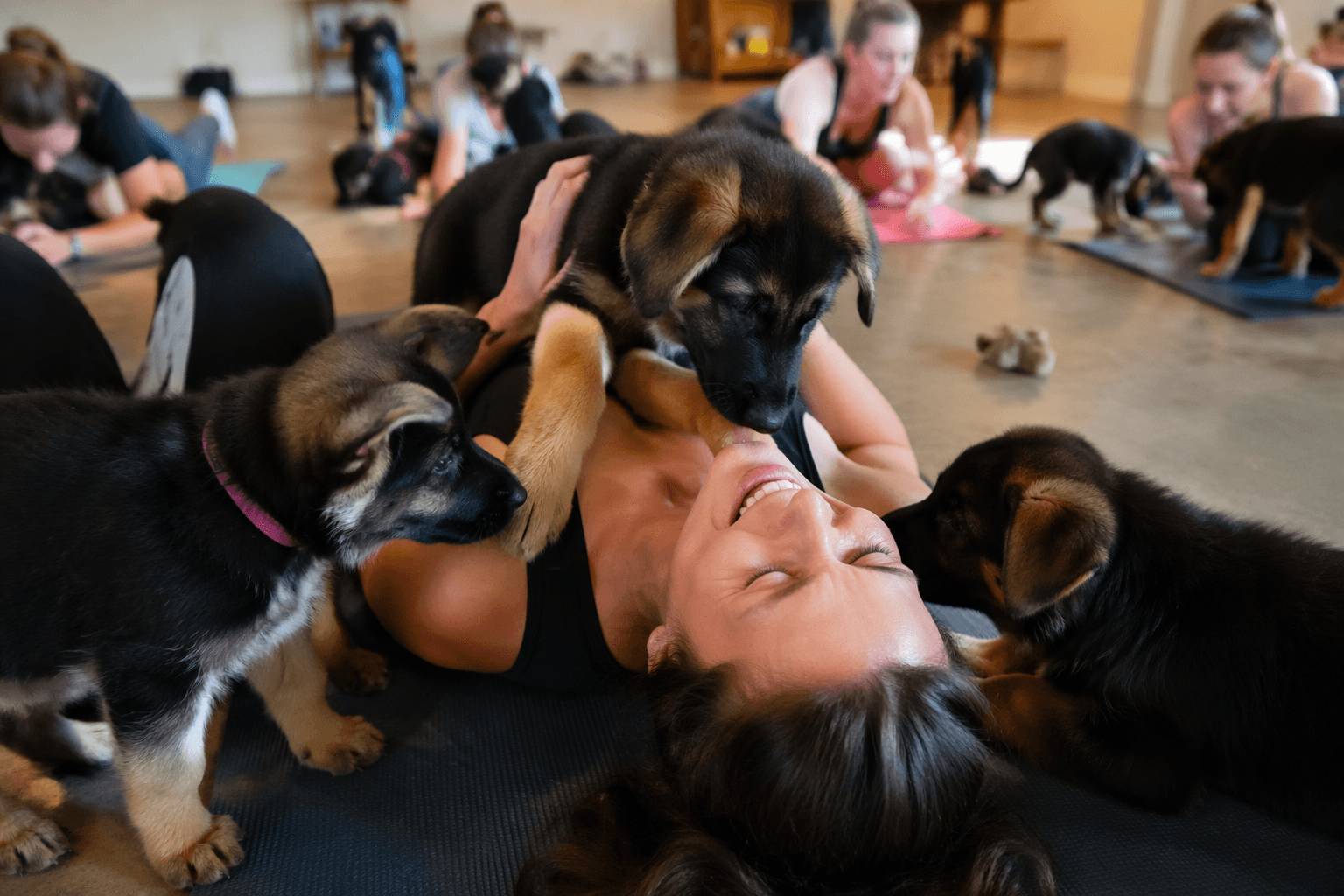
Here is the honest answer for doga practitioners: Puppypalooza builds exactly the right foundational behaviors, but it does not simulate the unpredictability that makes practicing yoga around a real dog challenging. A plush holds Butterfly pose because you arranged its legs that way. A beagle does not. What the plush does teach, however, is the attentional discipline and physical gentleness that are prerequisites for any shared mat session with a live animal.
Children who practice with Puppypalooza learn to slow their movements, follow a visual cue at dog height, and maintain focus through a short sequence. Those are transferable skills. Mountain pose requires stillness; Tree pose demands balance and concentration; Downward Dog, when done alongside a real dog, calls for calm proximity and body awareness. Running through those poses repeatedly with a plush partner builds muscle memory and behavioral habits that make the transition to a live doga session considerably smoother.
What the plush cannot teach is boundary-setting. It will not bark, reposition itself, or wander when a child crowds it. For families who plan to bring kids onto the mat with a real dog, the Puppypalooza routine works best as a pre-session warm-up, not a standalone curriculum in animal interaction. That gap is worth naming clearly, and it points to exactly where adult facilitation matters most.
Who it is actually for
The product is rated for ages 3 and up, and that floor feels accurate. At three, children are beginning to develop the gross motor control to attempt balance poses and the attentional capacity to follow a two- or three-step sequence. Puppypalooza meets them at that developmental stage without demanding the kind of abstract instruction that frustrates young learners.
For doga families specifically, the sweet spot is roughly ages 4 to 7. By four, children can engage with the Puppy Yoga Pose Guide independently and begin to understand that yoga is a practice with a beginning, middle, and end. By seven, most kids are ready to transition to mat-sharing with an actual dog, and the behavioral foundation built through regular, gentle movement with the plush pays real dividends in that setting.
Older children, particularly those above eight, may find the plush concept too simple unless it is used in a structured context. Connell's review specifically flags classroom and therapy settings as ideal use cases, particularly for MESH (mental, emotional, social health) lessons where calm, repetitive movement supports emotion regulation. In those environments, the plush removes the social pressure of being watched or corrected, letting children engage with calming sequences on their own terms.
How to pair Puppypalooza with an at-home doga routine
The most practical approach for doga households is phased:
1. Start with solo plush sessions.
Let the child work through the Puppy Yoga Pose Guide with Puppypalooza as their only partner for the first few weeks. Focus on one or two poses per session rather than rushing through the full sequence.
2. Introduce breathwork explicitly.
Connell's review flags this as the most important adult responsibility: the toy alone does not teach correct breathing technique. Sit with your child and cue breath with each transition. That adult-led layer converts mimicry into an actual calming skill.
3. Add the real dog as an observer.
Before asking your dog to participate, bring them into the room during plush sessions. Let the child practice while the dog simply exists nearby. This normalizes the shared environment for both parties without adding pressure to either.
4. Transition to mat-sharing.
Once the child can move through the Mountain, Tree, Butterfly, and Downward Dog sequence with reasonable control and calm, begin guiding them through the same sequence alongside the real dog. The familiarity of the poses removes one variable; the presence of a live animal introduces the real lesson.
Using Peaceful Puppy Palooza as a read-aloud before practice sessions reinforces the narrative frame and helps younger children understand that practice has an intentional arc.
What to look for in products that build real animal-interaction skills
Puppypalooza is a strong example of a product category that is still finding its footing. When evaluating similar toys or supplementary materials for a doga-curious child, these markers indicate genuine developmental value rather than surface-level pet theming:
- Tactile engagement: Does the toy invite physical manipulation, or is it passive? Bendable limbs and interactive props teach body awareness more effectively than screen-based alternatives.
- Guided sequences, not just poses: A single pose card is decoration. A sequenced guide that moves children through breath, transition, and stillness mirrors what an actual yoga practice looks like.
- Adult-facilitation prompts: The best products in this category explicitly invite parent or teacher involvement rather than positioning the toy as self-contained. Puppypalooza's own review recommends adult-led breathing instruction, which is exactly the right instinct.
- MESH alignment: For classroom or therapy use, look for explicit connections to mental, emotional, and social health frameworks. Products designed with those outcomes in mind tend to have more intentional curricula behind them.
- Age-appropriate challenge: A product pitched too broadly across age ranges often underserves both ends. Puppypalooza's 3-and-up rating with content calibrated clearly to the lower end of that range is an honest design choice, not a marketing hedge.
The bottom line
At $47.99, Puppypalooza is not a novelty item. It is a purposefully built tool that teaches the attention, gentleness, and sequenced movement that doga families actually need children to develop before sharing a mat with a live dog. It does not replicate the experience of a real animal, and it should not be expected to. Used intentionally, with adult-guided breathwork and a phased introduction to live doga practice, it is one of the more coherent on-ramps to this practice available for young children. The plush holds its Downward Dog perfectly every time. The real dog will not. That gap is the whole lesson, and Puppypalooza is solid preparation for it.
This article was produced by Prism’s automated news system from verified source data, official records, and press releases, then run through automated quality and moderation checks before publishing. The system is built and supervised by the people who set the standards it runs under. Read our full AI policy.
Did this article answer your question?