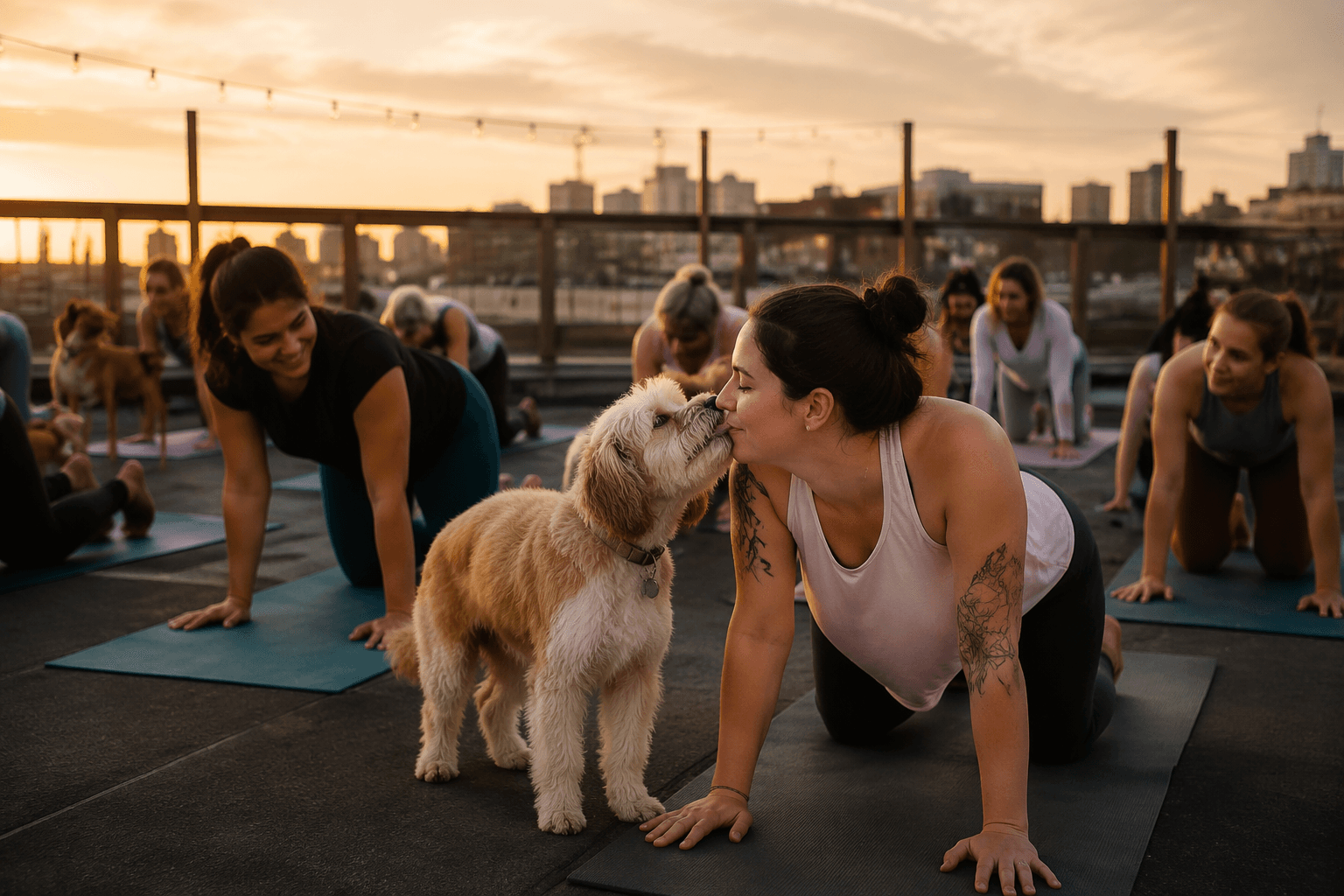
Dog yoga helps people and pets unwind together
Doga pairs slow yoga with a dog’s comfort, and the best classes keep the focus on calm bonding, not puppy-photo chaos.
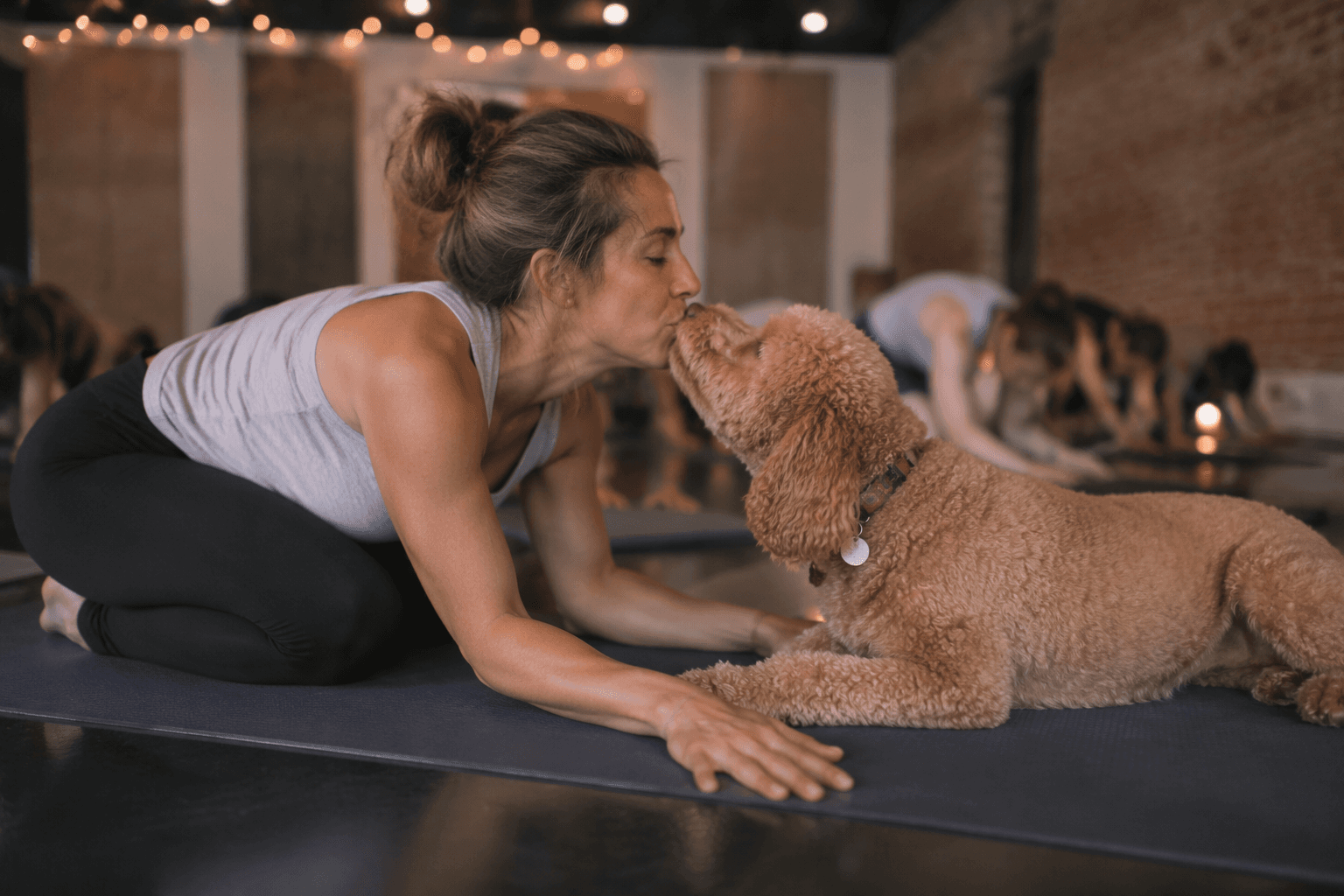
Doga, short for dog yoga, is a yoga session built around a simple rule: the dog gets to participate, rest, roam, or share the mat without pressure. When it works well, the room feels quiet and low-stakes, with people moving slowly and dogs staying comfortable enough to settle in.
What doga is really for
In 2018, TIME framed “Dog Yoga” as a way for people and pets to unwind together. The point is calm companionship, not athletic poses or getting the dog to perform on cue.
The strongest doga sessions let the animal set the tone. A dog may lie beside the mat, watch from the edge of the room, or drift in and out of the action while the human keeps the class slow and simple. If the session feels more like a photo shoot than a shared stretch, it has already drifted away from what doga was built to do.
The founder trail behind the format
Mahny Djahanguiri, a Swiss-born British yoga teacher who has taught since 1999, launched Dogamahny in 2012 and popularized doga in the UK.
She started Doga classes in 2013 at Harrods Pet Spa, and the practice later continued through OMNOM yoga studios in Islington as well as events in Hackney. Dogamahny’s current-facing listings also point to International Doga Day and a June 21 event in London.
Her book, Doga: Yoga for You and Your Dog, was first published June 2, 2015, runs 128 pages, and appears in retail metadata as a hardcover from Hamlyn and Octopus. A June 17, 2021 podcast episode featured Djahanguiri, who founded Dogamahny in 2012 and led London-based and international classes, workshops, and teacher training with her dog Robbie.
What a class can actually look like
Expect a doga class to be gentler than a standard studio flow. In some classes, participants may guide a dog to jump over, crawl under, and circle around them while the human holds poses, but that only works when the dog is already relaxed and willing. Classes are listed for owners with their adult dogs. This is not built for nervous puppies or dogs that struggle with group settings.
The best sessions stay flexible. Your dog may do a little, do a lot, or do almost nothing at all, and all of those outcomes can still fit the format. If the room expects perfect obedience, forced contact, or a dog to behave like a prop, you are not looking at thoughtful doga.
How to show up prepared
A little preparation makes a big difference. Bring a yoga mat, leash, waste bags, and treats. Arriving early also helps, because a dog that has time to sniff, settle, and orient to the room is more likely to have a calm session.
- bring a mat with enough grip for you and your dog
- bring a leash in case the venue asks for controlled entry or movement between spaces
- bring waste bags so the room stays clean and low-stress
- bring treats if the class allows positive reinforcement
- stop or step back if your dog seems restless, overstimulated, or unsure
Keep the expectations modest and the setup simple:
How to spot a dog-centered class, not a gimmick
A real doga class puts the dog’s comfort first. That usually means a quieter room, slow movement, and a structure that leaves room for rest rather than constant activity. It also means the class language should sound calm and practical, not like a stunt package built around viral moments.
If the session is pitched mainly around puppies, rapid-fire photo moments, or novelty poses, it is sliding toward the wider puppy-yoga side of the market rather than classic doga. If the listing emphasizes adult dogs, calm handling, and low-pressure participation, it is much closer to the original intent.
This article was produced by Prism’s automated news system from verified source data, official records, and press releases, then run through automated quality and moderation checks before publishing. The system is built and supervised by the people who set the standards it runs under. Read our full AI policy.
Did this article answer your question?