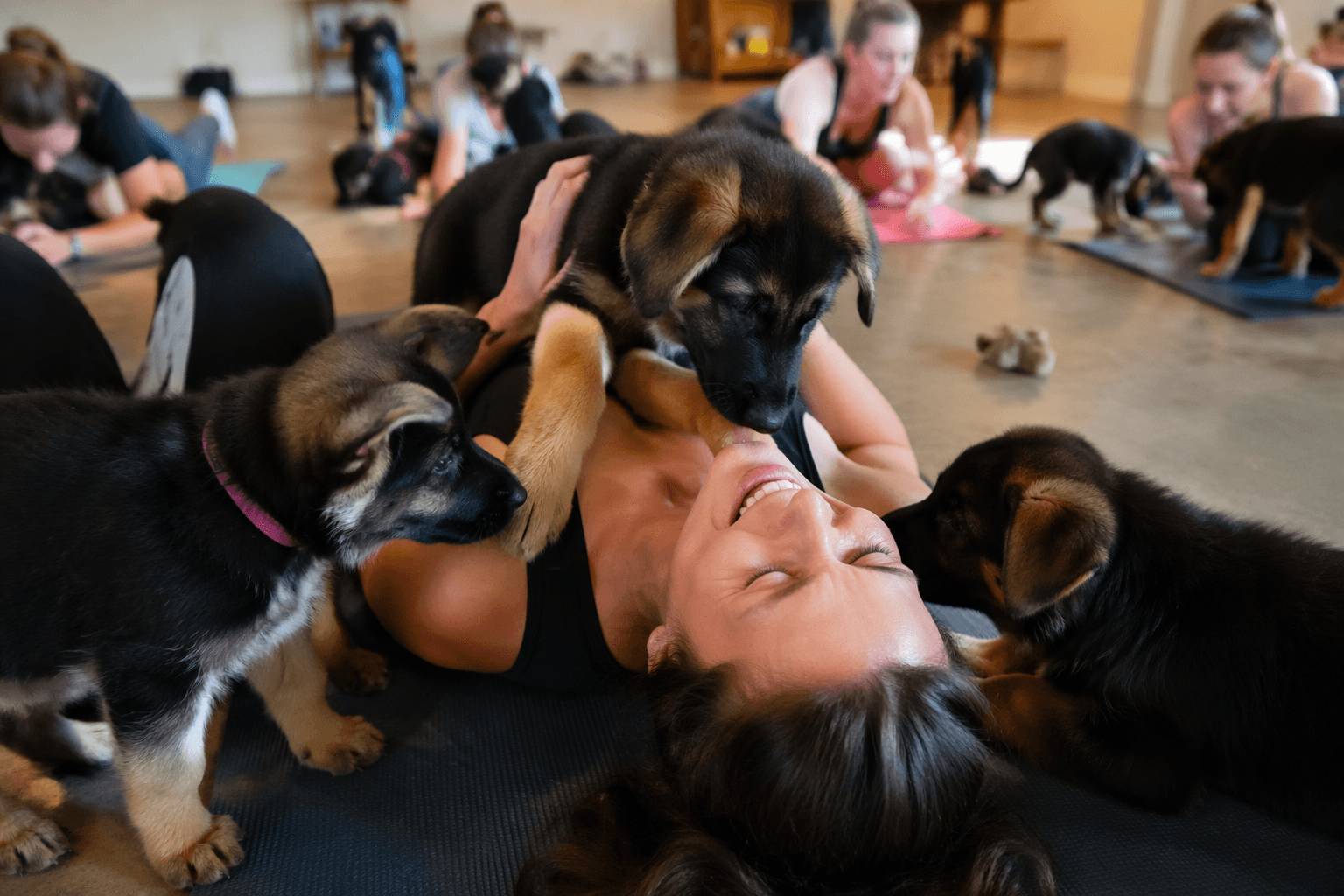
Petco explains doga as a simple bonding practice with dogs
Petco’s version of doga keeps the entry bar low: if your dog is calm, close by, and comfortable, you are already doing it right.
What to know before you step onto the mat
The easiest way into doga is not with a perfect pose, but with a relaxed dog. Petco’s explainer frames the practice as a simple bonding session, one where your dog might meditate, stretch, massage, relax, balance, or just stay close while you move through gentle yoga poses. If you are looking for a hard-edged fitness class, this is not that. If you want quiet time that lets a dog and person share the same space without pressure, you are much closer to the point.
That matters because the real goal is not performance. In Petco’s telling, doga works best when it feels like companionship first and exercise second. The dog’s comfort sets the tone, and that makes the practice especially welcoming for first-time dog owners who are still figuring out what their dog enjoys, what makes them restless, and how much togetherness feels calming instead of crowded.
How doga actually looks in real life
One of the most useful things about Petco’s explanation is how open-ended it is. Doga does not have to look like a polished studio class with choreographed movement. It can be as simple as a quiet session on the floor with your dog lying beside you while you move through gentle poses. It can also include light movements that invite the dog to participate a little more actively, if that suits the dog’s temperament.
That flexibility is the whole appeal. Some dogs are naturally mellow and happy to stay near you while you breathe and stretch. Others may want to engage, shift, or move with you. The practice leaves room for both, which is why it feels less like a rigid format and more like a way of adapting yoga to the dog already in your home.
Petco also points out that doga is relatively new compared with yoga itself, which helps explain why people interpret it in different ways. Some versions lean into relaxation, some into movement, and some into the emotional benefit of simply spending undistracted time together. That variety is not a weakness. It is the reason the practice can fit so many different households.
Which dogs are a fit
The best doga dog is not the fanciest one or the most athletic one. It is the dog whose personality, age, energy level, and needs match the experience. Petco’s guide makes that adaptability central. A calm older dog may enjoy lying near you during a slow session. A more energetic dog may only enjoy a shorter, looser version with minimal movement. A young dog may need a simpler setup than a dog that already settles easily.
That is why the dog’s reaction matters more than your plan. If the dog is relaxed and willing to stay nearby, the session is probably on the right track. If the dog is restless, disinterested, or overwhelmed, the answer is not to push harder. It is to simplify, shorten, or scale the session back until it feels comfortable again.
For a first-time dog owner, that is the most useful filter of all. Doga is not about proving that your dog can perform on cue. It is about noticing what kind of shared activity your dog can handle with ease. When the dog stays comfortable, the practice is doing its job.
How to keep the session low-stress
Low-stress doga begins with a low-pressure mindset. Petco’s framing is clear that the experience should be enjoyable and individualized rather than forced. That means starting gently, keeping expectations loose, and treating the session as quality time instead of a fitness test. The less you try to make it look a certain way, the easier it is to notice what your dog actually wants.
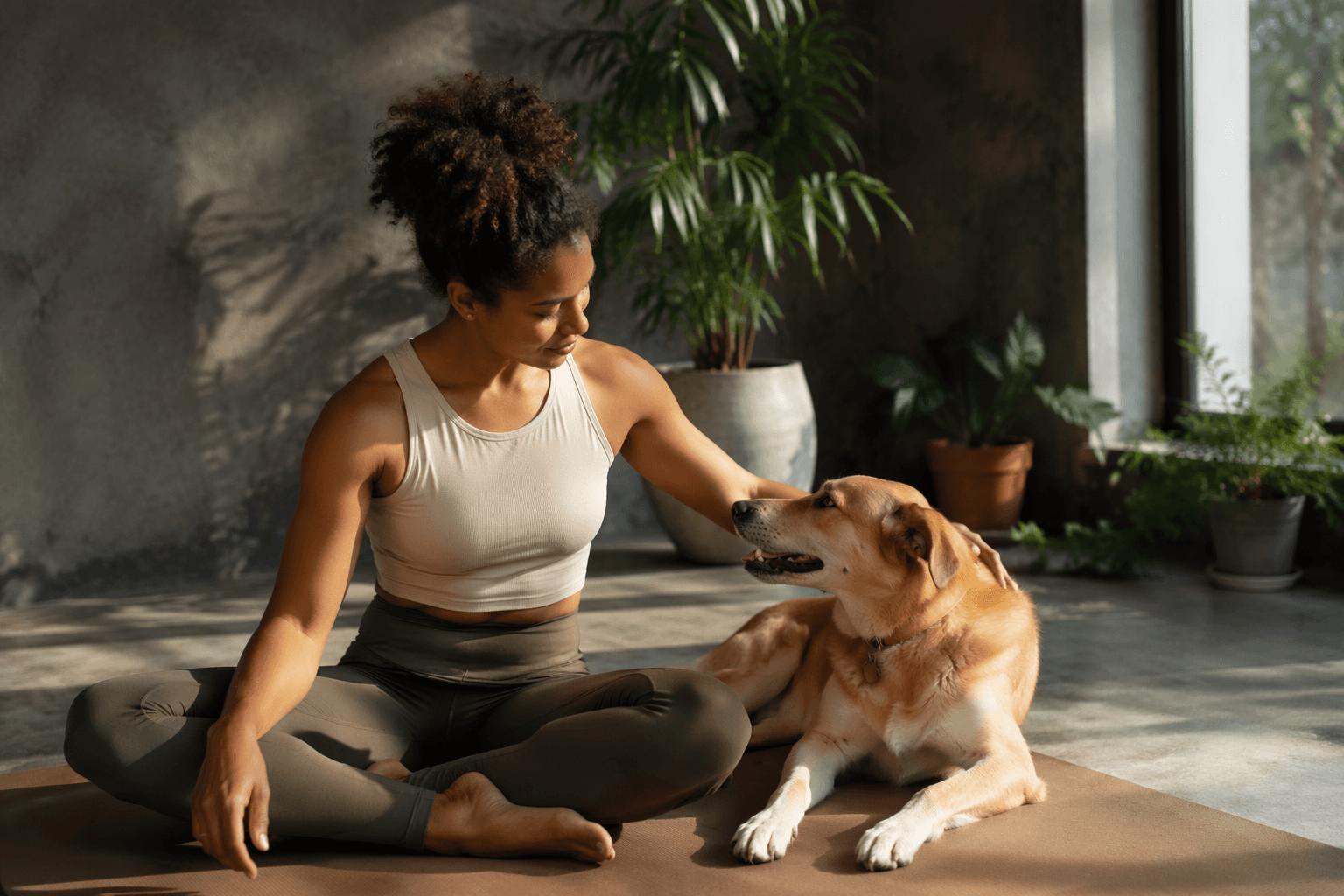
A quiet, uncomplicated setup is usually enough. The practice can fold naturally into an existing home routine, which is part of what makes it appealing as a bonding habit. You do not need to turn it into a production to make it meaningful. In fact, the simplest version, a calm floor session with your dog close by, may be the most faithful to what Petco describes.
A good low-stress session usually follows this rhythm:
- Begin with gentle movement and a calm tone.
- Let the dog decide whether to stay close, lie down, or simply watch.
- Keep the session short enough that it feels easy, not demanding.
- If the dog becomes restless or overwhelmed, simplify right away.
That last point is especially important. In Petco’s model, the dog’s comfort is the success metric. If the dog is not relaxed, the session is no longer serving the practice.
Why Petco’s version has become the easy entry point
Petco’s explainer helps make doga feel mainstream without stripping away the softness that makes it appealing. By presenting it as a relationship-focused activity rather than a performance trend, the guide gives new dog owners permission to try it without overthinking it. That is a big reason the practice can feel approachable even for people who have never imagined themselves doing yoga with a dog at their side.
The bigger message is that doga is less about novelty than connection. It is a low-pressure enrichment option for people who want to combine mindfulness with companionship, and it works best when the dog’s mood leads the way. In that sense, Petco’s version of doga is not asking you to master anything. It is asking you to notice your dog, move gently, and let a quiet shared moment count as enough.
If you want to try it this week, start where Petco starts: keep it simple, keep it calm, and let your dog’s comfort decide what kind of class it becomes.
This article was produced by Prism’s automated news system from verified source data, official records, and press releases, then run through automated quality and moderation checks before publishing. The system is built and supervised by the people who set the standards it runs under. Read our full AI policy.
Did this article answer your question?