Puppy Yoga Blends Gentle Poses, Rescue Dogs, and Stress Relief
Puppy yoga's stress-relief promises are backed by real science, but the welfare of the animals depends entirely on how the class is run.
What Puppy Yoga Actually Is
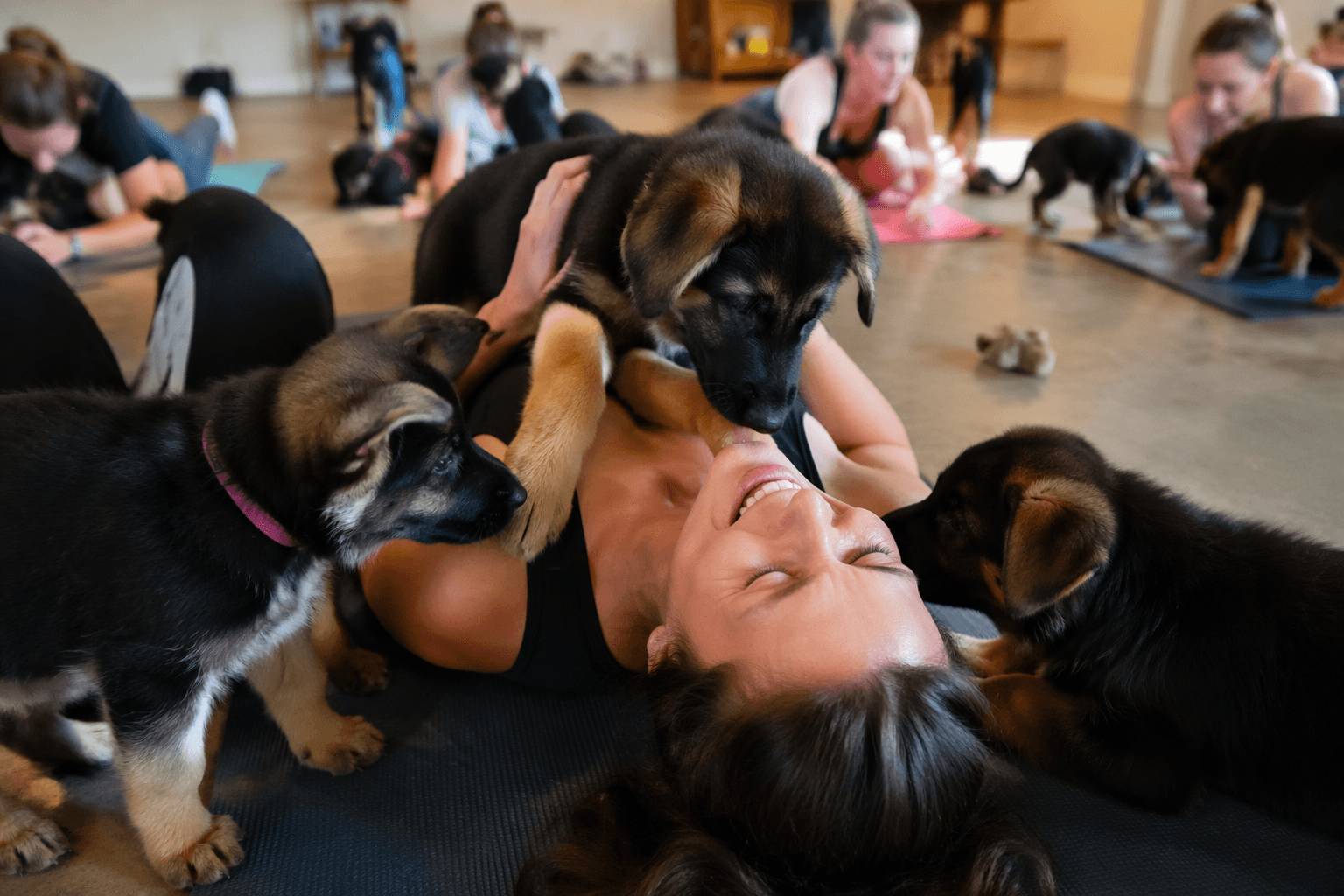
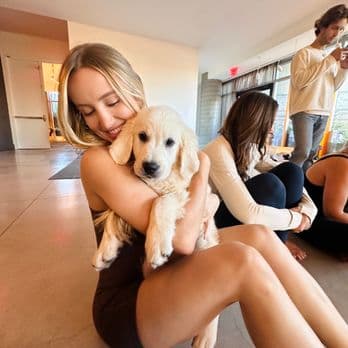
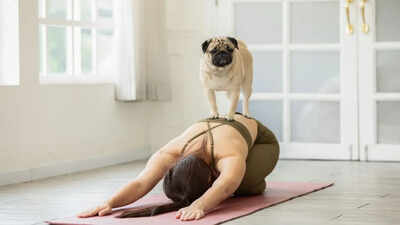
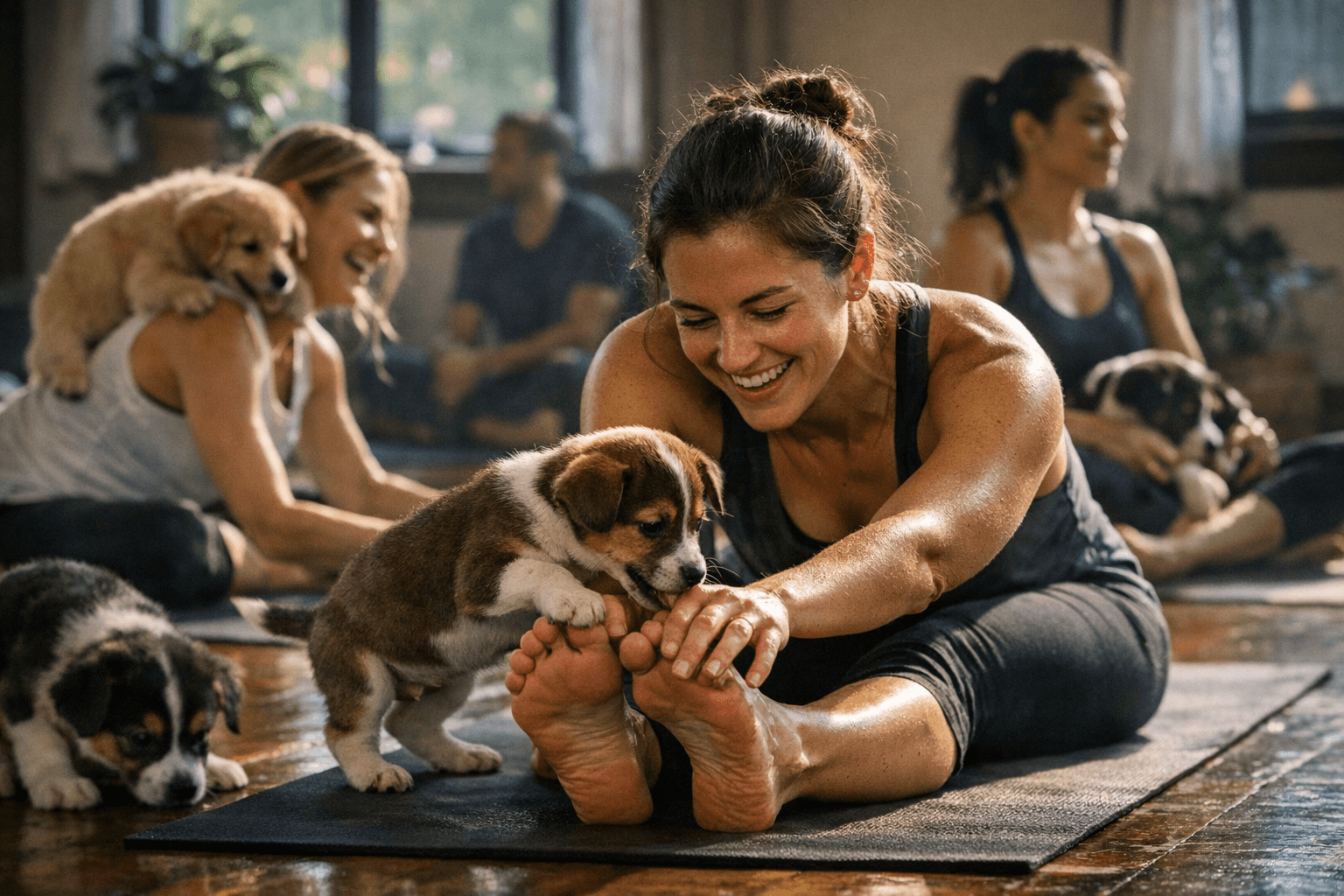
Forget the image of a perfectly synchronised vinyasa flow. Puppy yoga is something more chaotic, warmer, and deliberately unhurried: a guided yoga session into which rescue or shelter puppies are released to roam, tumble across mats, and invite themselves into whatever pose you were attempting. The format is beginner-friendly by design. Instructors slow the flow, adapt postures, and build intentional pauses into the sequence so that when a curious puppy decides your downward dog pose is a climbing wall, you have room to respond. That interruption, it turns out, is the whole point.
The practice has spread from boutique studios to shelter fundraisers to community wellness events, and its appeal sits at the intersection of two things people reliably enjoy: gentle movement and dogs. But how much of the benefit is real, and how much depends on the operator running the class? Those two questions are worth separating before you book a spot.
How a Session Unfolds
A well-run puppy yoga class follows a straightforward arc. It opens with a short warmup, moves into simple stretches and breathing exercises, then gradually introduces the animals into the space. Ashley Bloom, director of shelter services at the Southampton Animal Shelter Foundation in New York, describes the format her organisation uses: "A typical class lasts about 45 minutes, and we always start by going over safety guidelines and introducing the puppies so everyone knows their stories and what to expect." After introductions, the yoga session takes up the bulk of the time, with a window at the end for photos and relaxed play.
After intros, it's time for a yoga session, which takes up most of the time. Then at the end, there's often time for gentle playing and photos. The pace is set to match the animals, not the other way around. Posture precision takes a back seat to presence, and the format is welcoming to people who would find a standard studio class intimidating.
The Science: What Holds Up and What Doesn't
The feel-good chemistry of puppy yoga has genuine grounding in research, even if the headlines sometimes outrun the evidence. Petting animals has been shown to lower cortisol levels (a stress hormone) and increase serotonin and dopamine, neurochemicals that promote well-being. A landmark review of 69 peer-reviewed human-animal interaction studies found well-documented effects on social attention, social behaviour, interpersonal interactions, and mood, as well as stress-related parameters such as cortisol, heart rate, and blood pressure, self-reported fear and anxiety, and mental and physical health.
Both human-animal interaction and oxytocin were found to promote social interaction, to reduce stress and anxiety, and to enhance human health. Oxytocin is released via eye contact, but in particular, via pleasant tactile interactions which seem to play a major role in the oxytocin-mediated decrease of stress levels.
What the science does not support is the idea that a single 45-minute class produces lasting clinical change for anxiety disorders or chronic depression. Oxytocin effects may be triggered in response to single meetings with animals, but stable relationships with animals such as pet ownership will be linked to more potent and long-lasting effects due to repeated exposure. Puppy yoga works best understood as a mindfulness tool: a structured environment for parasympathetic activation, social connection, and momentary stress relief. Those benefits are real and worth pursuing. Treating it as a substitute for therapy or clinical support is where the evidence runs out.
The Rescue Connection
Puppy yoga is a casual yoga class where rescue puppies get to interact with people in their community. It's essentially a fun way for people to exercise and get an endorphin boost while helping the puppies build social skills and confidence that can make them more adoptable. When shelters and rescues are the organising partners, the event functions simultaneously as community outreach, adoption introduction, and fundraiser. Amanda Farah, a national training and behavior lead for Best Friends Animal Society, notes that "these sessions help them build confidence and learn to feel comfortable around new people." Early positive socialisation is developmentally significant: puppies that have relaxed, varied exposure to humans during their critical socialisation window are easier to place and more likely to thrive in adoptive homes.
For rescue groups and shelters, puppy yoga is a creative way to let their community know about the adoptable animals in their care. A low-pressure mat session is, in practice, a low-pressure adoption conversation. There is no sales pitch and no pressure, and potential adopters get an honest read on a dog's temperament in a real social setting.
The Ethical Line and How to Read It
Not every puppy yoga event operates with shelter welfare at its centre, and the gap between responsible and exploitative runs wide. An ITV undercover investigation across multiple studios in England found an array of basic welfare requirements were being ignored, with experts at the RSPCA and elsewhere saying many breach basic welfare and safety standards. Investigators documented puppies as young as six and a half weeks old being put out to play in yoga classes. At one class in Nottingham, the breeder said that the puppies had just turned eight weeks old, before adding "they've done loads, they do like three [sessions] a day." ITV calculated that's at least nine lessons they took part in before they were eight weeks old.
The welfare concerns extend beyond age. RSPCA science and policy officer Esme Wheeler warned that withholding water puts dogs in serious danger: "Dogs don't have the capacity to store water in the same way that we do, so they need constant access, otherwise health and potentially fatality can occur quite quickly." On the issue of waking sleeping puppies to appease paying attendees, Wheeler was unambiguous: "Sleep deprivation is a form of torture, and there's no reason to assume that this won't be as damaging to these dogs."
What a Reputable Class Looks Like
The difference between a well-run event and a harmful one is mostly structural. Before booking, the questions worth asking are straightforward:
- Are the puppies sourced from a rescue, ethical foster, or shelter, and can the organiser confirm this clearly?
- Are the animals at least eight weeks old and fully vaccinated?
- Is a trained animal handler or shelter staff member present throughout, not just a yoga instructor?
- Do the puppies have access to water, a rest area, and the freedom to disengage at any point?
- Is this the only session that particular group of puppies will do that day?
Bloom says that at her shelter's puppy yoga sessions, each dog has a volunteer assigned to watch them throughout the class. Her approach to rest is non-negotiable: "If a puppy falls asleep, we let them sleep. No exceptions. And we only do one yoga session per group of puppies, with small class sizes, so the puppies never get overwhelmed."
On sanitation, reputable operators treat hygiene as a live, active responsibility: puppy supervisors immediately remove and disinfect any soiled areas during class using veterinary-grade cleaning products to maintain hygiene and safety. Hand sanitiser at check-in is a baseline, not a bonus.
When to Skip Puppy Yoga Entirely
Puppy yoga is not the right format for everyone, and knowing that is part of making a responsible choice. People with dog allergies, a genuine fear of dogs, or conditions that make unpredictable physical contact uncomfortable will get more from a traditional or restorative class. If you have your own adult dog who is well-socialised and calm in group settings, some studios welcome owner-dog pairs, which sidesteps sourcing concerns entirely while preserving the human-animal interaction that makes the format work.
The format also isn't a substitute for therapeutic support. The stress relief it provides is real, but it is situational, rooted in mindfulness and social warmth rather than clinical intervention.
The question puppy yoga asks is a simple one: can time spent on a mat, breathing deliberately, surrounded by animals that need homes and people who need a break, be useful? The evidence says yes. Whether a specific event earns that answer depends entirely on who is running it and how much the animals' welfare is built into the structure before a single pose begins.
This article was produced by Prism’s automated news system from verified source data, official records, and press releases, then run through automated quality and moderation checks before publishing. The system is built and supervised by the people who set the standards it runs under. Read our full AI policy.
Did this article answer your question?