Puppy Yoga Booms in 2026, Blending Wellness With Dog Adoption
Puppy yoga has moved from novelty to mainstream wellness, but the real question is whether your studio is doing it right for the dogs.

From Gimmick to Genuine Wellness Routine
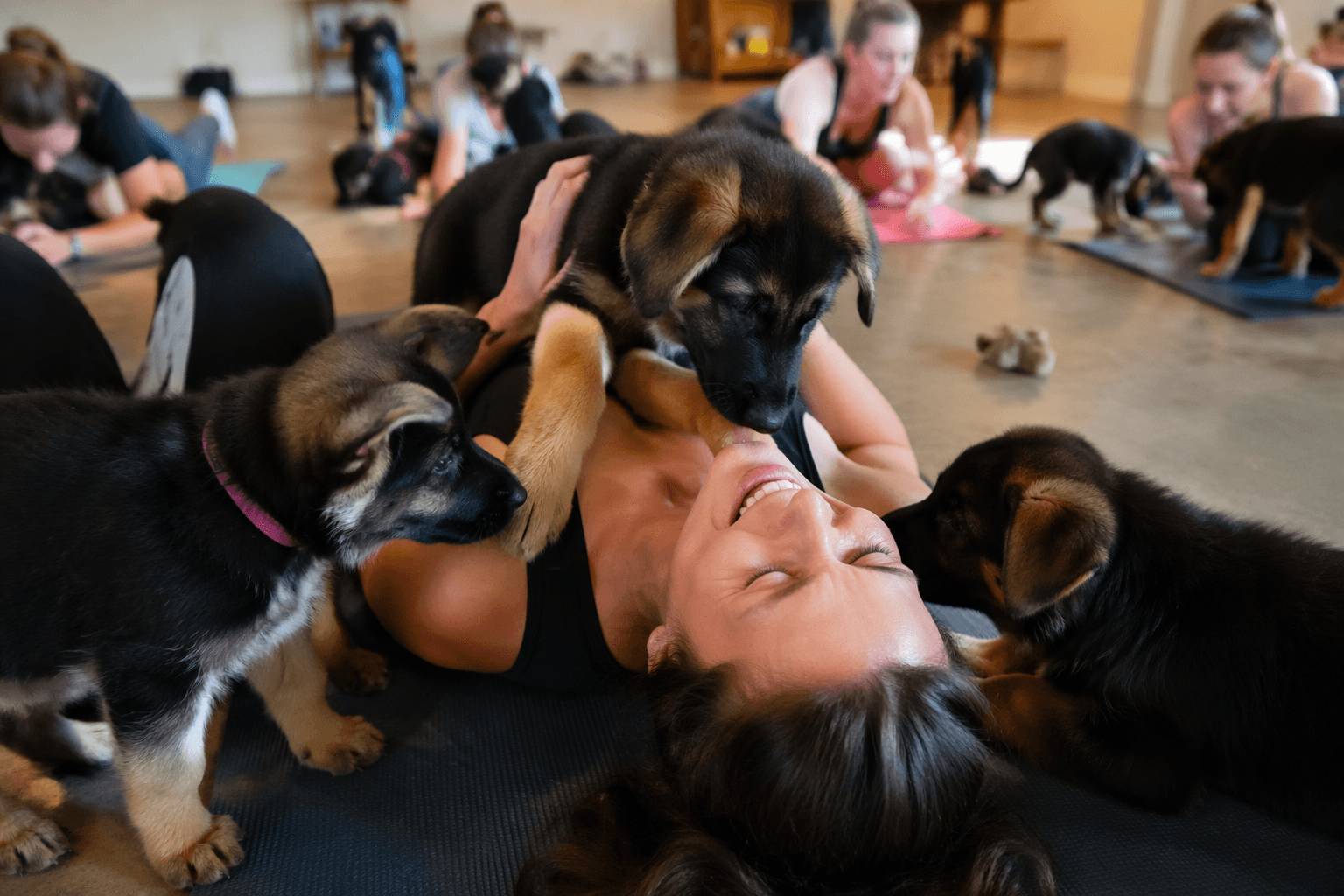
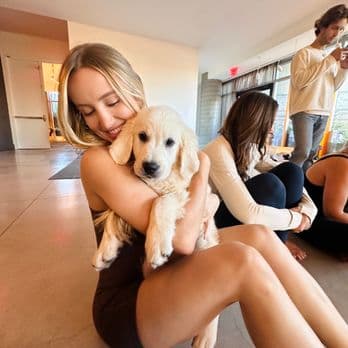
Puppy yoga, widely known in the doga community as the format that pairs breathwork and mindful movement with a litter of adoptable pups loose on the mat, crossed a threshold in early 2026. National Puppy Day on March 23 became a flashpoint: studios and rescues staged special classes and adoption-oriented events that drew broad social-media attention, accelerating what was already a fast-moving trend. The format has grown from niche pop-up events to dedicated studios and widespread classes across the United States, and in 2026 it remains a popular way to reduce stress, boost mood, and support animal welfare through adoption-focused sessions. For anyone already practicing doga, the moment felt less like a trend story and more like confirmation of what the community has argued for years: shared movement with dogs is not a gimmick. Whether it holds up as a responsible practice, though, depends entirely on who is running the room.
The Science Is Real, Within Limits
The wellness case for puppy yoga rests on solid, if still-developing, research. Research has consistently shown that interacting with animals, particularly puppies, can trigger the release of oxytocin, the "love hormone," and a study in The Veterinary Journal found that even brief interactions with dogs can significantly elevate oxytocin levels in humans. Several studies confirm that just 30 minutes around animals like puppies decreases stress hormones like cortisol while increasing production of feel-good neurochemicals such as oxytocin, dopamine, and serotonin. Yoga alone offers proven advantages: reduced stress and anxiety, improved flexibility, better mood, lower blood pressure, and enhanced mindfulness, and adding puppies amplifies these effects through animal-assisted therapy.
YogaJala's Anna Sugarman situates the trend within that evidence-based framework: animal interaction reduces cortisol and increases oxytocin, and when combined with yoga's breathwork and mindful movement, those physiological effects can compound into measurable stress reduction. Participant testimonials reinforce the data point that feels hardest to quantify: puppies make the practice feel accessible and less intimidating for beginners who might never walk into a traditional studio. That accessibility angle is part of why the format scales so well as a community event.
The Rescue Partnership Model
Studios have been forming regular partnerships with rescues so each event can serve both wellness and adoption goals, and these partnerships appear to be a primary driver of the format's growth because they provide a structured environment for socializing puppies while giving attendees a tangible adoption or fundraising benefit. Three million dogs are waiting for homes, and that number sits at the heart of why National Puppy Day has grown from a niche pet-lover observance into a full-scale community mobilization involving shelters, wellness studios, and community centers.
In 2026, classes often occur weekly at dedicated studios or as pop-ups at community spaces, with costs ranging from $40 to $75 and some events donation-based to benefit rescues. The dual-purpose structure matters: when a class is tied to a rescue, there is institutional pressure on the organizer to handle animals responsibly, because the rescue's reputation is on the line alongside the studio's.
Where It Goes Wrong: Welfare Concerns You Cannot Ignore
The boom has a shadow side, and the doga community needs to own that conversation rather than leave it to outside critics. An undercover investigation found that young pups, some as young as six weeks old, were denied essential needs such as sleep and water during puppy yoga sessions. Classes often took place in hot rooms, for extended periods, with no option for the puppies to leave if overheated or stressed. An ITV News reporter found that young pups were being forced into poses and not given regular water or allowed to sleep.
Animal welfare advocates frame the problem clearly: RSPCA's Esme Wheeler stated that "there is nothing in that environment which I would consider to be beneficial to the health, the welfare or the behavioral lifelong development of these animals" in the context of poorly run events. YogaJala's Sugarman frames the welfare debate as central to the trend's future: supporters point to socialization and adoption benefits; critics worry about overstimulation or exploitation if events are not properly run. Both concerns are legitimate, and neither cancels the other out.
How to Vet a Class Before You Book
Not all puppy yoga is created equal. Before paying a deposit, run through these criteria:
- Age and health requirements: Ethical operators require that puppies are at least eight weeks old, healthy, and assessed for temperament before participating in any class. Ask the organizer directly what the minimum age and vaccination requirements are. No legitimate instructor should be evasive about this.
- Staff-to-puppy ratio and supervision: When done responsibly, trained staff and volunteers must actively monitor puppies throughout, removing any animal that appears overstimulated or uncomfortable and placing it in a quiet rest space. Ask how many handlers will be present and what their background is.
- Consent-based handling: Certified doga instructors, often yoga teachers with animal behavior training, emphasize consent: if the dog walks away or shows stress signals, the session stops. This is the single most important marker of a well-run class.
- Session length and class size: Short sessions with capped headcounts are non-negotiable. YogaJala's reporting flags both overexposure and overcrowding as top welfare risks. Ask for the session duration and maximum participant number before booking.
- Rescue or welfare partnership: A verified partnership with a named rescue organization is the clearest signal that animal welfare is built into the event's structure, not treated as an afterthought.
Red Flags That Should Send You Elsewhere
Walk away from any class that:
- Uses puppies younger than eight weeks or cannot confirm vaccination status
- Allows or encourages forced poses, picking up resistant animals, or posing dogs for photos against their will
- Has no visible rest area or quiet space where puppies can decompress
- Runs sessions longer than 60 minutes without documented breaks for the animals
- Packs more participants onto the floor than handlers can reasonably supervise
- Cannot name the rescue or breeder supplying the animals and explain the sourcing process
A Consent-Based At-Home Beginner Sequence
If you practice doga at home with your own dog, the same principles apply. The goal is shared presence, not performance. Your dog is a participant, not a prop.
1. Ground pose (Savasana invitation): Lie flat in savasana and let your dog approach on its own terms.
Do not call or coax. If your dog settles near or on you, rest one hand lightly on its side and synchronize your breathing to its rhythm. If your dog wanders off, stay in savasana anyway. Five minutes.
2. Seated forward fold with contact: Move into a gentle forward fold.
Let your dog sniff and investigate. If it settles in front of you, maintain soft contact with one hand on its back. The contact is secondary to your breath; deepening the fold matters more than holding the dog in place. Two to three minutes.
3. Puppy pose (Anahatasana) mirroring: Drop into puppy pose.
Dogs often mirror this posture instinctively. Make eye contact if your dog offers it; the oxytocin exchange documented in peer-reviewed research is triggered specifically by mutual gaze. Hold for four to six breaths.
4. Gentle side stretch with proximity: Move into a seated side stretch.
Your dog does not need to be touching you. Proximity is enough. Resist the urge to reposition your dog; let it choose its spot.
5. Closing rest: Return to savasana.
Keep one hand available but passive. End the session when your dog moves away, not on a timer.
The sequence takes fifteen to twenty minutes and requires nothing from your dog except its willingness to be in the same room. That willingness is the whole point.
The Road Ahead
YogaJala concludes that the trend is likely to continue growing as long as studios and rescues can demonstrate responsible animal handling and clear adoption or welfare outcomes, and suggests the future of puppy yoga will depend on standardized best practices and stronger coordination with animal-welfare groups so the format can scale without harming the animals it depends on. That is the right framing. The science supports the human wellness benefits. The adoption pipeline gives the format real community value. What it still lacks is industry-wide standards that make the vetting criteria above unnecessary because every operator is already meeting them. Until those standards exist, the due diligence falls on you.
This article was produced by Prism’s automated news system from verified source data, official records, and press releases, then run through automated quality and moderation checks before publishing. The system is built and supervised by the people who set the standards it runs under. Read our full AI policy.
Did this article answer your question?