Vet-Approved Doga Guide Helps Dog Owners Practice Yoga Safely
A vet-authored guide to doga breaks down two distinct practice styles and the real benefits — socialization chief among them — with safety steps your dog will thank you for.

Incorporating your dog into your yoga routine, known as Doga, offers a unique opportunity to strengthen your bond while promoting physical and mental well-being for both of you." That's how Dr. Duncan Houston BVSc opens his Ask A Vet guide to doga, and it sets the tone for what the resource is trying to do: give pet owners and practitioners a grounded, vet-authored starting point for a practice that's still earning its place in mainstream dog wellness.
Doga sits at an interesting intersection. It's not just letting your Lab wander onto your mat while you hold warrior two. The Ask A Vet guide describes it as a synthesized approach that combines "veterinarian guidance, training considerations, and practical pose sequences to help owners introduce low-impact movement safely with companion dogs." That framing matters, because it tells you this isn't wellness fluff — at least not the version Dr. Houston is presenting.
What doga actually is
At its core, doga is a blend of traditional yoga practices with the companionship of your dog. Dr. Houston is clear that your pup doesn't need to nail a vinyasa for it to count: "While your pup may not perform poses, their presence adds a layer of connection and relaxation to your routine." That's the baseline definition, and it's a useful anchor when you start to understand that doga actually comes in two meaningfully different forms.
Two distinct types — and they're not interchangeable
Bark & Whiskers draws the clearest line between the two approaches, and it's worth understanding which one you're signing up for before you book a class.
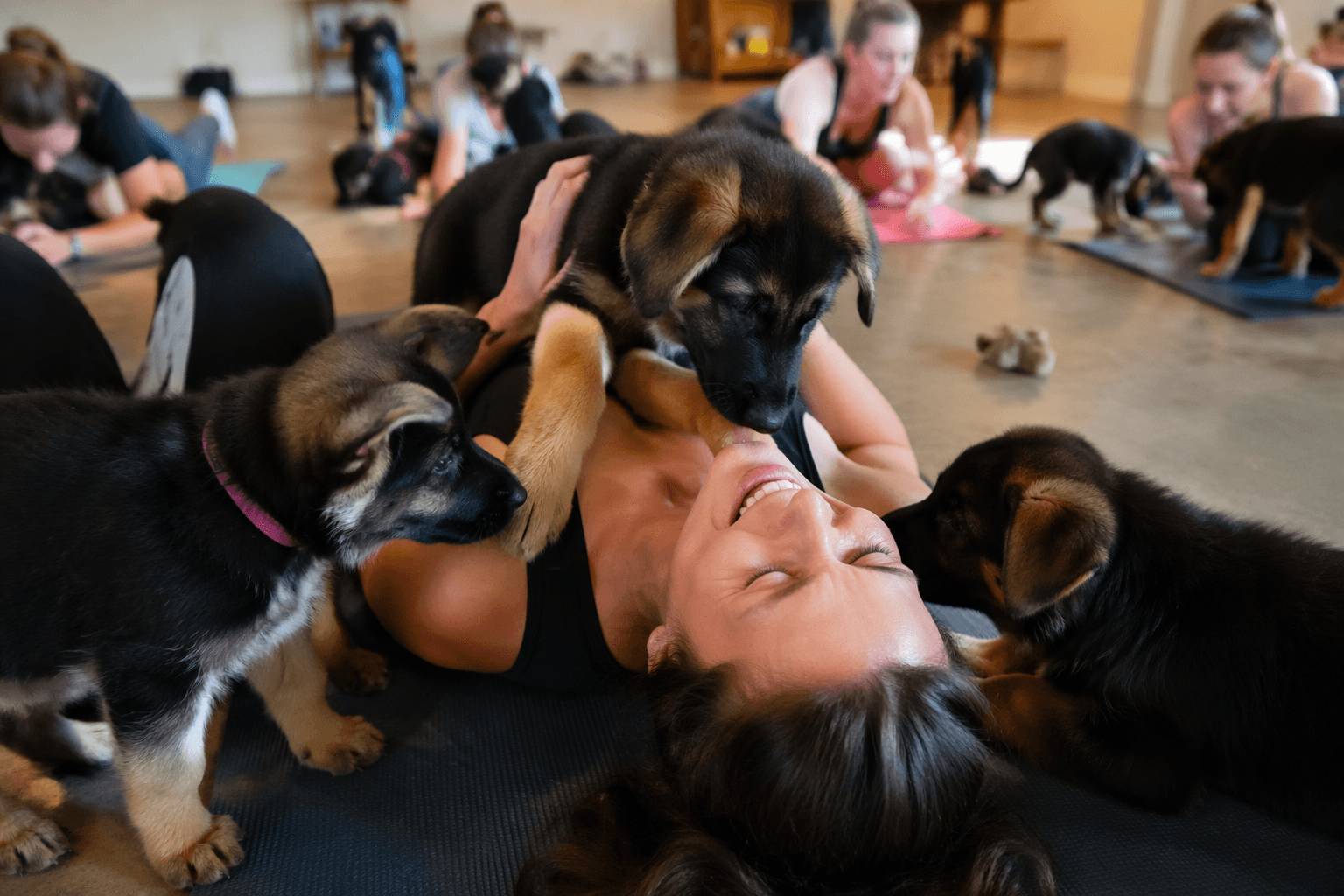
The first type is essentially socialization yoga. You bring your dog to class, they stay by your side or move around and interact with other dogs and people, and the yoga practice is yours alone. As Bark & Whiskers describes it, "this type of doga is geared more toward socialization, allowing your pup to be acquainted with other pets and people while being immersed in the calming yoga atmosphere." Your dog isn't performing anything. They're absorbing the environment.
The second type is hands-on and more structured. Here, you actively guide your dog into stretches and movement. Bark & Whiskers gives a concrete example: the chair pose, where you lift your dog's two front legs in the air while they sit on their back legs. It's the kind of thing that requires your dog to be comfortable with handling, patient enough to be positioned, and ideally already familiar with the space. This is the form that starts to blur into therapeutic movement work, and it's where the vet-guidance component of Ask A Vet's approach becomes most relevant.
Where the benefits are clear — and where they're debated
Ask A Vet's guide frames doga as promoting both physical and mental well-being, and given that it's authored by a BVSc, that claim carries some weight. But it's worth being honest about where the evidence is solid and where it's still thin.
The clearest, most consistently supported benefit is socialization. Bark & Whiskers puts it plainly: "Traditional yoga provides plenty of whole-body benefits, but for dog yoga, the benefits are more related to socialization." Doga allows your dog to acclimate to new places, new people, new stimuli, and unfamiliar dogs — all in a calm, low-stimulation environment that's designed to reduce anxiety rather than amplify it. That's genuinely useful for dogs who struggle in novel situations or react to handling.
The handling piece is especially worth calling out. According to Daily Paws, as cited by Bark & Whiskers, "another advantage of doga is it allows your dog to be more tolerant when they are being touched or handled, which can be an advantage during vet checkups and grooming sessions." If your dog is reactive at the vet or turns into a wriggling nightmare at the groomer, regular doga practice that involves gentle guided movement and touch could meaningfully improve that.
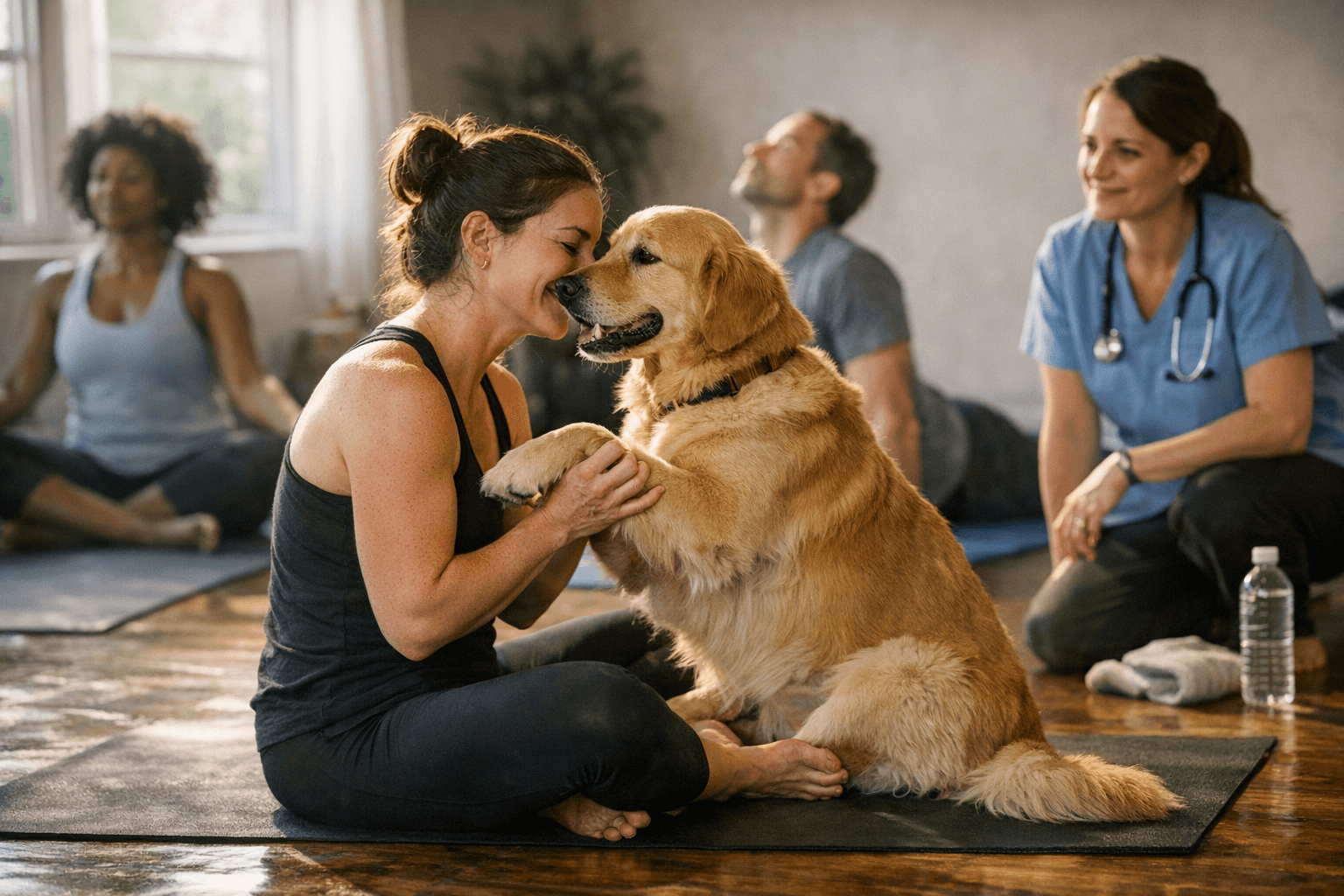
On the physical side, the picture is more complicated. Bark & Whiskers acknowledges that "there's still some speculation as to what dog yoga brings to the table, although some experts believe that canines are already reaping the benefits of yoga during their usual movements." The example they give is worth sitting with: poses like downward dog and puppy pose are literally named after canine movement patterns. Dogs may already be doing the functional equivalent of these stretches in their daily routines.
That said, there is a category of dog where intentional stretching appears to offer real value: senior dogs and those dealing with joint pain or musculoskeletal problems. Regular stretching exercises targeting the shoulders, hips, and back are specifically noted as potentially beneficial for these dogs. The active form of doga, with its guided stretches and low-impact movement emphasis, maps naturally onto this population. Key target areas include shoulder flexors worked through front leg movements, and hip and back mobility, though the full stretch sequence from Dr. Houston's guide goes beyond what's been publicly detailed in available excerpts.
Getting started without making a mess of it
Both Ask A Vet and Bark & Whiskers converge on a few non-negotiable preparation steps before your first class, and they apply whether you're going the socialization route or the active participation route.
- Confirm the studio allows dogs before you show up. Not every studio that advertises doga has thought through the logistics, and showing up with a dog who wasn't expected is a bad start for everyone.
- Familiarize your dog with the space before the session starts. A quick exploratory sniff of the room before mats go down and other dogs arrive makes a real difference in how settled your dog will be during practice.
- Watch for signs of discomfort throughout. Your dog can't tell you when something feels wrong, so you need to be reading their body language continuously, especially during any hands-on guiding into stretches.
- Bring treats and use them. Positive reinforcement is the mechanism that makes the handling and positioning aspects of active doga work. Without it, you're just wrestling with your dog on a mat.
The Ask A Vet guide's framing of "low-impact movement" is the guiding principle here. Nothing in doga should be forced. If your dog is stiff, reactive, or simply not having it, that's information worth acting on, not overriding.
A note on the vet-approved framing
It's worth being precise about what "vet-approved" means in this context. The Ask A Vet guide is authored by Dr. Duncan Houston BVSc, and it's positioned as a desk guide for both pet owners and practitioners. That's a meaningful credential. What it isn't, at least based on available material, is a statement of widespread veterinary consensus or a claim backed by controlled clinical trials. The guide synthesizes veterinarian guidance and practical experience into a usable framework for safe practice. Think of it as a well-informed starting point from a qualified vet, not a clinical endorsement from a medical body.
For dogs with existing health conditions, especially the senior dogs and joint-pain cases who stand to benefit most from the stretching component, a conversation with your own vet before starting active doga is the move. Dr. Houston's guide is designed to help you practice safely, and part of safety is knowing your individual dog's limitations before you start guiding them into a chair pose.
Doga won't replace a physiotherapy program for a dog with serious musculoskeletal issues, and it's not going to transform a socially anxious dog overnight. But as a low-pressure way to build tolerance to handling, reduce reactivity in novel environments, and add intentional movement to your shared routine, the case for it is solid enough to be worth exploring, especially with a vet-authored framework guiding the approach.
This article was produced by Prism’s automated news system from verified source data, official records, and press releases, then run through automated quality and moderation checks before publishing. The system is built and supervised by the people who set the standards it runs under. Read our full AI policy.
Did this article answer your question?