Ben Sharp's touring kit shows the rise of hybrid drum rigs
Ben Sharp’s Yungblud rig is a road-ready blueprint: duplicated snares, trigger backup, MIDI routing and tactile monitoring keep the show alive when gear fails.
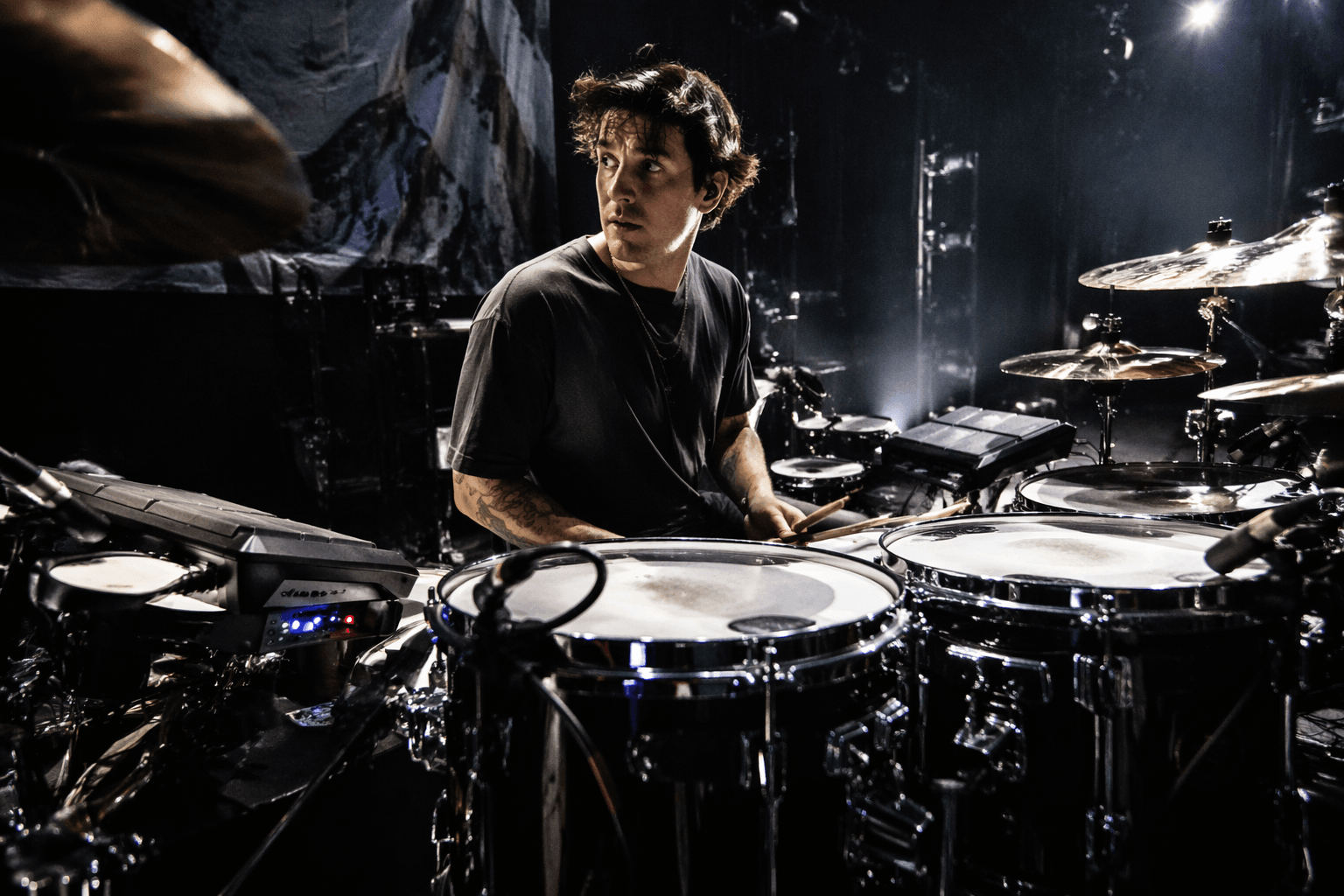
Ben Sharp’s touring setup for YUNGBLUD is built like a survival plan, not a display piece. The Gretsch shell pack, the duplicated snares, the trigger stack and the tactile monitoring all point to the same priority: keep the show moving when something goes wrong and still cover the huge range a modern arena production demands.
A touring kit designed around backup, not just sound
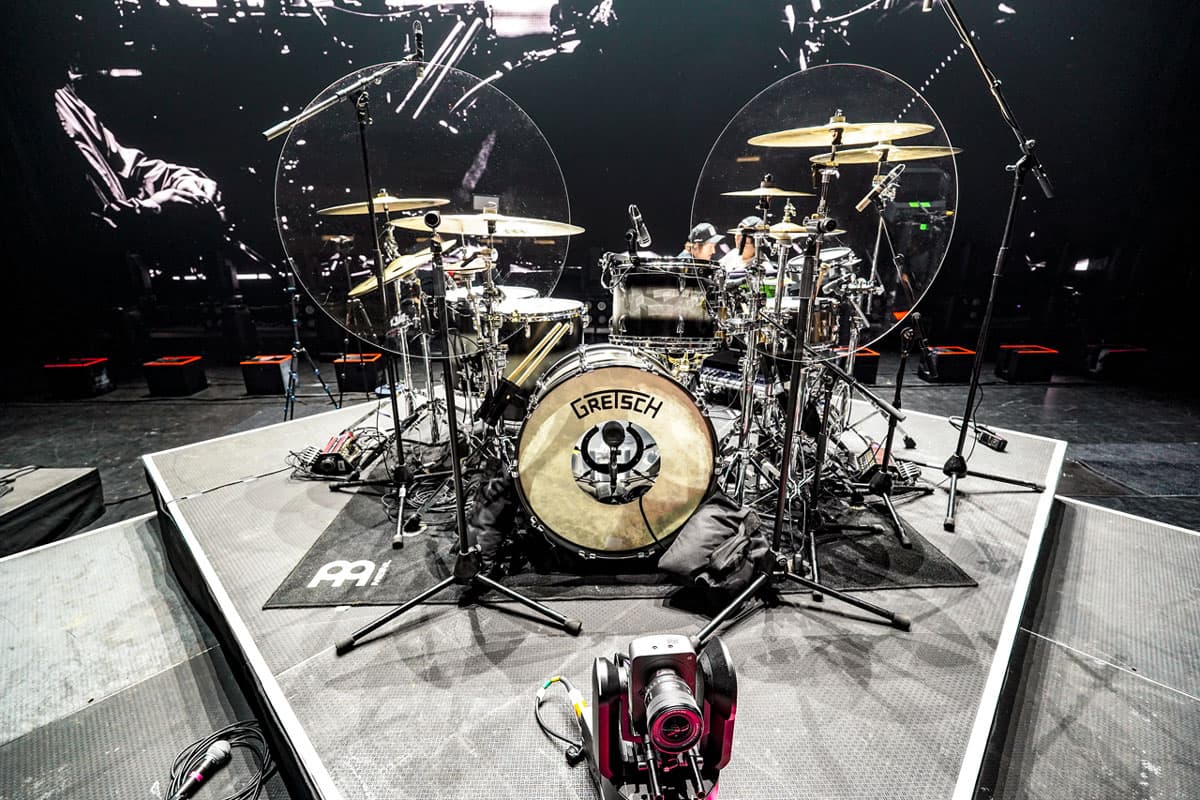
The acoustic core starts with a Gretsch USA Custom shell setup that includes a 9x13 rack tom, 16x16 and 16x18 floor toms, and a 16x22 kick. Sharp also carries two Gretsch 6.5x14 snares, with a Bell Brass drum in the A position and a phosphorus bronze drum as the B snare and spare. That second snare is the clearest sign of how the rig works in practice: one voice for the main part, another ready if the first one fails or if the song needs a different attack.
That logic runs through the rest of the hardware. DW 9000-series stands and pedals form the backbone, giving the rig the same kind of stability that the shell choice gives it. Sharp is not building around one perfect sound, he is building around continuity, with enough overlap in the setup to absorb a broken head, a damaged drum, or a last-minute change in the set.
Shells, cymbals and the acoustic voice
Sharp’s cymbal world is equally broad. Meinl Byzance Traditional hi-hats sit alongside crashes, rides, effects and artist-concept hats, which tells you that the cymbal plan is meant to stretch across textures, not just keep time. In a production like YUNGBLUD’s, that matters because the drummer is covering both hard impact and color, often within the same song.
The breadth of the acoustic kit also makes the touring logic clearer. A 13-inch rack tom and two floor toms give the set enough range for big choruses and low-end movement without leaning on excessive tom swapping between songs. That kind of layout is common in high-pressure live work because it keeps the player’s hands and feet in familiar places while still covering a wide set of sounds.
The hybrid layer is where the rig becomes modern
The most revealing part of Sharp’s setup is the electronic section. He uses Roland dual snare and kick triggers, Roland PDX100 and KT10 pads, and two SPD-SX Pro units, one for the main job and one as redundancy. That is not decoration, it is insurance, and it shows how far live drumming has moved toward hybrid systems where samples, triggers and acoustic drums are expected to work as one instrument.
The routing is just as deliberate. Sharp runs signals through a Radial Catapult over Cat6, uses an iConnectivity MioXL for MIDI, relies on Porter & Davies BC2rm tactile monitoring and throne support, and keeps a Boss FS6 and Morley hum eliminator in the chain for switching and grounding issues. Put together, that is the anatomy of a rig built to survive venue changes, cable problems and the kind of electrical noise that can appear in large touring productions.
For working drummers, the key point is not simply that Sharp uses electronics. It is that every electronic job has a physical fallback or a utility layer around it, whether that means duplicate SPD-SX Pro units, tactile monitoring, or hardware that solves switching and grounding problems before they derail the set.
What the brand pages add to the picture
Gretsch says Sharp has been a Gretsch artist since 2021, and identifies him as Leeds-based and tied to YUNGBLUD. The same artist page also lists a current kit setup that includes a 24x14 kick and the same 14x6.5 snare size, which shows how a touring spec can evolve without changing the underlying approach. The point is not that one page is right and the other is wrong, but that a working drummer’s live setup can shift from one production to the next.
Meinl’s artist page adds another layer to Sharp’s profile. It describes him as a UK-based session drummer who has recently worked with YUNGBLUD, Hannah Trigwell and Kelsey Gill, and says he teaches from his home studio in Leeds. That broader session and teaching background fits the rig itself: this is a player who needs a setup flexible enough for different artists, not a one-band museum piece.
Why the IDOLS era demands this much hardware
The scale of the YUNGBLUD campaign explains why a rig like this makes sense. Official Charts says IDOLS, YUNGBLUD’s fourth studio album, was released on 20 June 2025 and gave him a third consecutive UK No. 1 album. YUNGBLUD’s own store says the album reached number one in seven countries, which helps explain the production weight behind the live show.
The campaign was still active in 2026, with an Australian leg in January and later U.S. dates in July. A Meinl drum-cam from Munich on 14 October 2025 also captured Sharp performing “Hello Heaven, Hello,” confirming that this hybrid Meinl-driven setup was already working on the road during the IDOLS run. In that context, the rig is not overbuilt, it is appropriate for a show that has to travel, expand and keep sounding the same city after city.
Sharp’s kit is a clear answer to a very modern touring problem: how do you keep a big, electronic-heavy show feeling live when so much can go wrong between soundcheck and encore? His answer starts with acoustic shells and ends with fail-safes, and that is exactly why the rig reads like a blueprint for the way working drummers are carrying arena productions now.
This article was produced by Prism’s automated news system from verified source data, official records, and press releases, then run through automated quality and moderation checks before publishing. The system is built and supervised by the people who set the standards it runs under. Read our full AI policy.
Did this article answer your question?