Carolina Crown and Bands of America link student training to drum corps excellence
A weather move into Worthen Arena still put BOA campers beside Carolina Crown, turning one preview night into a real lesson in drum corps technique and culture.
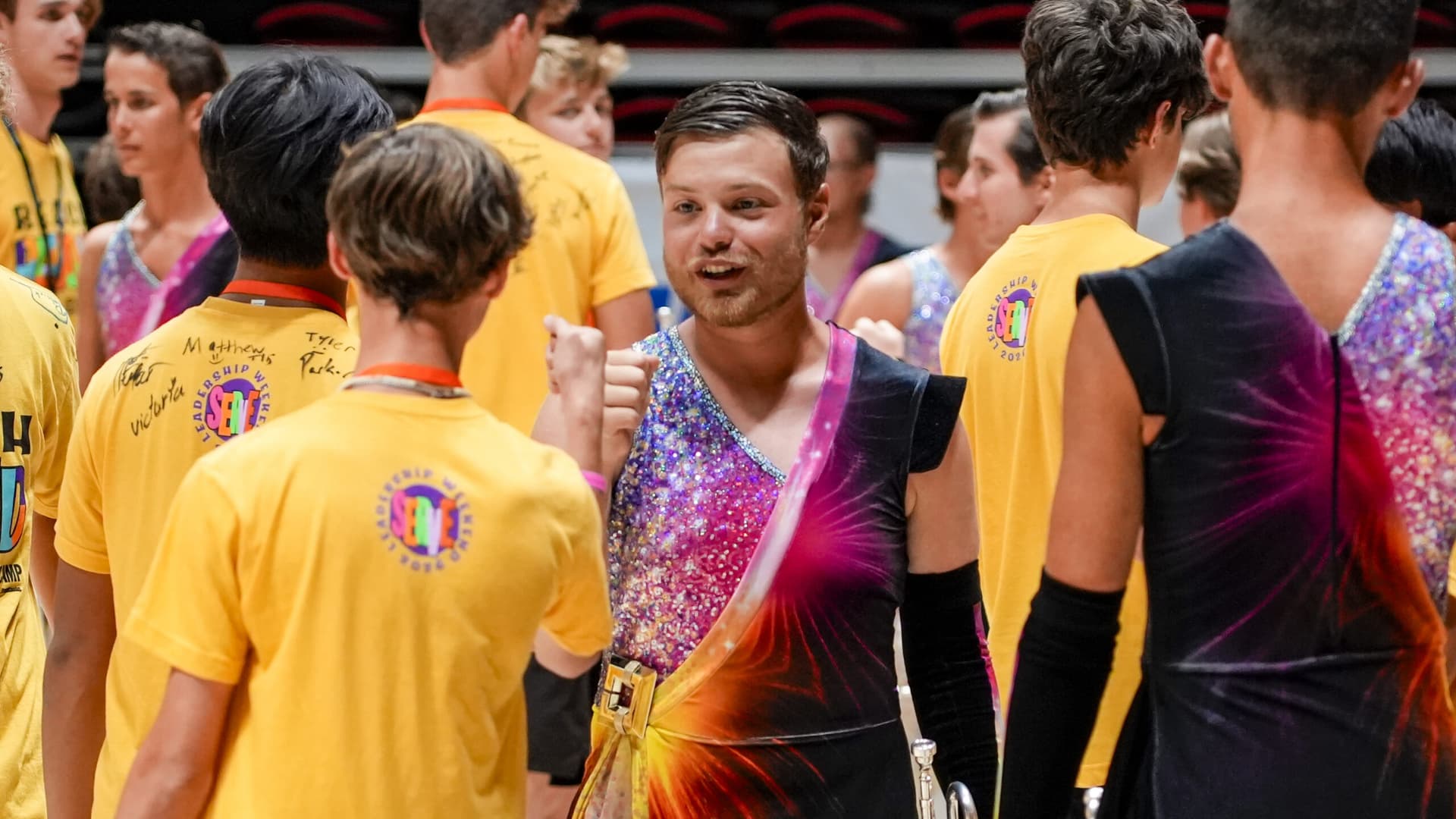
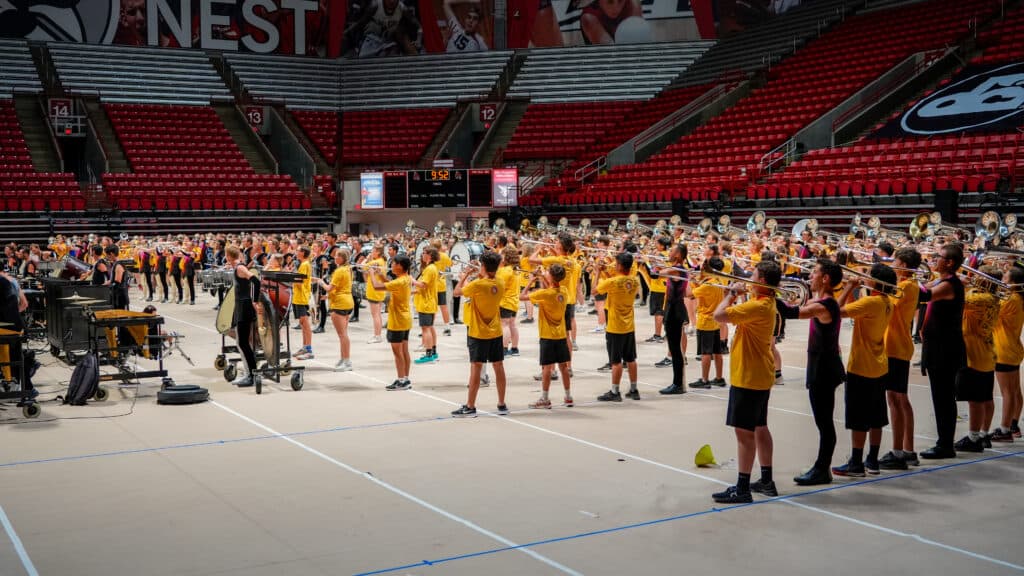
Carolina Crown did not just share a field with student musicians at Ball State University’s Worthen Arena. It gave them a live look at how elite drum corps reps, rehearsal culture, and performance pressure translate into something younger players can actually use back home. Even after weather pushed the DCI Tour Preview indoors, the joint encore with Bands of America Summer Camp students still landed as the kind of moment that teaches drummers what corps-level standards feel like in real time.
The camp was built like a feeder, not a field trip
The useful part of the BOA Summer Camp is its structure. It ran from June 22 through June 27 on the campus of Ball State University, and it was not limited to a single section or a one-off clinic. Students could plug into marching band, marching percussion, color guard, drum majors, music production, concert band, and jazz band, which makes the week feel more like a training pipeline than a camp with a performance attached at the end.
That matters for drummers because marching percussion is not treated as a side note here. It sits inside a broader ensemble ecosystem, where listening, timing, body control, and ensemble awareness all have to line up before anyone can move a show forward. If your school program is trying to raise the floor on stick control, tempo responsibility, and rehearsal habits, this is the kind of environment that shows students how those habits operate beyond the band room.
Natalia’s take on the experience gets to the point quickly. She said the week helped her connect with other students, learn from the staff, and prepare to carry those lessons back to her home program. That is the real payoff for educators too: students leave with more than a memory of a big show. They leave with a standard they can bring back to their own battery, front ensemble, or leadership group.
Why Carolina Crown makes the lesson stick
The Crown piece works because it is not random. DCI documented this collaboration in 2025 as part of a recurring partnership among Carolina Crown, Bands of America, Music for All, and Yamaha, with the week of clinics ending in a field performance alongside Crown at the DCI Tour Preview. That repeat structure gives the camp credibility. It is not a marketing stunt or a one-night cameo. It is a built-in bridge between student development and drum corps excellence.
You can hear that bridge in the way current Crown members talk about the camp. Harper Holewinski said she attended the camp in previous years before deciding to march drum corps in 2026. Holly Dexter said several of the skills she uses now at Crown started there. Those are the kinds of details that matter in marching percussion, because they point to something bigger than talent identification. They show a system that teaches students how to work, how to absorb critique, and how to recognize what top-tier ensemble expectations actually sound and feel like.
That feeder effect is easy to miss if you only look at the final performance. Several current Carolina Crown members were BOA campers themselves, which suggests a genuine recruitment and development pipeline. For a drummer, that is more useful than abstract talk about “excellence.” It shows a path: go from student camp, to improved school performance, to a corps audition, to a spot where the standards are much less forgiving.
The indoor move did not dull the edge
The DCI Tour Preview itself was shifted indoors to Ball State University’s Worthen Arena because of an unpredictable weather forecast, and DCI kept the event in a non-competition format with no scores awarded. That could have made the night feel smaller. Instead, it sharpened the focus. Without a score sheet hanging over everything, the encore with the BOA students and Carolina Crown became about execution, not placement.
That is especially relevant for percussionists. A non-competition environment strips away the easy habit of chasing adjudication language and puts attention back on fundamentals: sound quality, timing, balance, and confidence under changing conditions. Moving the preview indoors was the kind of logistical pivot every marching musician eventually has to learn to handle, whether it is weather, travel, or a last-minute rehearsal change.
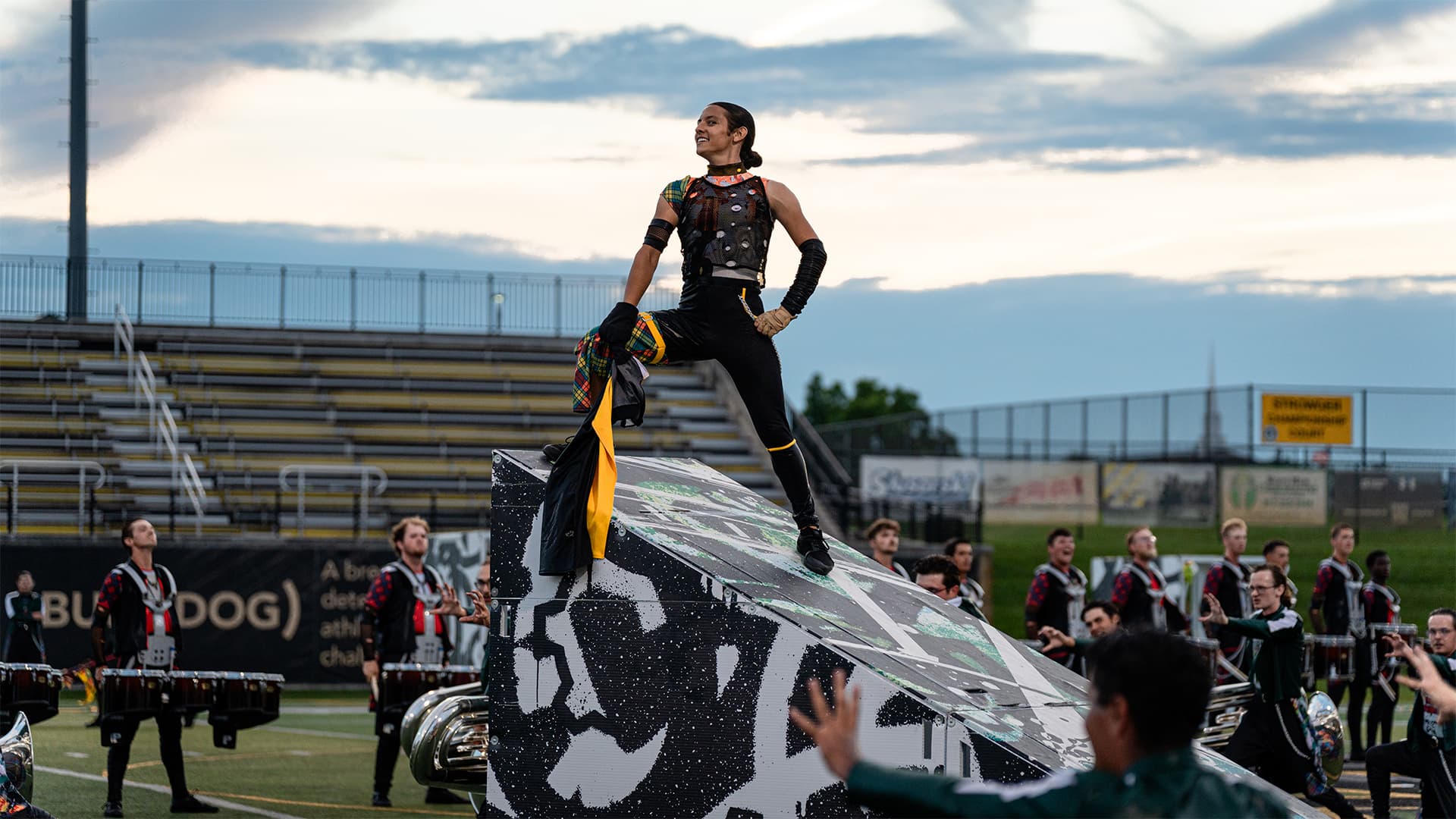
The setting also tied into Crown’s current production, The Doors of Perception. Carolina Crown says the 2026 program is inspired by Aldous Huxley and William Blake, with a cosmic visual concept built around shifting doors that represent filtered and unfiltered perception. Even if you are not following the visual design side of the show, the idea fits the education model here: students are being shown a different frame for what performance can look like when technique, staging, and musical intention are all locked together.
The bigger pipeline is the point
Carolina Crown’s own story reinforces why this partnership keeps mattering. The corps says it was founded in 1988 and that it directly impacts thousands of young people each year through two active programs and three live events. That is the scale that turns one camp into part of a larger ecosystem, not a standalone summer memory.
DCI’s 2026 tour schedule adds the wider backdrop. The season stretches across more than 75 events in more than 30 states over roughly six weeks, all building toward the World Championships in August. In that context, the BOA campers at Worthen Arena were not watching from the sidelines. They were being folded into the same performance culture that drives the rest of the summer.
That is why the indoor move did not flatten the story. The forecast changed the venue, but not the value. The students still got the most important part of the night: a close-up look at how drum corps excellence is built, then a chance to step into it and play.
This article was produced by Prism’s automated news system from verified source data, official records, and press releases, then run through automated quality and moderation checks before publishing. The system is built and supervised by the people who set the standards it runs under. Read our full AI policy.
Did this article answer your question?