Chimpanzees drum with rhythmic beats to communicate across rainforest distances
Drumming may be older than human music, and chimpanzees are giving that idea a rainforest test. Their tree-root beats travel over a kilometre and vary by subspecies, sharpening the debate over rhythm, learning and evolution.
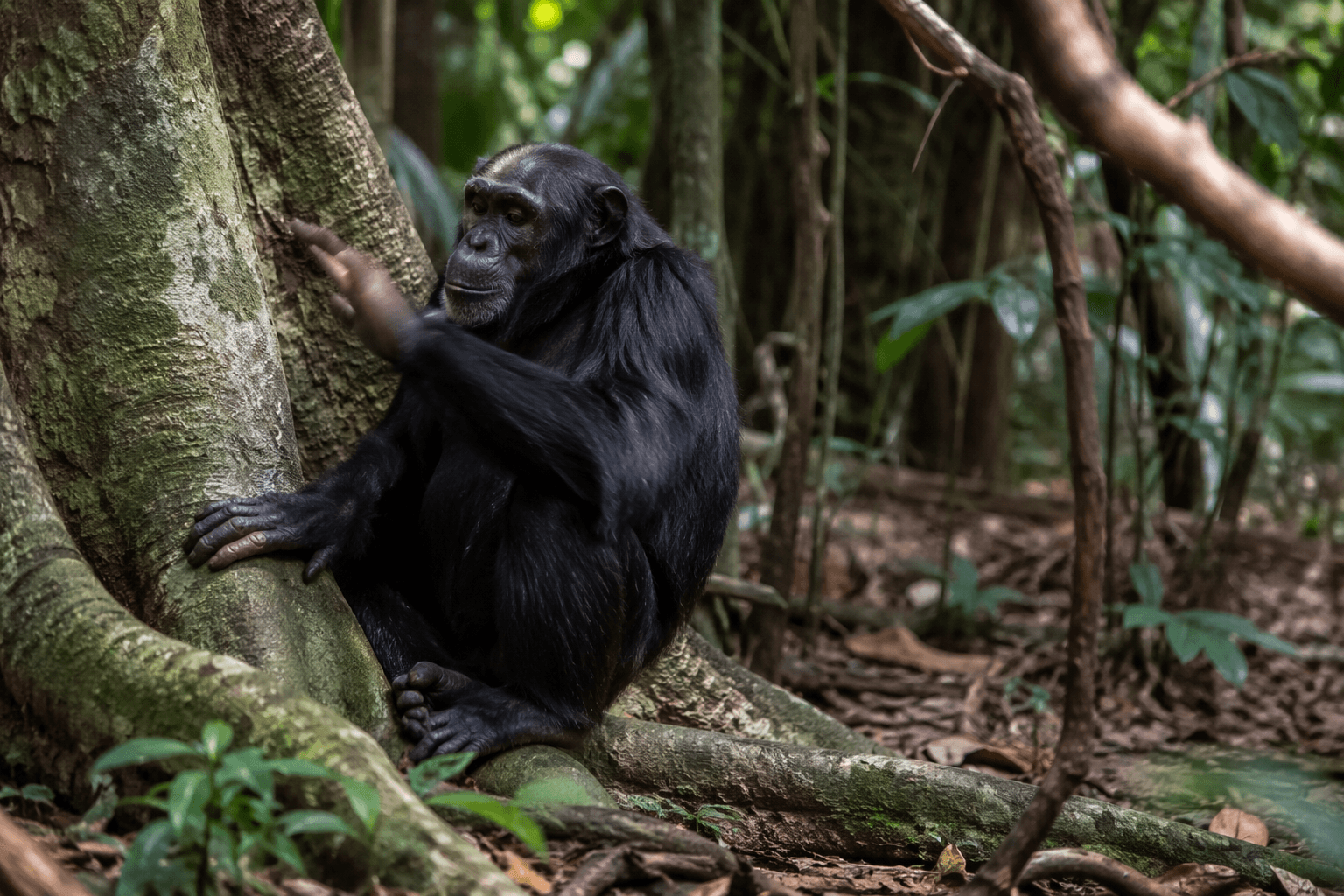
Drumming may predate humans as music, and chimpanzees are giving that idea a hard, rainforest-sized test. A 2025 study in Current Biology found that male chimpanzees drum on buttress roots with non-random timing, and two subspecies use distinct tempos and techniques to send their beats across more than a kilometre of forest. For drummers, the real takeaway is that groove and timekeeping may not be uniquely human after all, but part of a much older communication system.
The timing of the finding also matters. World Chimpanzee Day is observed every July 14, and some observances tie that date back to July 14, 1960, when Jane Goodall first stepped into the field site that became central to her chimpanzee research. That date keeps chimp behavior in the public eye, but the new drumming work pushes the conversation well beyond celebration and into the deeper question of where rhythm itself came from.
What the chimp beat is doing
Male chimpanzees are the drummers in this story, and they are not tapping on anything at random. They use tree roots, especially buttress roots, as natural drums, producing low-frequency sounds that can travel more than a kilometre through dense African rainforest. That kind of reach makes the beat a practical tool for contact and coordination when sight lines disappear fast under the canopy.
The study found that the timing is non-random, which is a crucial detail for anyone thinking about groove. Two chimpanzee subspecies also use distinct tempos and techniques, so the sound is not one universal chimp pattern but a set of local styles. That variation matters because it points to behavior that changes across societies, not a fixed reflex that sounds the same everywhere.
Why the timing matters to drummers
For human players, timing is where intent becomes audible. A pulse that lands in a pattern can carry more than volume, and the chimp work suggests the same principle may be at play in the forest, where a beat can help a group stay in contact across distance. Scientists describing the behavior have called it strikingly rhythmic and deliberately timed, the kind of pulse that seems almost physical in the body as much as auditory in the ear.
Earlier research had already hinted that chimpanzees may have underlying rhythmic abilities when drumming. The new paper sharpens that hint by showing structured timing and clear differences between subspecies, which is stronger evidence than a simple observation that chimps make noise on roots. It does not turn chimp drumming into a human backbeat, but it does show that timekeeping-like behavior can exist in a communication system built for survival rather than performance.
What this means for rhythm, learning and evolution
This is where the human-music question gets interesting. A Science Magazine analysis framed the 2025 findings as evidence that chimpanzees can learn and develop different rhythms, which keeps open the possibility that rhythmic ability evolved in our shared common ancestor with chimps. National Geographic’s coverage pushed the same idea from another angle, emphasizing that chimps drum and call to communicate across long distances and can also produce complex vocalizations.
The broader comparative picture has been building for some time. Current Biology places ape drumming in the context of understanding the evolutionary origins of human rhythmic percussion, and a University of St Andrews research portal notes that rhythmic percussion is present across human cultures and has been proposed as one of the earliest evolved forms of musical expression. That makes chimpanzee drumming especially valuable, because it sits near the line between a learned cultural skill and an evolved signaling behavior.
The language question is now part of the rhythm question
Related 2025 coverage linked the drumming work not just to rhythm but to possible origins of language. That does not mean chimpanzees are speaking, but it does show why researchers are looking at more than sound alone. If timing, repetition and distance communication are already present in ape drumming, then the roots of human musical percussion and the roots of structured communication may be more intertwined than a simple human-only story allows.
That is also why comparative work across ape species matters. Studies focused on populations across Central Africa and West Africa, including places such as Uganda, Budongo Forest, Guinea and the Nimba Mountains, are helping researchers compare tempo, technique and social use across different chimp groups. The more those comparisons widen, the harder it becomes to treat rhythm as a late human invention rather than an inherited system that humans later turned into art.
The opening provocation still holds: if drumming may have roots older than human music, then the beat on a chimp buttress root is not a novelty. It is a direct clue that rhythm can carry distance, structure and intent long before it ever reaches a stage kit.
This article was produced by Prism’s automated news system from verified source data, official records, and press releases, then run through automated quality and moderation checks before publishing. The system is built and supervised by the people who set the standards it runs under. Read our full AI policy.
Did this article answer your question?