How to read drum notation and count common-time rhythms
One clear staff map can turn copy-and-copy drumming into real chart reading, so you learn grooves faster, count common time cleanly, and survive rehearsal.
The frustration usually shows up at the least glamorous moment: you are staring at a rehearsal chart, the band wants bar 17, and the YouTube cover you memorized last night will not save you. Drum notation gives the kit a map, not of pitch like piano or guitar, but of time, limbs, and surfaces, so the page tells you what each hand and foot does. Once that map clicks, common-time grooves stop feeling like guesswork and start reading like something you can walk into cold.
Learn the map first
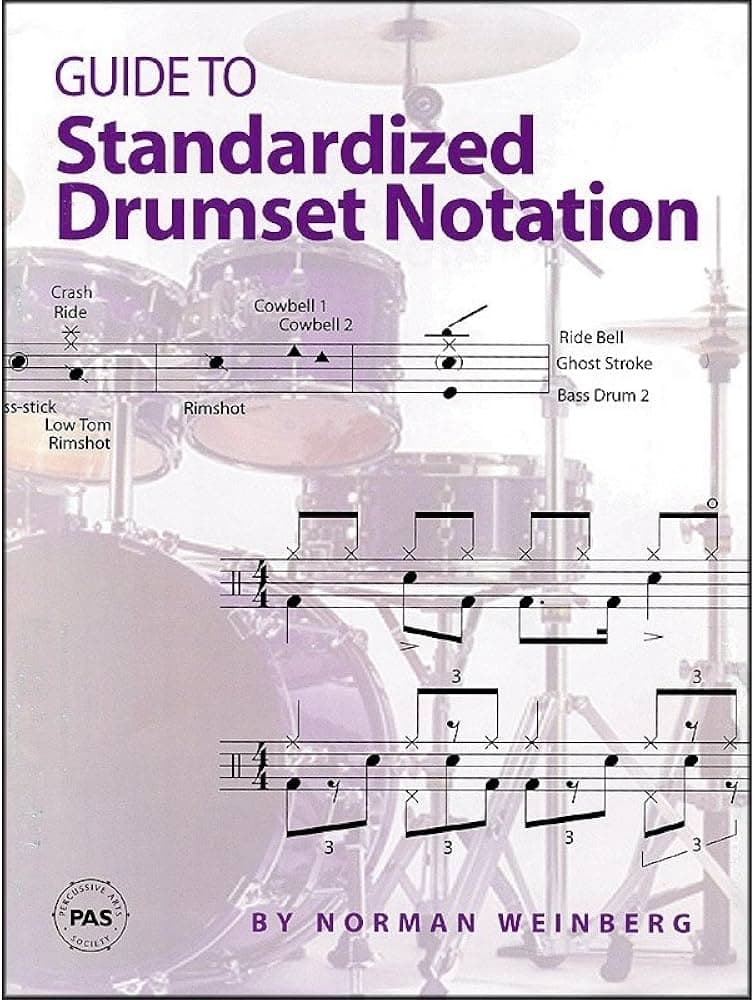
Drum-set notation usually lives on a five-line staff, and the first breakthrough is realizing that the staff is organized for coordination, not melody. The snare sits in the middle of the staff; Norman Weinberg’s guidelines specifically put it on the third space, while the bass drum sits low and cymbals and hi-hats are written higher up. Standard notation also uses x-shaped noteheads for cymbals and hi-hats, which is one of the quickest visual tells that you are no longer reading a melody line.
A lot of the confusion disappears once you connect the symbol to the limb. Hand-played parts use stems up and foot-played parts use stems down, and that simple convention helps you separate the ride hand from the kick drum or the hi-hat pedal at a glance. The page is not asking you to hear the part first and guess the rest. It is telling you where the sound lives on the kit.
Count the pulse before you chase the fill
Common-time reading gets easier when you stop thinking of a groove as a shape and start counting the subdivisions that make it up. Quarter notes mark the beat, eighth notes split it in half, and sixteenth notes divide it again, which is where fills, ghosted movement, and tighter syncopation become readable instead of mysterious. When you can count through those values, you are less likely to rush the fill at the end of a bar or drag the backbeat when the arrangement opens up.
That is where rests and ties matter just as much as the hits. A rest tells you to leave space, and a tie tells you to hold the value across the beat, both of which affect feel in common time as much as the notes you actually strike. If you have ever played a groove that sounded fine alone but fell apart with a band, the problem was often not touch. It was the count.
Decode the shorthand real charts use
Real-world drum charts rarely spell out every detail. Repeat signs tell you to play a section again, while slash notation gives you a rhythmic road map without locking you into every stick motion or voicing, which is why it shows up so often in set lists and rehearsal books. That shorthand is practical: if the chart only needs you to keep the groove moving, the notation does not waste space describing something the band does not need to overthink.
- reading x-noteheads as if they are ordinary drum notes instead of cymbals or hi-hats
- missing the difference between stems up for hands and stems down for feet
- overlooking repeat signs and bar lines, then losing the form
- treating slash notation like an empty bar instead of a timekeeping instruction
- forgetting that the bass drum is usually low on the staff while snare sits near the middle
The most common beginner misreads are usually simple, but they cost time:
Reading changes practice efficiency
Drum notation lets you learn, remember, and communicate parts without relying only on ear training or muscle memory. School of Rock’s beginner material uses the phrase language for drummers. In a rehearsal, church service, pit gig, or studio session, that matters because you can find the form quickly, mark repeats, and locate the kick pattern or accent shape before the room has moved on.
Learning by ear is still valuable, but reading a chart changes the speed of the work. Ear-only learning can leave you dependent on repetition and memory, while notation gives you a permanent visual reference for where the hi-hat opens, where the kick lands, and how the groove sits across the bar. That makes it easier to return to a song after a week away and much easier to survive the first read when nobody wants a long breakdown of the chart.
Why the system looks the way it does now
Drum writing did not always look as standardized as it does now. Historic drum manuals used different conventions, including up-down notation that indicated hands differently above and below the staff, which shows how the system evolved as drummers needed a way to write coordination and texture, not just pitches. Modern drum-set notation has settled into a more consistent map, especially for snare, bass drum, cymbals, and hi-hat, because players need to identify the kit voice, the rhythmic value, and the articulation fast enough to use it in real playing situations.
This article was produced by Prism’s automated news system from verified source data, official records, and press releases, then run through automated quality and moderation checks before publishing. The system is built and supervised by the people who set the standards it runs under. Read our full AI policy.
Did this article answer your question?