Vic Firth guide clarifies concert snare tuning and head choices
The concert snare is not a drum-set snare in a tuxedo. Vic Firth’s guide points straight at the real variables: head choice, tuning, and snare response.
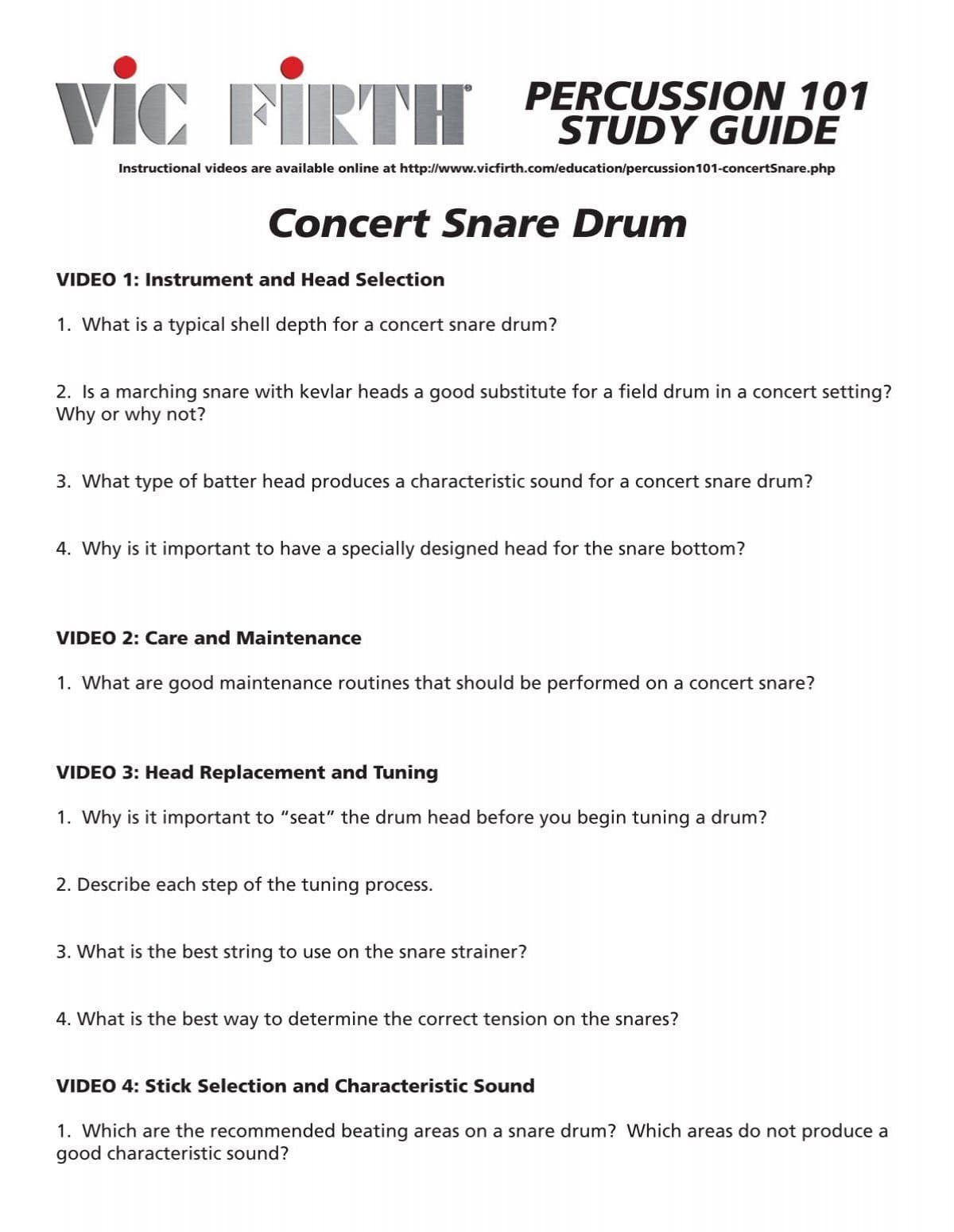
A concert snare drum asks for clean response at soft dynamics, articulate rolls, and enough control to sit inside an orchestral texture without taking over. Vic Firth’s Percussion 101 treats it as its own discipline, with its own choices in instrument setup, head selection, care, head replacement, and tuning. Habits that work on a drum-set snare often get in the way of the sensitivity, clarity, and blend the orchestral setting demands.
The first mistake is assuming projection is the point
The Percussion 101 questions get right to the pressure points: typical shell depth, whether a marching snare with Kevlar heads can stand in for a concert field drum, what batter head produces a characteristic concert sound, why the snare-side head matters, and why the head should be seated before tuning. A marching snare built for volume and cut may be powerful, but concert playing values low-dynamic response, articulate rolls, and control inside an orchestral texture.
That is where drum-set instincts can fail. On a kit, many players learn to accept a snare that speaks aggressively and rewards backbeat energy. In concert playing, that same setup can feel stiff, overly bright, or reluctant to speak at low volume. Black Swamp Percussion describes concert snares as precision instruments built for power and pairs that with advice on how to play soft dynamics on snare drum.
The bottom head is not just the underside of the top head
The snare-side head is part of the response system, not a mirror image of the batter. That distinction is easy to miss if your only reference point is drum-set maintenance, where the bottom head can seem like a secondary concern. In concert snare setup, the batter head, snare-side head, shell, and snare mechanism all have to work together, or the wires will not respond with the crispness orchestral parts require.
That is why a specially designed bottom head matters so much. If the snare-side head is too heavy, too loose, or simply the wrong construction, the drum loses definition and the wires stop behaving the way the music needs them to. The result is not just a duller tone, but a compromised mechanism, where articulation disappears before volume does.
Seating the head is part of tuning, not a side chore
Vic Firth treats seating the head before tuning as a necessary step: the head needs to settle onto the bearing edge so the drum is not constantly drifting into new tension spots. On concert snare, stable tuning is part of repeatability, not just pitch. If the head has not seated properly, the player can end up chasing uneven response instead of focusing on sound.
Bearing edges shape attack, sustain, tuneability, and responsiveness, which is why careful contact between head and shell is such a big part of concert snare setup. The player is tuning how quickly the drum speaks, how even the response feels, and how the instrument behaves under a soft passage.
Mechanism design is where concert snares become their own category
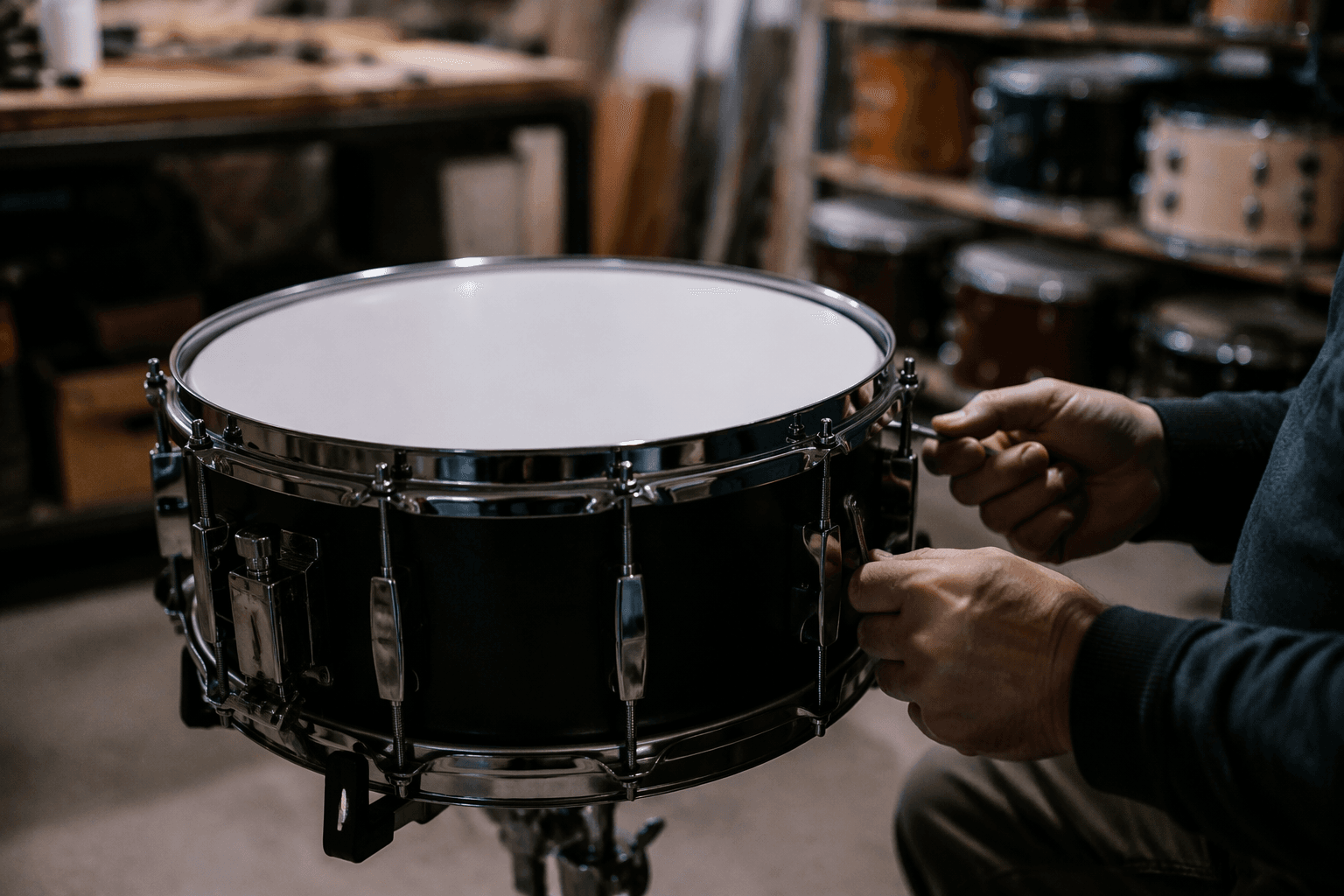
Pearl Drums’ Philharmonic concert snare line includes the Triad Silent Strainer System, three snare types, graduated and even-tension cable snares, and a quick-release snare mounting system. The design centers on quiet, controlled engagement and the ability to shape response instead of simply maximizing raw snap.
Pearl’s manual also gives an initial batter-head tuning range of Bb to C# for 15-inch and 16-inch diameter field drums, which shows that concert and field contexts are not just scaled versions of the same setup. Tuning changes with the instrument’s diameter, intended use, and snare system, and D’Addario / EVANS also has a resource on how to tune a drumset/concert snare.
Soft playing is not optional in this world
On Drumforum, players describe quiet snare mechanisms and maximum articulation as the goal, with sensitivity, articulation, and focus at the top of the list. Concert snare work often feels less like hitting harder and more like reducing friction in the instrument. If the drum does not respond cleanly at low dynamics, no amount of arm motion will fix the underlying setup.
DrumCraft frames the instrument for concert-hall playing rather than drum-set-style use. It is built to articulate ensemble writing, project when needed, and still stay controlled when the score asks for almost nothing.
The pedagogy matches the instrument
Kjos Music Publishing’s TRADITION OF EXCELLENCE curriculum puts snare drum beside bass drum and mallet percussion in a sequential path toward developing “total percussionists.” It treats the player as part of a broader orchestral language rather than as a drum-set offshoot. The player is building a different ear and a different physical response.
Vic Firth’s Percussion 101 moves through instrument and head selection, care and maintenance, head replacement, and tuning.
This article was produced by Prism’s automated news system from verified source data, official records, and press releases, then run through automated quality and moderation checks before publishing. The system is built and supervised by the people who set the standards it runs under. Read our full AI policy.
Did this article answer your question?