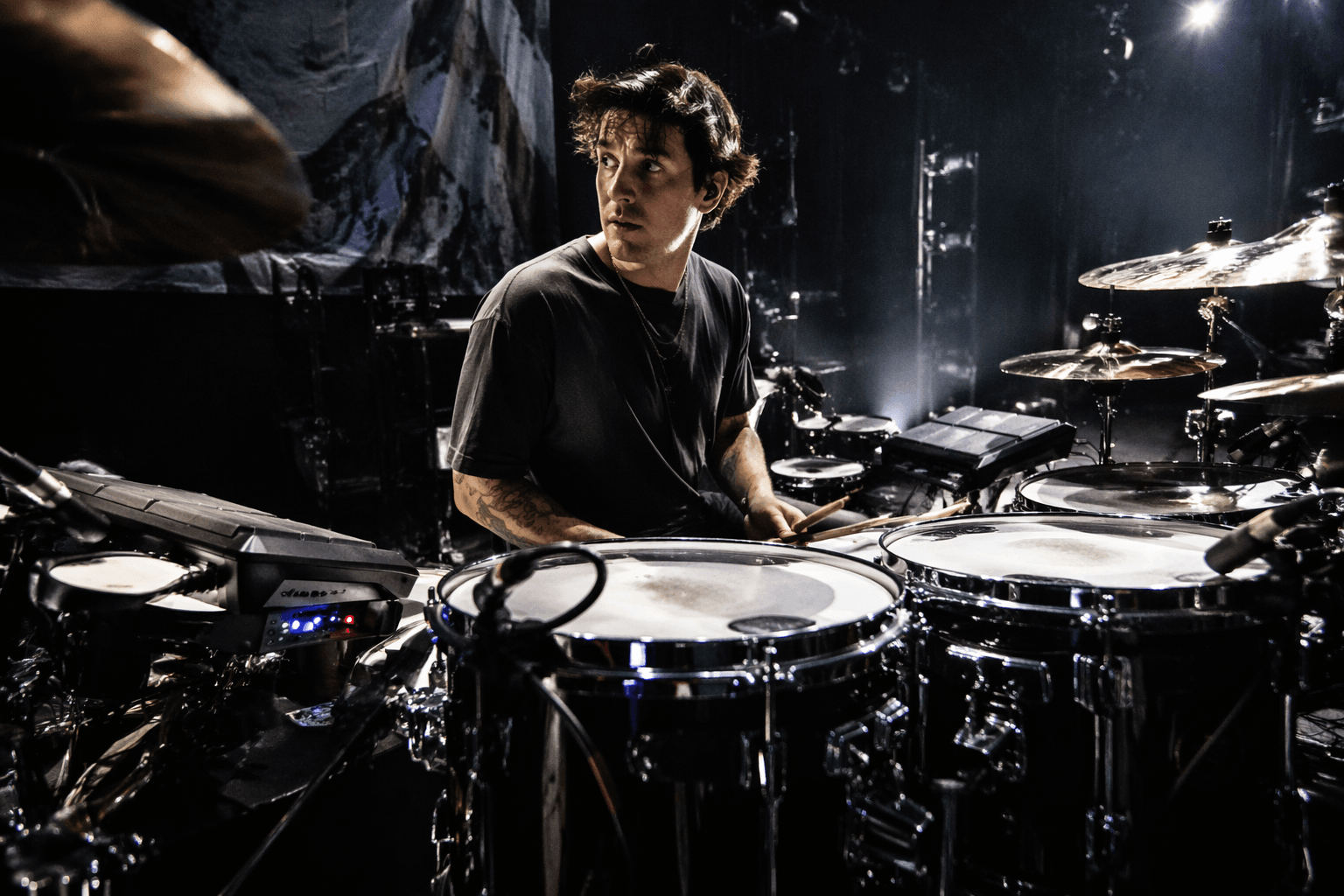
Connecticut Public Radio Spotlights Drummers as the Backbone of Rock and Roll
Questlove, Ringo Starr, and John Bonham finally got their hour on Connecticut Public Radio, with author John Lingan's new book on 15 defining drummers as the springboard.

Ask any guitarist who the most underrated person in their band is, and watch them squirm. Connecticut Public Radio just made that conversation a lot harder to dodge. The Colin McEnroe Show devoted a full hour to the people who hold everything together from the back of the stage: the drummer.
The Episode That Makes the Case for Drummers
The episode framed its focus as "a look at the backbone (and the backbeat) of rock and roll: the drummer." That's not a throwaway description. The hour used interviews and historical framing to make a sustained, serious argument for why drummers deserve to be understood as central figures in rock music, not just reliable timekeepers lurking behind the kit while frontmen get the magazine covers.
The Colin McEnroe Show has built its reputation as public radio's most eclectic, eccentric weekday program, and this episode fits squarely in that tradition. Host Colin McEnroe has spent years on Connecticut Public Radio turning deep-dive subjects into compelling hour-long conversations, serving as radio host, newspaper columnist, magazine writer, author, playwright, and occasional singer since he started in radio in 1992 and moved to Connecticut Public in 2009. A drummer episode is exactly the kind of culturally rich, underexplored subject the show was built for.
The Roster That Anchors the Conversation
The episode didn't arrive at its conclusions through vague generalizations. It named names, and the list reads like a syllabus for anyone serious about understanding the instrument's role in rock history. The show invoked Ringo Starr, Charlie Watts, John Bonham, Hal Blaine, Moe Tucker, Dave Grohl, Lars Ulrich, Meg White, Tony Thompson, Questlove, Karen Carpenter, and Sam Lay, among others.
That's a deliberately wide net. You've got stadium rock titans like Bonham sitting alongside minimalists like Moe Tucker, session legends like Hal Blaine alongside hip-hop figures like Questlove. Karen Carpenter, who is still chronically underrated as a drummer despite her technical precision, gets a seat at the table alongside Metallica's Lars Ulrich. The message is clear: the history of rock drumming is far broader and stranger than the classic-rock canon usually admits.
The Guests Who Drove the Discussion
The episode featured two guests: John Lingan, author of "Backbeats: A History of Rock and Roll in Fifteen Drummers," and Molly Sayles, described as a percussionist, music educator, and the Official Drummer of The Colin McEnroe Show.
Lingan's book is the kind of anchor a conversation like this needs. Fifteen drummers as the spine of a rock history is a genuinely different way to tell a story that has been told plenty of times from the perspectives of guitarists and frontmen. Bringing that framework into a radio hour gives the episode a structural coherence that goes beyond a simple greatest-hits discussion.
Molly Sayles brought her drum kit into Connecticut Public's Studio Five on March 12, 2026, ahead of the episode's airing, which means this wasn't just a talking-heads discussion. Sayles has been a recurring musical presence on the show, and her role as both percussionist and music educator positions her as exactly the kind of working musician who can move between practical demonstration and broader cultural analysis. Her bass drum head, painted by her grandmother, is the kind of personal detail that signals what the show does well: it finds the human specificity inside the larger subject.
Why This Kind of Episode Matters to Drummers
Public radio doing a serious, hour-long feature on drumming's role in rock history is not a common occurrence, and that's precisely why this episode is worth your attention. The framing here isn't "here are some famous drummers." It's a historical and cultural argument: that the drummer is the backbone of the music, not its supporting structure.
That argument lands differently depending on where you sit. If you've spent years behind a kit watching audiences face the other direction, or if you've fielded the Ringo jokes at rehearsal, hearing that case made seriously on a public radio program with a national podcast footprint carries some weight. Connecticut Public is a community-supported, locally-owned public media organization home to Connecticut Public Radio (WNPR), Connecticut Public Television, and Connecticut Public Learning, and serves one million people each month through its television, radio, and digital platforms. That's a substantial audience for a full hour dedicated to drummers.
The Colin McEnroe Show's track record of bringing serious cultural subjects to a general audience without dumbing them down suggests this episode won't just preach to the converted. Lingan's "Backbeats" framework gives curious non-drummers an entry point, while Sayles's presence as a working percussionist and educator gives the episode real credibility for anyone who already knows what a paradiddle is.
How to Listen
The Colin McEnroe Show is available as a podcast on Apple Podcasts, Spotify, Amazon Music, TuneIn, Listen Notes, and wherever you get your podcasts. The episode is worth going back to even if you missed the live broadcast. Lingan's book "Backbeats: A History of Rock and Roll in Fifteen Drummers" is the natural companion read; the fifteen-drummer structure gives you a ready-made playlist framework if you want to dig into the music while you listen.
Rock history written from behind the kit looks fundamentally different from the version written from the front of the stage. This episode is a good hour-long argument for why that version deserves more airtime.
This article was produced by Prism’s automated news system from verified source data, official records, and press releases, then run through automated quality and moderation checks before publishing. The system is built and supervised by the people who set the standards it runs under. Read our full AI policy.
Did this article answer your question?