DrumBot AI turns prompts and audio into custom grooves for drummers
DrumBot AI can turn a typed groove idea or audio reference into a playable pattern, but the real test is whether its humanization holds up in a drummer’s workflow.
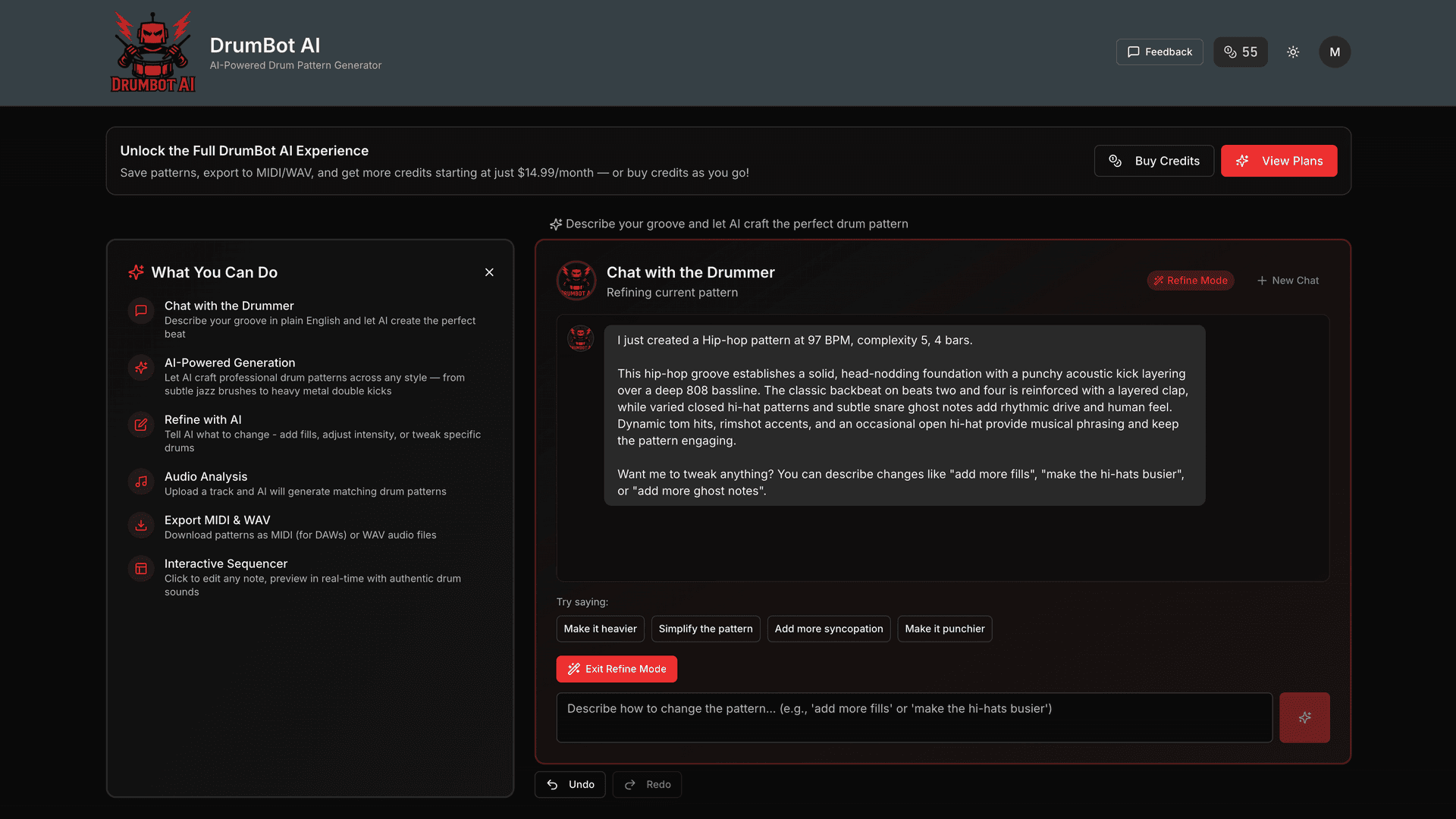
DrumBot AI put a simple question in front of drummers and beatmakers: how much of the sketching process can a browser do before a human still has to sit down and fix the pocket?
The tool built its case around two fast entry points. A user could type a prompt such as a heavy half-time groove with ghost notes on the snare, or something jazzy and loose at 120 BPM, and DrumBot would generate a programmed pattern inside its onboard sequencer. It also accepted audio files, analyzed a reference track or stem, pulled out the rhythmic feel, and then generated a drum part meant to sit alongside that groove. That made it less of a novelty button and more of a shortcut from an idea in your head to something you could hear, edit, and keep moving.
DrumBot’s pitch was that it listened, learned, and talked back. In practical terms, that meant a proprietary AI engine built to understand groove and dynamics, plus support for eight styles: rock, jazz, funk, dubstep, metal, hip hop, rap, and driving rhythms. The system also let users adjust tempo, complexity, pattern length, and time signature, while a mix panel handled reverb, compression, and stereo width. For anyone who has ever spent too long nudging a kick on the grid, the appeal was obvious: get to a first pass quickly, then refine instead of starting from zero.
The detail that mattered most to working drummers was humanization. DrumBot included controls for timing, pitch, and velocity variation, the very factors that decide whether a programmed part breathes or just ticks. That is where the tool’s usefulness would be tested, because groove is rarely about filling bars with notes. It is about touch, push and pull, and the way a drummer supports a song’s energy without overplaying it.
That made DrumBot feel less like a replacement for drum programming and more like a rapid idea generator with a musical vocabulary. It could save time on early demo work, especially when a producer needed a rough groove to build around or wanted to translate the feel of a reference track into a new part. But the final decisions still belonged to a human ear. The software could sketch the contour; a drummer would still have to decide whether the part actually swung, sat deep enough in the pocket, and served the song.
This article was produced by Prism’s automated news system from verified source data, official records, and press releases, then run through automated quality and moderation checks before publishing. The system is built and supervised by the people who set the standards it runs under. Read our full AI policy.
Did this article answer your question?