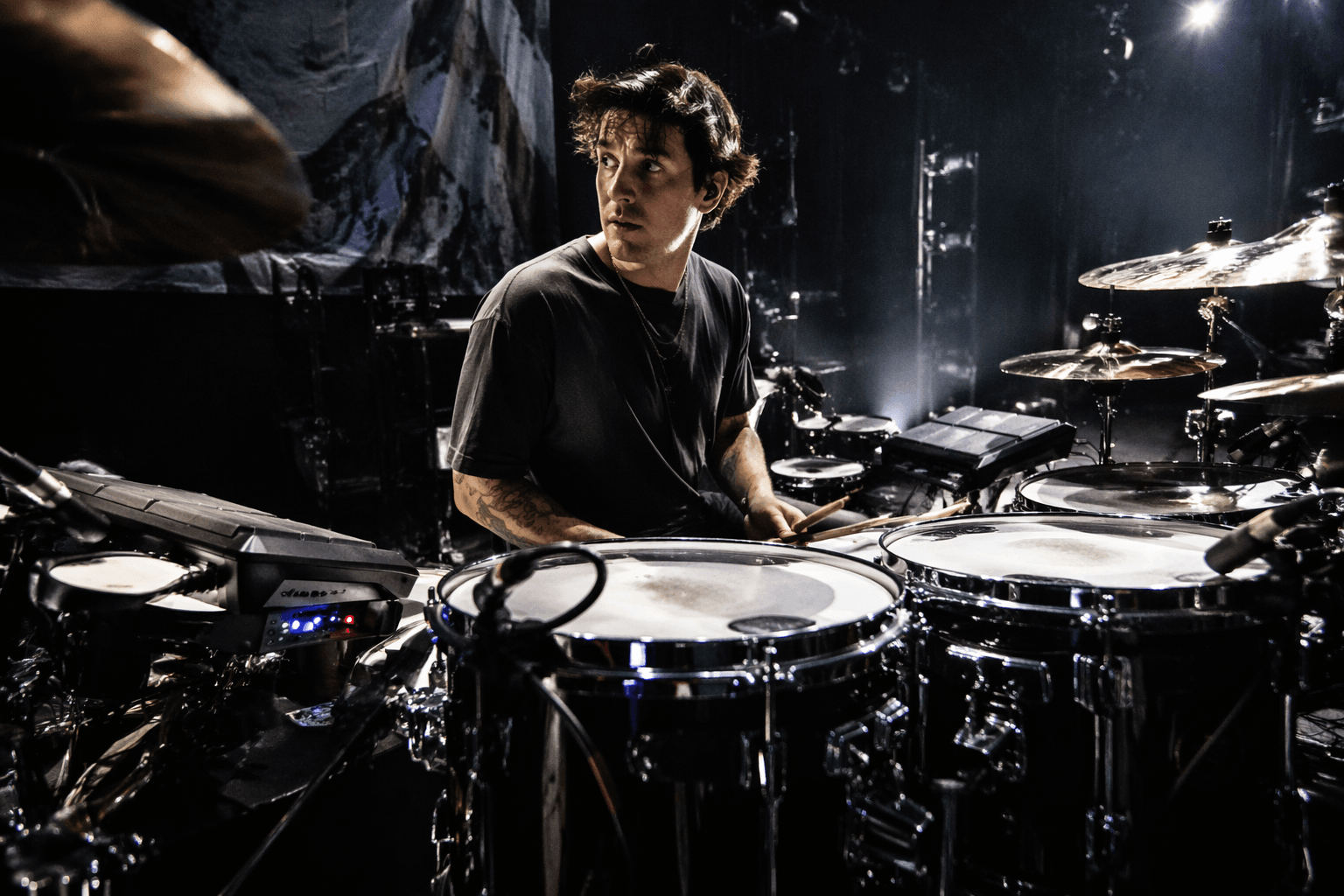
Jimmy Douglass recalls Atlantic Records, where legendary drum grooves were shaped
Ginger Baker's trash-can cameo is the wild opening, but Jimmy Douglass's Atlantic years show how drum grooves were really shaped by the person behind the console.
Atlantic's strangest hello
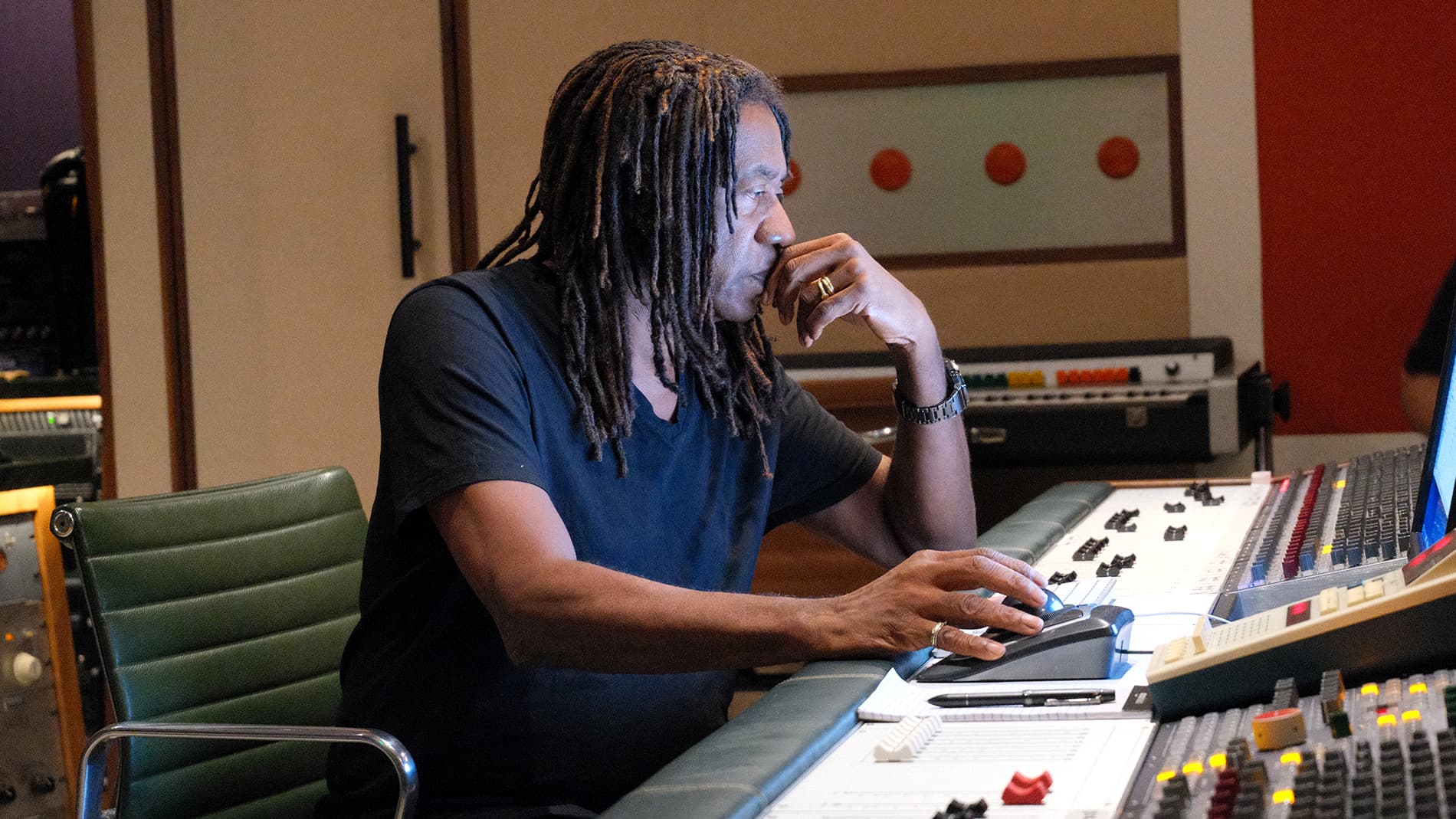
Jimmy Douglass, known as “The Senator,” has one Atlantic Records memory that sounds like pure studio folklore: he walked out a back door and saw Ginger Baker pop up from a trash can. It is a surreal image, but it fits the world Douglass came up in, where a teenager could start as a tape duplicator and end up helping define how rock, R&B, and hip-hop records hit the speakers.
What makes the story matter for drummers is not the celebrity sighting. It is the reminder that a groove does not become a record by magic, it becomes a record because somebody in the room knows how to catch the attack, the weight, and the pocket before it vanishes into tape or code. Douglass has spent more than five decades doing exactly that, and his Atlantic origin story still reads like a crash course in how finished drum sounds are actually built.
How Douglass got in the building
Douglass did not arrive at Atlantic Records with a grand plan. Jerry Wexler lived near him in Great Neck, Long Island, and a connection through Wexler’s daughter turned into a job at the distributor warehouse, where he pushed records on a cart before moving into the studio side of the company. He later became a tape duplicator at Atlantic in the early 1970s, learning the ropes while still young enough to treat every session like a lesson.
That detail matters because it explains a lot about how great drum records get made. Douglass was not handed a glamorous role; he earned access by doing the unsexy work first, then used downtime to teach himself the studio’s custom-made 16-channel console. The practical lesson is simple: if you want better drum sounds, start by understanding the path the signal takes, not just the brand names on the mics.
The Atlantic education
Douglass learned by watching giants. At Atlantic he was surrounded by Tom Dowd and Jerry Wexler, and the studio had that old-school “mystery and magic” that came from musicians relying on specialists who really knew microphones, routing, and room behavior. He even remembers walking into his first session and not yet knowing what a studio was, which is exactly why the lesson landed: ears, judgment, and repetition were the curriculum.
There is a great little turning point in the way he tells it. When he asked Wexler if he could use the room to demo a band he had discovered, Wexler told him, “You want it, you do it,” and Douglass cut the session himself. Atlantic’s brass was not especially impressed by the music, but they were impressed by the sound he got, and that is the kind of detail every drummer should care about: a strong recording can change the way people hear a band before they have decided whether they like the song.
Lesson 1: The groove starts before the drummer plays
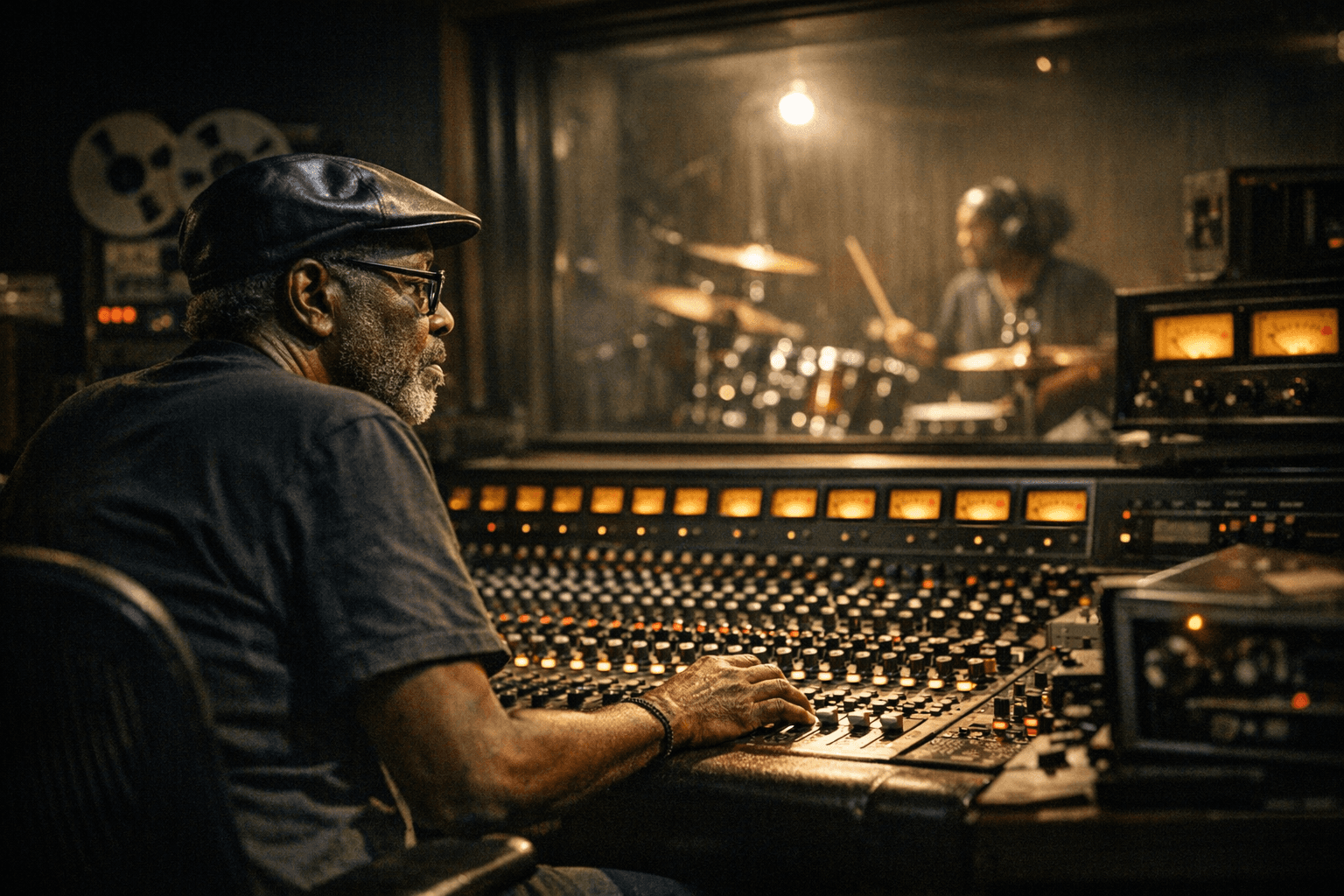
Douglass’s Atlantic years show that great drum sound begins with the room, the console, and the person paying attention to details other players never see. He was learning on a 16-channel desk while observing Dowd and Wexler, which is a reminder that the best tracking decisions are usually made by somebody who understands how all the pieces fit, not just by somebody chasing a big snare sound. If the low end is fighting the kick, or the overheads are flattering the cymbals but blurring the pocket, the issue is not “more vibe.” It is usually a tracking decision.
Lesson 2: Mic choice is part of the performance
Douglass has said that when he started out, he did not really know microphones yet, but Atlantic had one of the great mic collections and he would put one up without always knowing the exact placement. That is not a flaw in the story, it is the point: the studio taught him that sound is built by curiosity, repetition, and enough access to learn what the tool actually does. Drummers chasing a classic record feel should hear that as a warning against overcomplicating things before the mic placement, phase, and room tone are right.
Lesson 3: Heavy low end can live in rock without killing the song
One of the things Douglass is credited with is bringing a heavy funk bass sound into rock music, and that move connects directly to the way drum grooves lock to the bottom end. His credits run from Aretha Franklin and The Rolling Stones to Genesis, Roxy Music, AC/DC, Hall & Oates, then later Missy Elliott, Justin Timberlake, Ginuwine, and Jay-Z, with a long Timbaland collaboration carrying him into the digital era. The takeaway for drummers is that pocket is portable: a rock track can borrow from funk, hip-hop can borrow from live-band heft, and the engineer’s job is to make those choices feel inevitable rather than pasted on.
That is also why Douglass still matters now. He is a five-time Grammy winner and 11-time nominee, but the bigger story is that he stayed relevant by moving from tape-era Atlantic into modern digital mixing and immersive audio formats without losing the instinct that made his early records hit. For drummers, that is the real studio-history lesson: the performance on the kit is only half the story, and the records that last are the ones where the engineer knows exactly how to let the groove breathe.
This article was produced by Prism’s automated news system from verified source data, official records, and press releases, then run through automated quality and moderation checks before publishing. The system is built and supervised by the people who set the standards it runs under. Read our full AI policy.
Did this article answer your question?