Drumeo's Beginner Warm-Up Guide Covers Four Essential Pre-Session Exercises
Drumeo's four beginner warm-up exercises give drummers a focused, efficient way to prep their hands and mind before any practice session or gig.
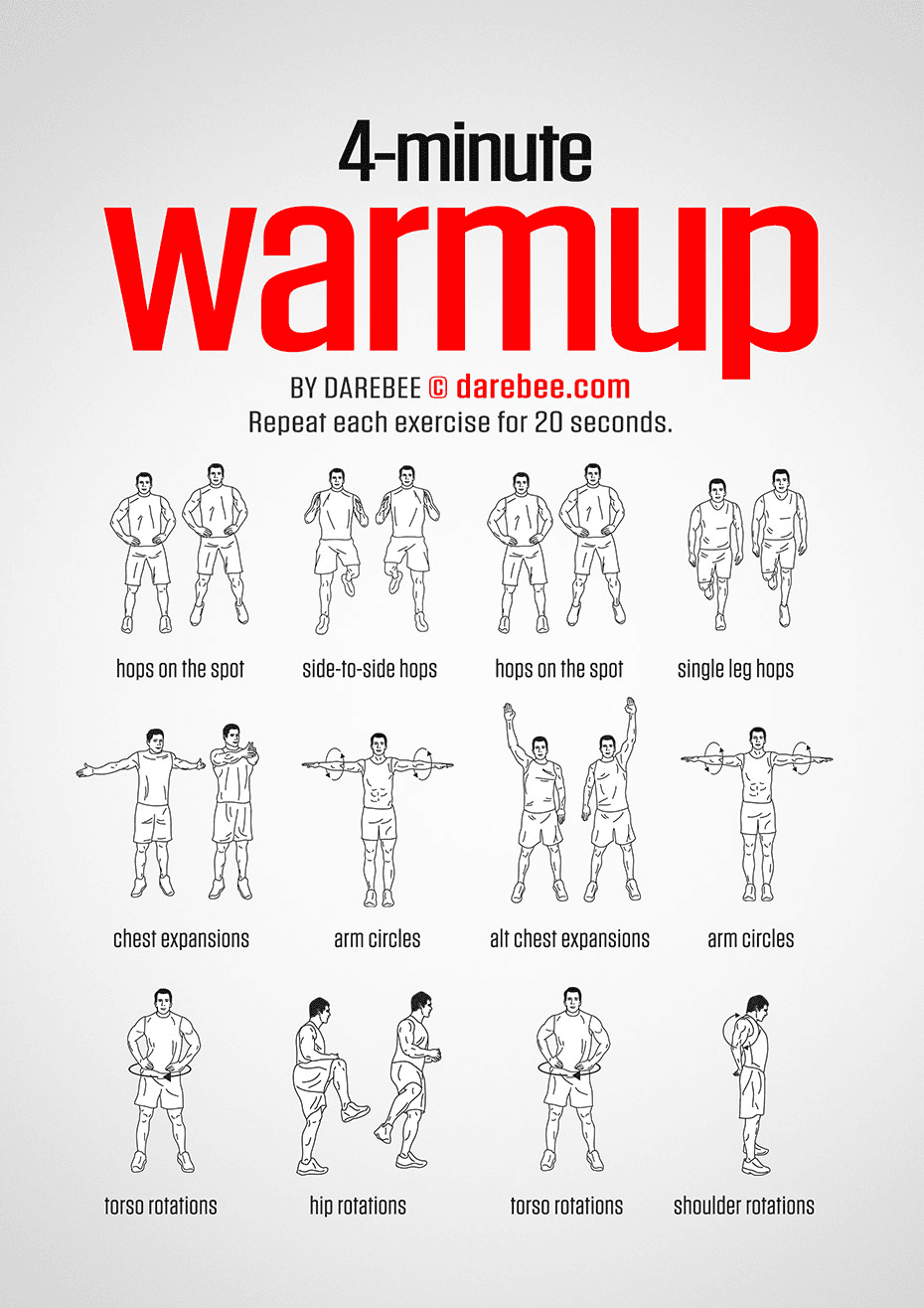
Sitting down at the kit cold is one of the most common mistakes beginners make. Your muscles haven't fired yet, your coordination is sluggish, and your stroke control is nowhere near where it needs to be for productive practice. Drumeo's beginner warm-up guide addresses exactly this problem, laying out four short, focused exercises designed to get your body and brain into playing shape before a single beat of actual music starts.
The guide is built around a simple premise: a few targeted minutes of preparation before a session pays dividends across everything that follows. Whether you're running through rudiments, working on a new groove, or stepping onstage for a gig, the warm-up is the bridge between sitting down and actually playing well.
Why Warm-Ups Matter More Than You Think
Drummers are full-body athletes in a way that's easy to underestimate. You're coordinating four independent limbs, managing dynamics across multiple surfaces, and maintaining rhythmic precision simultaneously. Doing all of that cold, without preparing the muscles and neural pathways involved, increases both injury risk and the likelihood of ingraining sloppy technique during practice time.
The warm-up phase is also when you establish your internal clock. Rushing into a practice session without centering your pulse first means you're spending the early portion of your session compensating for tempo drift rather than building real skills. These four exercises combat that by giving your hands, wrists, and timing a deliberate runway before the real work begins.
The Structure of the Four Exercises
Drumeo structures the warm-up around exercises that are short enough to complete before any session without eating into practice time, yet focused enough to produce a real physical and mental shift. The goal isn't exhaustion or complexity; it's readiness.
Each exercise targets a specific aspect of drumming mechanics. Rather than vague advice to "loosen up," the guide gives you concrete things to do at the practice pad or kit. That specificity is part of what makes Drumeo's approach useful for beginners who haven't yet developed an intuition for what their body needs before playing.
Working Through the Warm-Up
The exercises follow a logical progression: starting slow and simple, then building in coordination demand as your muscles wake up. Here's how that progression plays out in practice:
1. Begin with single strokes at a controlled, relaxed tempo.
The focus here isn't speed; it's evenness. Each stroke should feel identical, with the stick rebounding freely and the wrist doing the work rather than the arm. This is where you establish your baseline control for the session.
2. Introduce a rudiment-based exercise, typically something that alternates hands in a slightly more demanding pattern.
This challenges your coordination and begins to warm up the smaller stabilizing muscles in your forearms and wrists that single strokes alone don't fully activate.
3. Move to an exercise that incorporates dynamics, asking you to vary stroke velocity in a controlled way.
Playing consistently at one volume is relatively easy; shifting between soft and loud strokes while maintaining timing is a skill that benefits from deliberate warm-up.
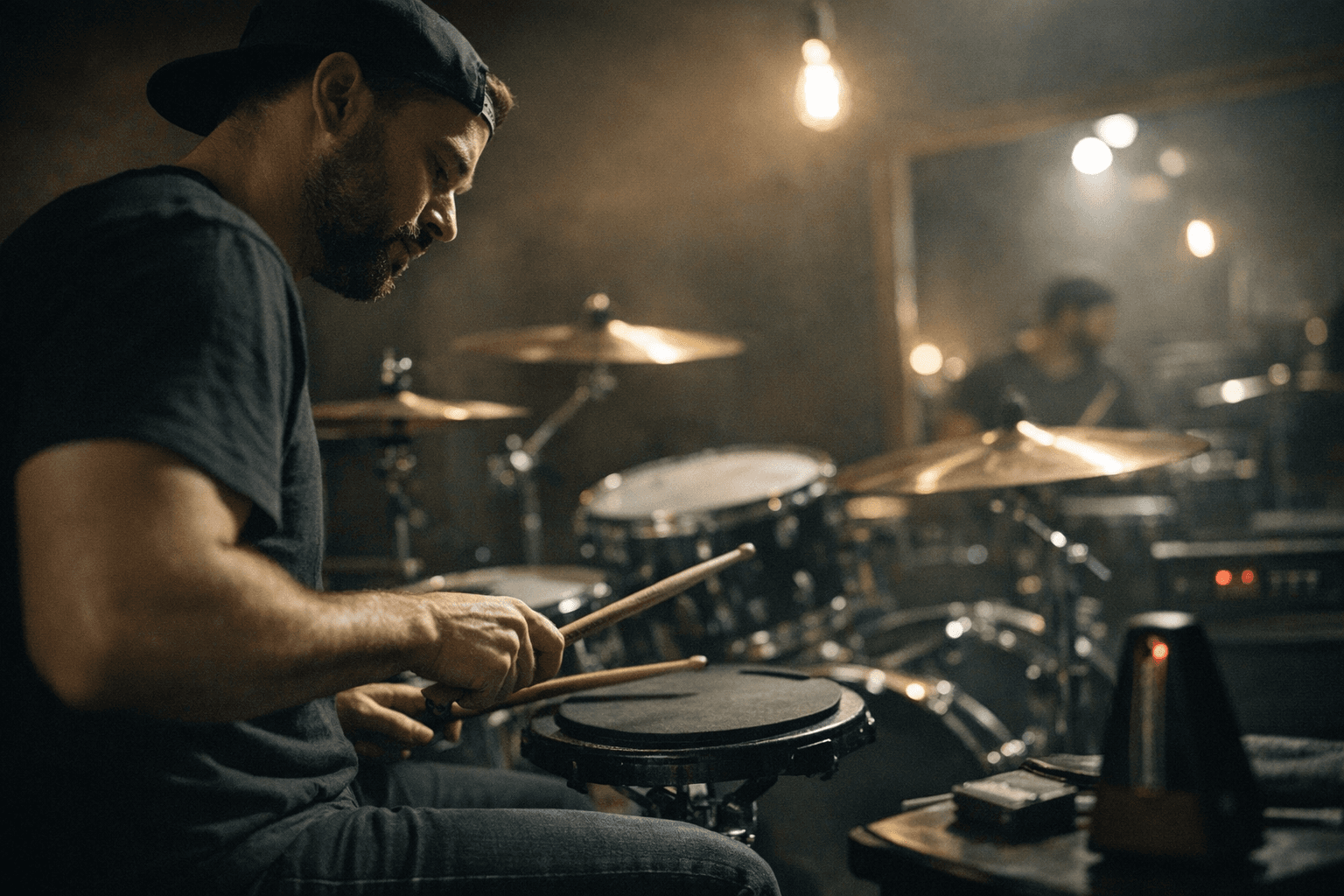
4. Finish with a light coordination exercise that brings the feet in, bridging from hand warm-up into full-kit readiness.
Even if it's just a simple bass drum and hi-hat pattern paired with hand exercises on the pad or snare, this step reestablishes the limb independence that drumming demands.
Getting the Most Out of a Short Warm-Up
One of the consistent themes in Drumeo's instructional material is that quality of attention matters more than quantity of time. A five-minute warm-up done with full focus, where you're listening critically to each stroke and actively correcting unevenness, outperforms twenty minutes of mindless repetition.
A few practical habits worth building into your pre-session routine:
- Use a metronome from the very first warm-up stroke. Don't wait until the "real" practice to turn it on.
- Start at a tempo that feels almost too easy. The point is controlled movement, not impressive speed.
- Listen for evenness between your dominant and non-dominant hand. Most drummers have a measurable gap, and the warm-up is the right time to identify and address it.
- Keep your grip relaxed throughout. If you feel tension creeping into your forearms or shoulders, slow down before continuing.
- Keep warm-up duration consistent. Whether you have fifteen minutes or three hours to practice, the warm-up should take roughly the same amount of time. It's a ritual, not a variable.
For Gig Preparation Specifically
The guide acknowledges that the warm-up serves a slightly different function before a performance compared to a practice session. In practice, the warm-up is partly diagnostic: you're checking in with your body and establishing the conditions for effective learning. Before a gig, the priority shifts toward confidence and physical readiness under pressure.
The same four exercises apply, but the mental orientation changes. You're not trying to fix anything or improve; you're reminding your hands what they already know. The exercises become a form of physical confirmation that you're ready, which has a genuine psychological benefit that experienced drummers recognize immediately.
Building the Habit
The biggest obstacle for beginners isn't understanding why warm-ups matter; it's remembering to do them consistently. The exercises Drumeo outlines are specifically short enough that "I don't have time" stops being a credible excuse. Even five focused minutes on a practice pad before sitting at the kit makes a measurable difference in how the session opens.
Over time, the warm-up stops feeling like a separate obligation and starts feeling like the natural entry point into playing. That shift, from warm-up as chore to warm-up as ritual, is one of the clearest signs that a beginner is developing real drumming habits rather than just accumulating seat time.
The four exercises Drumeo covers aren't revolutionary. Single strokes, rudiments, dynamics, and coordination patterns have been the foundation of drum warm-ups for generations. What the guide does well is sequence them logically, explain the purpose behind each one, and present the whole routine as something achievable before any session, regardless of your current level.
This article was produced by Prism’s automated news system from verified source data, official records, and press releases, then run through automated quality and moderation checks before publishing. The system is built and supervised by the people who set the standards it runs under. Read our full AI policy.
Did this article answer your question?