Drums through history, from ancient membranophones to modern kits
The drum set is only the newest remix in a much older family tree. Knowing that lineage can sharpen your choices on tone, touch, tuning, and groove.
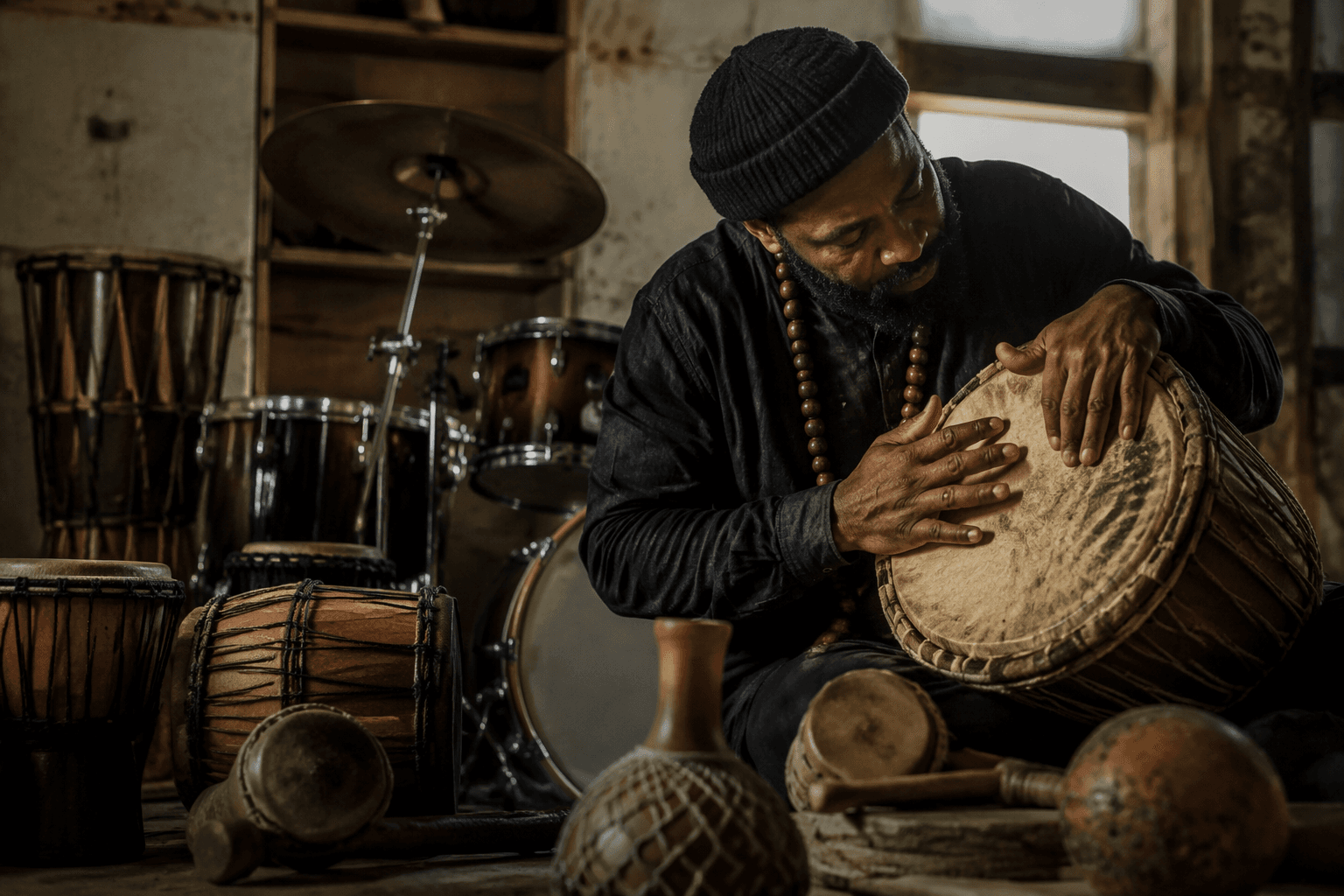
The drum is a membranophone: a body or shell with a stretched membrane that makes sound when struck. Once you stop treating the kit as the whole story, every shell, head, and accent starts to look like part of a larger language. The modern drum set is one late arrangement inside that language, not the starting point.
Start with the membrane, not the hardware
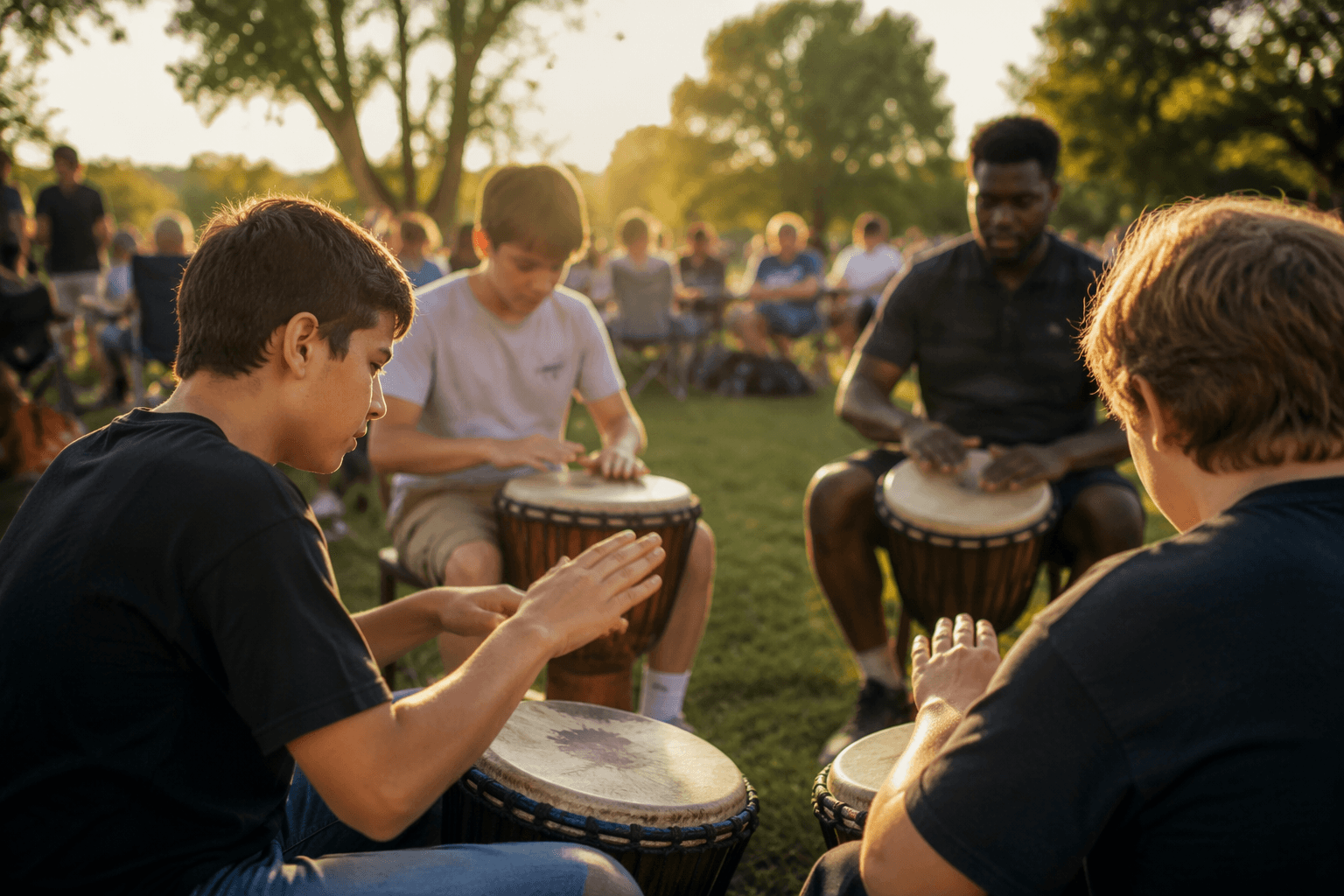
Frame drums, double-headed drums, ground drums, bass drums, snare drums, and the drum set each solve the same basic problem in different ways, using shell shape, head count, and tension to change response and color.
That family logic has a direct payoff at the kit. A shallow frame drum suggests fast attack and touch-driven phrasing; a double-headed drum points toward a different balance between resonance, projection, and surface choice. When you think this way, orchestration becomes more than picking toms and cymbals. You start asking what each voice is doing in the arrangement, whether it should speak clearly, sit back in texture, or carry a sharper rhythmic line.
The drum has always done more than keep time
Drums have worked in ritual, communication, military signaling, dance, and art, long before the modern set existed. They have also appeared in court and religious settings, which is why Britannica’s imagery includes a Korean puk, monks at the Ivolginsky Datsan temple, and a janggu player.
If drums once signaled movement, ceremony, and public order, then timekeeping alone is only one function in the toolkit. A drummer who understands that lineage tends to hear groove as placement, authority, and space, not just subdivision. That is useful when you are deciding whether to lean into the pocket, push a phrase forward, or let a figure breathe instead of crowding it.
Europe, orchestral low end, and the modern kit’s ancestors
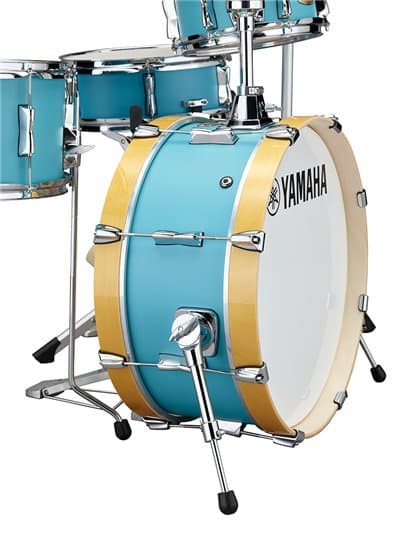
The Western orchestra helped shape the drum family into distinct roles. The bass drum became a separate low-end voice, while the snare drum developed its own identity through articulation and bite. Those distinctions are important because they reveal how the kit inherited parts from older ensemble roles rather than inventing a new rhythmic species from scratch.
This is where orchestration gets practical for a kit player. A bass drum voice can anchor a phrase like a low orchestral pulse, while snare articulation can carry the sharp edge of a military or ceremonial pattern. If you tune with that in mind, you are not just chasing a sound you like in isolation. You are deciding whether the kit should behave like a bandstand machine, an ensemble of voices, or a compact percussion section.
The steel drum is a correction, not a sidebar
The steel drum story is one of the clearest reminders that popular naming and musical classification do not always match. The steel drum developed in Trinidad and Tobago in the 1930s, with the steel drum, or steelpan, developing in Trinidad in the late 1930s. The steelpan is not technically a drum at all, but a tuned idiophone.
Its notes are formed by dents hammered into metal, and the steel pan has become an icon of Trinidadian culture. A BBC image caption places the Trinidad All Steel Percussion Orchestra in 1952, which gives the instrument a clear performance milestone and shows how quickly it moved from industrial material to ensemble identity.
The steelpan shows that rhythm families can overlap with melodic percussion, and that orchestration does not stop at skin and shell. If you write or arrange for a kit with that in mind, you may hear new roles for tuned percussion, metallic color, and interlocking parts that sit somewhere between drumset comping and melodic counterline.
Korea keeps the old forms alive
The puk is identified as a barrel-shaped double-headed membranophone, while the janggu is a major Korean traditional drum. Korean sources place the janggu’s origins in Koguryo, which underlines how deep that history runs, but these instruments remain living, working parts of music-making rather than museum pieces.
That living tradition shows up in education and exchange as well. A janggu workshop linked Korean and Nigerian percussion traditions in a Korea.net article dated 2016-04-18, and both instruments appear within cultural broadcasting and education in KBS World’s “Buk & Janggu” content. For a kit player, that is a reminder that touch and groove are not only about gear. They are learned through context, repertoire, and the physical language of a tradition.
What this changes at the kit
Once you see the drum set as a late remix, several everyday choices get sharper:
- Orchestration: think in families of voices, not just in tom sizes and cymbal brands.
- Touch: let the instrument’s ancestry tell you when to play for attack, when to play for ring, and when to play for texture.
- Tuning: use pitch and resonance with intention, since drums have long been tuned for both musical and functional roles.
- Groove: treat time as more than metronomic backbeat, because drums have served ceremony, signal, and dance as much as pulse.
This article was produced by Prism’s automated news system from verified source data, official records, and press releases, then run through automated quality and moderation checks before publishing. The system is built and supervised by the people who set the standards it runs under. Read our full AI policy.
Did this article answer your question?