Ghana's Osudoku Council Bans Drumming During Sacred Pre-Festival Period
Ghana's Osudoku Traditional Council banned drumming across the Greater Accra region for the sacred April-to-May pre-festival window.
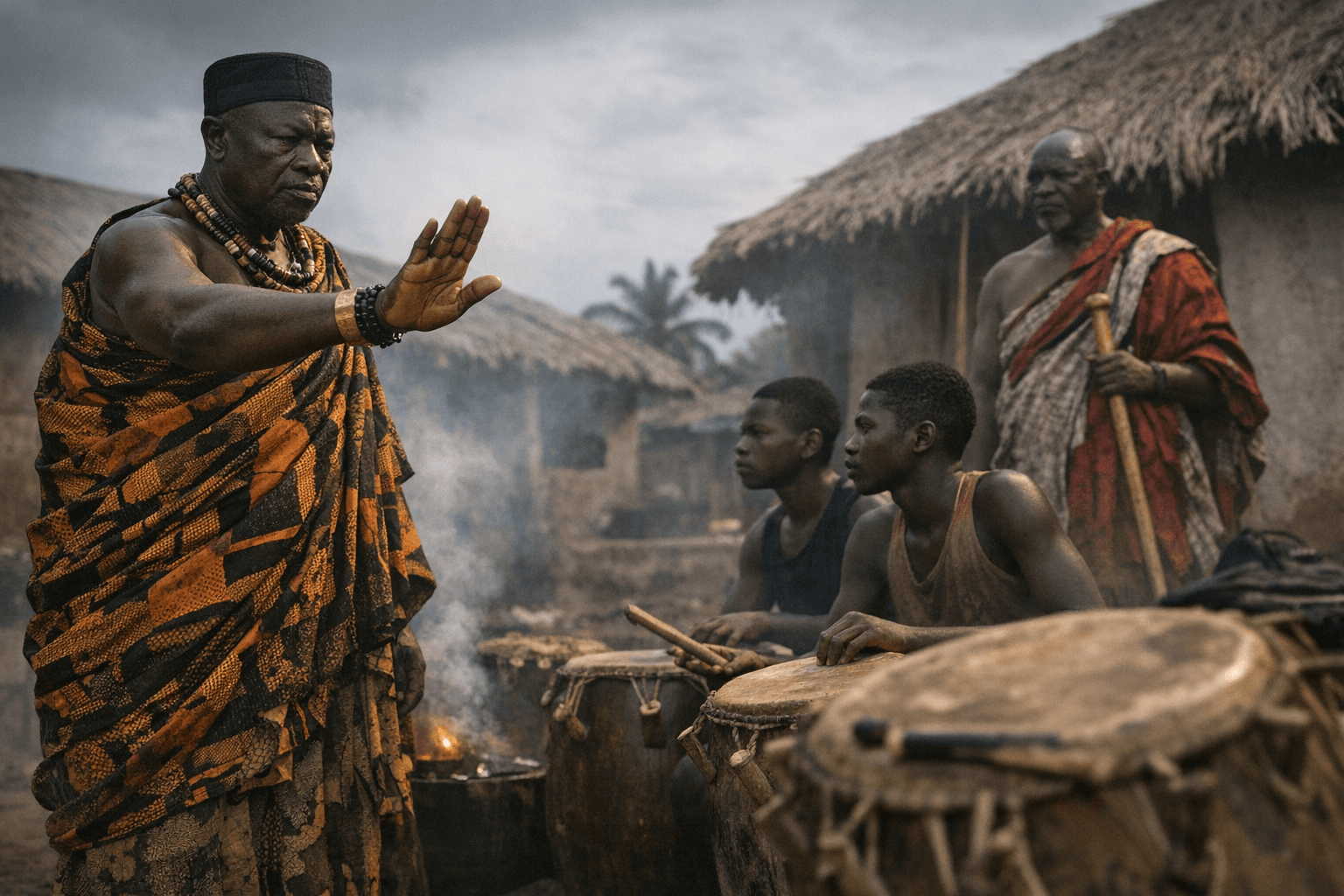
The drums have gone quiet in the Osudoku Traditional Area. Ghana's Osudoku Traditional Council, based in the Greater Accra Region, announced a ban on drumming and all forms of public noisemaking tied to the ceremonial calendar governing community life in the lead-up to local festival rites.
The restriction covers the April-to-May window traditionally used for pre-festival observances and applies to public drumming, amplified noise, and celebratory musical expression across the Osudoku Traditional Area. Council officials framed the directive around two core purposes: preserving the ritual sanctity of the preparation period and creating conditions for peaceful communal reflection ahead of festival ceremonies.
The Osudoku ban sits within a broader pattern of seasonal drumming restrictions across Ga State communities. The Ga Traditional Council announced its own separate noisemaking prohibition running from May 4 through June 4, a window that aligns with preparations for the Homowo festival. In these communities, the silence itself is a cultural act. Traditional authorities use enforced quiet not as a suppression of music but as a governance mechanism for maintaining the spiritual timetable of communal life.
For drummers, ensemble directors, and event organizers working in or traveling to Ghana, the announcement carries immediate practical weight. Any public performance scheduled during the prohibited window requires prior coordination with traditional authorities, with enforcement handled through council channels and regional peace councils. The Osudoku directive is active now; the April-to-May ceremonial period is already underway as of early this month.
For touring ensembles and international educators scheduling clinics or concerts in West Africa, both the Osudoku directive and the Ga Traditional Council's May 4 to June 4 order are a clear signal that local cultural calendars carry real regulatory authority. Consultation with traditional councils before booking public drumming events is not a courtesy extended to local custom; it is the required process.
The bans also illuminate something fundamental about how drumming functions in communities like Osudoku. The same councils that now restrict the drums are the custodians of the very ceremonial tradition those drums serve. Here, an instrument of celebration is also an instrument of governance, and its silence can be as prescribed as its sound.
Know something we missed? Have a correction or additional information?
Submit a Tip