How the modern drum set became one player’s compact rhythm section
One drummer became a full rhythm section when pedals and the hi-hat let feet and hands split the work. That efficiency still shapes the kit.
After the U.S. Civil War ended in 1865, drummers began experimenting with ways a single player could do the job of an entire percussion section. Theater orchestras and dance bands needed one player to cover the pulse, the back beat, and the color once spread across several musicians, and that pressure shaped every pedal and bracket on the kit.
The compact rhythm section hidden in plain sight
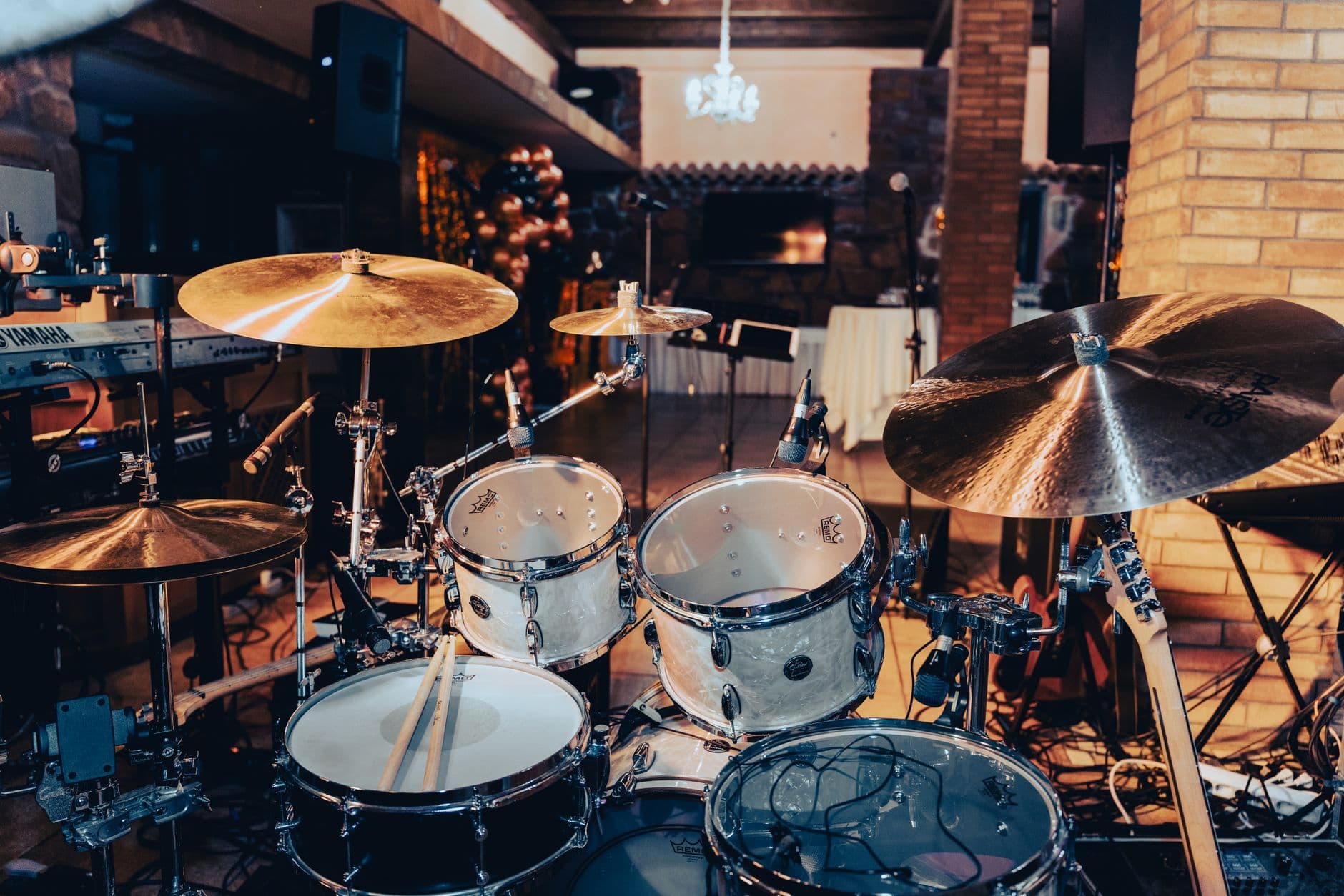
The core machine is a bass drum with foot pedal, snare drum, tom-toms, and suspended cymbals. That is the familiar outline behind almost every backline kit, but the deeper story is that the set is a compact version of the larger percussion family, where anything struck to make sound belongs to the section.
The drum set made it possible for one human body to create the pulse, the back beat, the syncopation, and the texture of a percussion part all by itself.
From sectional labor to double drumming
That practical need pushed drummers toward what became known as double drumming.
That shift was less about adding more objects than about dividing labor inside one body. The hands could keep snare figures, fills, and textures while the feet took over the parts that once required another player, especially bass-drum duty and cymbal control. In New Orleans and other marching-band traditions, that same logic was already taking shape in the two-drum lineup, where one performer covered snare and bass functions before the setup expanded in non-marching settings.
Once the arrangement started serving stage work and dance-band dates, it kept collecting tools that solved a specific job. Cowbells, wood blocks, and other accessories entered the picture because the drummer was no longer just marking time, but supplying a whole percussion part from one seat.
The pedal changed the job description
The bass drum pedal is the clearest hardware sign that the modern drum set was built for efficiency. Ludwig and Ludwig patented the first successful commercial bass drum pedal system in 1909, and that mattered because it let one drummer handle bass-drum parts that previously required another player.
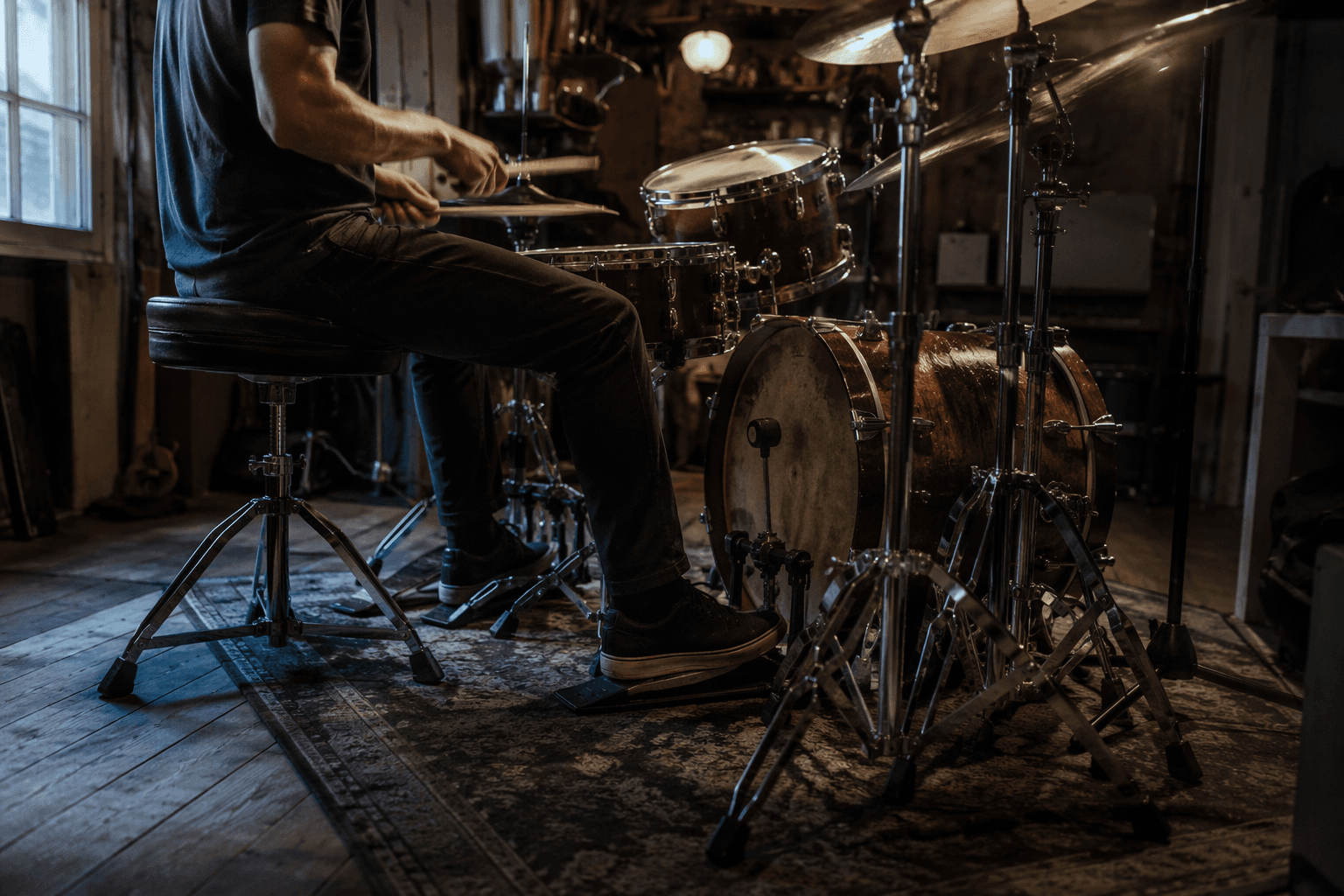
The evolution of the foot pedal was a structural change, not a minor accessory. Once the foot could drive the kick, the kit stopped being a row of separate percussion instruments and became a coordinated workstation. The drummer’s body, not the hardware alone, became the instrument.
That change also explains why the modern setup feels designed for function rather than symmetry. The bass drum anchors the feet, the snare sits where the hands can articulate the back beat, and the rest of the kit fans outward as a practical map of tasks.
Why the hi-hat completed the one-player system
The hi-hat finished the transformation from kit to one-person rhythm section. It began in the 1920s as two matching cymbals mounted low and operated by foot, which gave the drummer another timekeeping voice and another source of texture without sacrificing the hands.
Rob Cook has advanced a theory that Skip Retherford invented an early hi-hat pedal in 1922. That timeline predates Papa Jo Jones, who is often identified as the earliest user of the hi-hat. Whatever the exact origin, the result was the same: one foot could now shape time, snap, and color while the hands stayed free for snare orchestration, letting the drummer split responsibilities across four limbs in a way earlier percussion setups simply could not.
How the kit moved through jazz, rock, funk, pop, and fusion
The modern kit has only been around for about 100 years, yet it spread fast because it could serve so many styles without changing its core logic. Jazz made use of the ride pattern, brushes, and syncopated interplay; rock asked for a stronger back beat; funk demanded tight subdivision and pocket; pop and fusion pushed the same setup toward new textures and dynamic shapes.
Gene Krupa helped make the drum set visible as its own instrument family, not just a utility behind the bandstand. The star-drummer era helped the public see what drummers already knew: the kit could carry melody-like motion in the toms, snap in the snare, weight in the bass drum, and timekeeping in the cymbals without needing a second or third player.
Each component has a distinct role. The bass drum supplies the foundational pulse and weight, the snare delivers articulation and snap, tom-toms widen the fill vocabulary, and cymbals provide timekeeping, color, and dynamic shape.
This article was produced by Prism’s automated news system from verified source data, official records, and press releases, then run through automated quality and moderation checks before publishing. The system is built and supervised by the people who set the standards it runs under. Read our full AI policy.
Did this article answer your question?