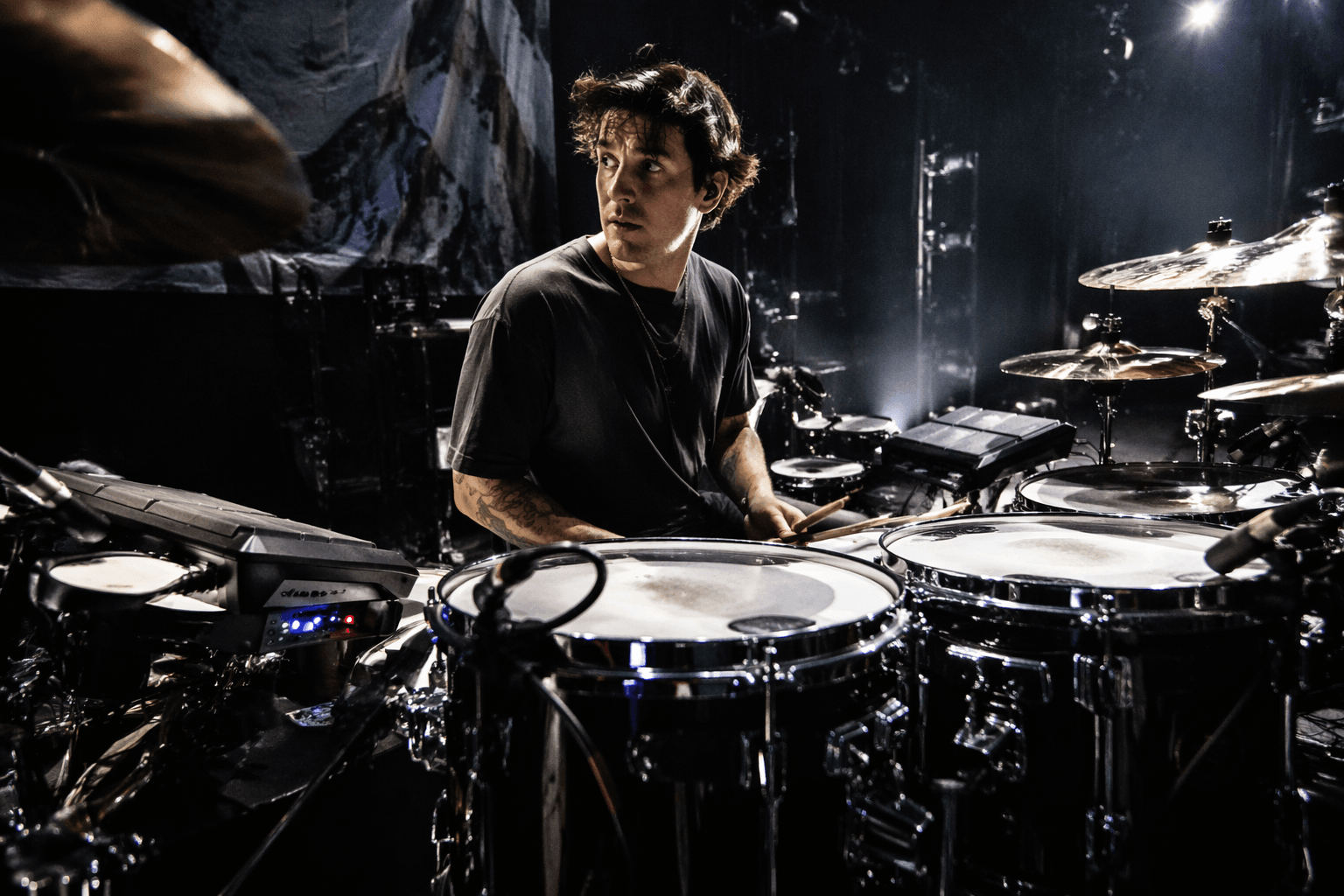
Howell Library's Drummunity Event Unites Families Through Rhythm and Percussion
Howell Carnegie Library's free Drummunity event drew families and older adults into a percussion circle on April 7, using call-and-response rhythms to make instant musicians of everyone.
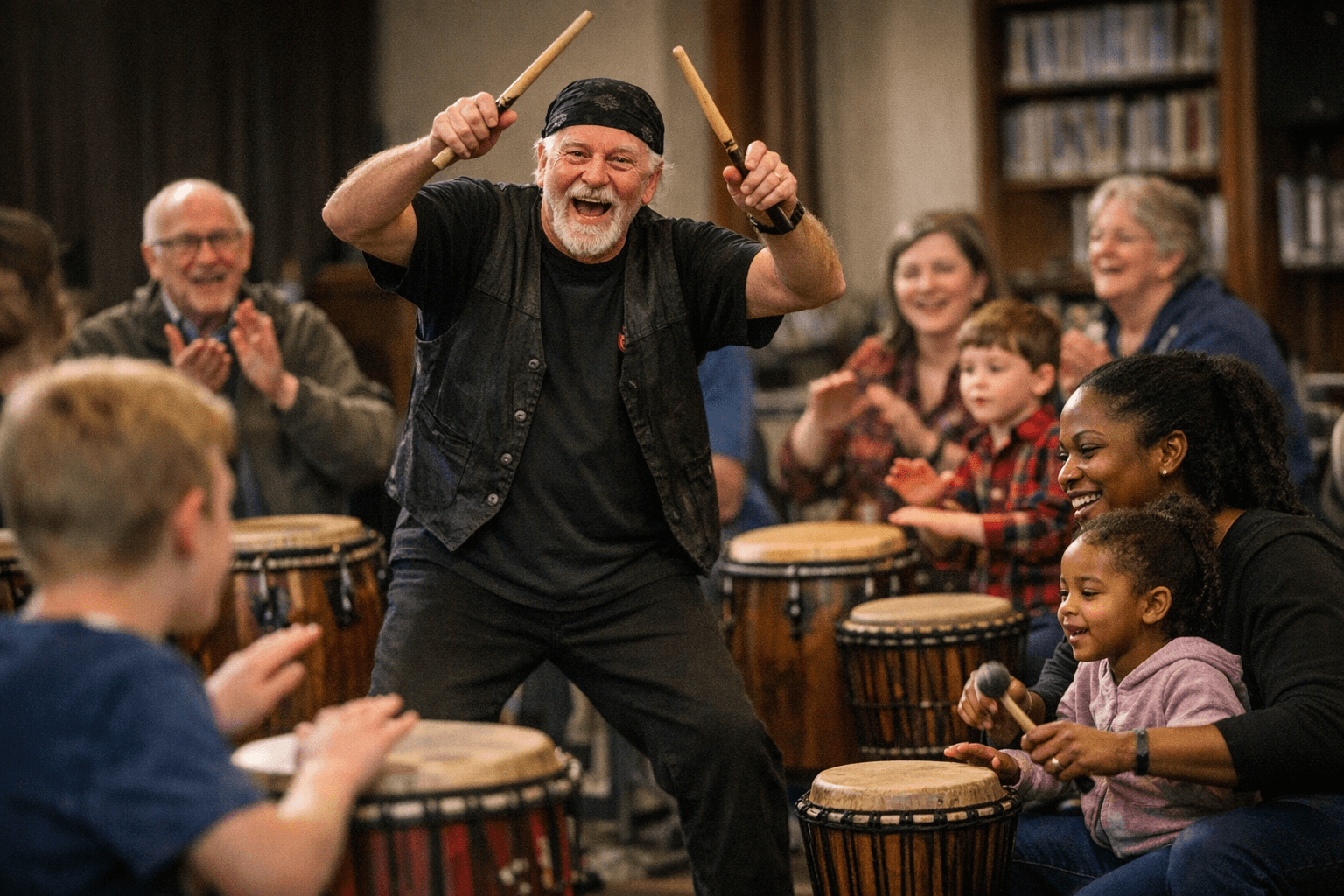
The Howell Carnegie Library turned its community meeting space into a percussion circle on April 7, drawing families, young children, and older adults together for Drummunity, a free group drumming event built around one straightforward premise: anyone can keep a beat.
The program, organized by the library with local facilitators experienced in group percussion, put hand drums, djembes, shakers, and small percussion instruments into the hands of attendees who may never have touched a drum before. Rather than drilling technique, the facilitators leaned on call-and-response patterns and simple ostinatos, the kind of repeating rhythmic figures that lock a group together within minutes. The result was an atmosphere full of laughter and participation, a room where the only wrong move was not showing up.
The name Drummunity says it plainly: drum plus community. That portmanteau captures the design philosophy behind these events. By stripping away the barriers that chase beginners away from melodic instruments, percussion-based programs create genuine musical engagement on the spot. Djembes and shakers require no prior training to sound intentional, and call-and-response structures give a facilitator the tools to bring any room into rhythmic conversation without a single rehearsal.
For the Howell, Michigan community, the library's programming choice reflects a broader understanding of what a public institution can offer. Libraries have quietly become some of the most effective venues for accessible arts programming, and Drummunity fits that role precisely. Cross-generational events that mix toddlers with grandparents around a drum circle don't happen by accident; they require intentional design, and the Howell Carnegie Library delivered exactly that on April 7.
For percussionists and rhythm educators watching this space, events like Drummunity function as more than community goodwill. They are proof-of-concept demonstrations that simple rhythmic pedagogy creates strong social outcomes, and they serve as natural entry points for drawing new participants into local ensembles, workshops, and classes.
HOST YOUR OWN DRUMMUNITY: A 30-MINUTE BLUEPRINT
The Howell Carnegie Library's model is reproducible with minimal resources, and the program design itself is what makes it work.
Space: A circle of chairs functions in any room large enough to seat 10 to 25 participants comfortably. Library meeting rooms, gymnasium floors, community center halls, and outdoor pavilions all work well. If the room echoes too much, arrange chairs in a tight circle rather than a wide one to pull the group acoustically together.
Instruments: Hand drums and djembes are ideal, but substitutes hold up fine. Overturned plastic buckets with wooden spoon mallets produce a clean attack. Sealed containers filled with rice or dried beans become shakers. Cardboard boxes, pot lids, and woodblocks round out the section. Aim for a mix of low-toned and high-toned instruments so the group hears the harmonic contrast between layers, which is what makes even a simple groove feel full.
Session outline: Open with five minutes of free exploration, letting participants handle instruments without instruction. Move into call-and-response for ten minutes, with the facilitator playing a short phrase and the group echoing it back. This is the fastest method for building listening and timing simultaneously because the echo demands both. Shift into layered ostinatos for ten minutes, adding one simple repeating pattern per cluster of participants until the room is playing interlocking rhythms. Close with five minutes of open groove, letting the group sustain the rhythm independently before a coordinated stop.
Facilitation tips: Use body language and eye contact to cue the group rather than talking over the noise. Start slower than feels necessary; rushing tempo is the most common beginner facilitator error, and it collapses ensemble feel before it has a chance to form. Celebrate mistakes openly because the no-judgment atmosphere is not incidental to Drummunity's success, it is the mechanism. Build call-and-response phrases around culturally neutral syllables like "ba-da-BUM" rather than words, which travel across age groups and language backgrounds without friction and keep the focus on the rhythm rather than the meaning.
The Howell Carnegie Library showed that none of this requires a concert hall, a grant, or a trained orchestra. It requires a circle, a few drums, and someone willing to start the conversation with a beat.
This article was produced by Prism’s automated news system from verified source data, official records, and press releases, then run through automated quality and moderation checks before publishing. The system is built and supervised by the people who set the standards it runs under. Read our full AI policy.
Did this article answer your question?