Klang.io transcription tool helps drummers chart grooves faster
Klang.io can sketch a drum chart fast from audio, but the real value is the first pass. A human still has to fix feel, ghost notes, and dynamics.
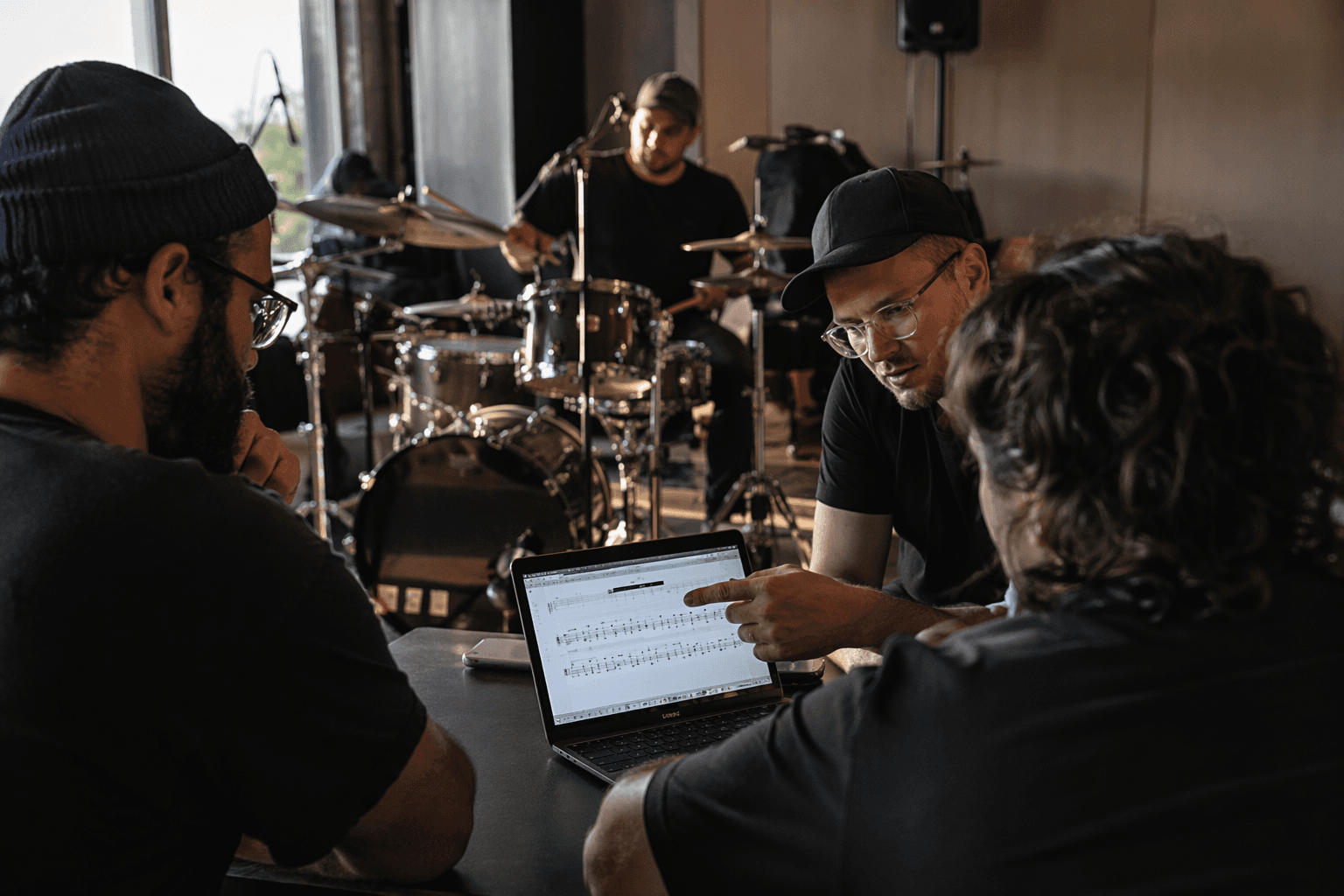
Klang.io’s Transcription Studio can turn music, MP3s, or YouTube audio into sheet music, TABs, MIDI, and MusicXML. Ethan Hein’s July 6, 2026 MusicRadar review placed the tool in the fast-moving AI transcription wave, but for drummers the takeaway is more specific: it may get you to a usable map faster, while your ears still decide what the groove really means.
What drummers can do with the first pass
Transcription Studio is built to run in a browser or as a DAW plugin. For a drummer who learns by ear, that matters because the job is rarely just “name the notes.” It is also about getting the form down, spotting where the fill lands, and marking the places where the arrangement opens up, shuts down, or hits a stop.
Instead of rewinding the same eight bars over and over, you can use the transcription as a rough road map for verses, choruses, breaks, and transitions. If you are building a cover chart, prepping a lesson, or trying to capture a studio part before rehearsal, the point is not perfection on the first export. The point is getting from audio to something you can read, annotate, and test against the recording in less time.
By March 2026, Transcription Studio could detect multiple instruments in an audio file and transcribe their parts to sheet music, tablature, or MIDI data, a capability Sound On Sound highlighted. For drummers, that makes it more useful than a simple tempo or loop tool, because it can help separate the drum part from the rest of the arrangement and show where the groove sits inside the full track.
Where the human ear still has to take over
The limits are just as important as the speed. These systems are moving quickly without replacing humans anytime soon. For anyone charting grooves by ear, the hardest decisions are usually the ones software is least equipped to make.
A machine can point you toward the kick-snare pattern, the length of the chorus, or the rough shape of a fill. It cannot reliably tell you how hard the backbeat should sit, whether the hi-hat is feathered or biting, or how much ghost-note motion is buried between the main accents. It also cannot fully capture push and pull, micro-timing, or the difference between a straight eighth-note pocket and something that leans just enough to give the tune its feel.
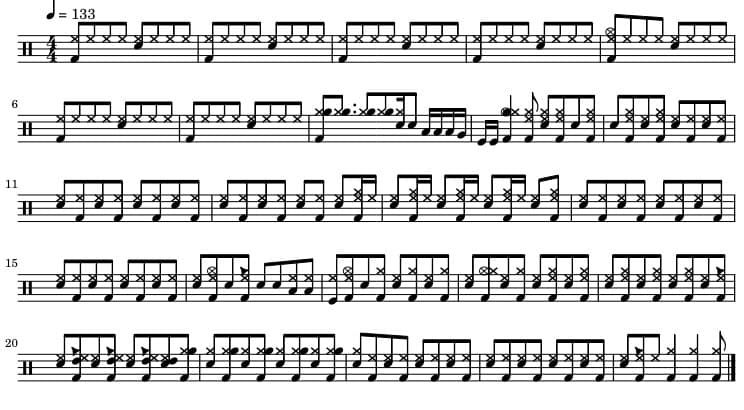
That is why the best use of Transcription Studio is as a first draft generator, not a finished chart. For a drummer, the real work still happens after the software gives you the outline. You still have to listen for dynamics, articulation, and placement, then correct the notation so the chart reflects the performance instead of just the algorithm’s best guess.
Why Klang.io is pitching this from a drum-aware angle
Klang.io is not approaching this like a generic office transcription app that wandered into music by accident. The company is based in Karlsruhe, Germany, and founder Sebastian Murgul is doing doctoral work on AI and music at KIT University. That background helps explain why the company’s product line has a drum-specific thread running through it.
In June 2025, Klang.io launched Drum2Notes, an AI model the company says can turn drum grooves into sheet music and capture every beat and fill. The model tracks the exact workflow drummers use when they transcribe by ear: identify the pulse, lock down the pattern, then clean up the details by hand. Transcription Studio sits in that same lane, but with broader inputs and output formats that are useful once the groove has to live inside a chart, a session file, or a rehearsal prep document.
Klang.io says Transcription Studio has passed 4 million transcriptions and includes a 14-day money-back guarantee.
How to judge it in a real drumming workflow
The cleanest test is simple: use it where it can save time, and ignore it where judgment still matters. Let it do the tedious first pass on form, repeated sections, and broad groove detection. Then listen back with a drummer’s ear and correct the chart for ghost notes, dynamics, accents, and feel.
This article was produced by Prism’s automated news system from verified source data, official records, and press releases, then run through automated quality and moderation checks before publishing. The system is built and supervised by the people who set the standards it runs under. Read our full AI policy.
Did this article answer your question?