Meinl 2026 festival spotlights global drumming across genres and generations
Garstka and El Estepario Siberiano anchor a Meinl lineup that treats drumming as a global language, with clinics, lineage, and crossover style on the same bill.
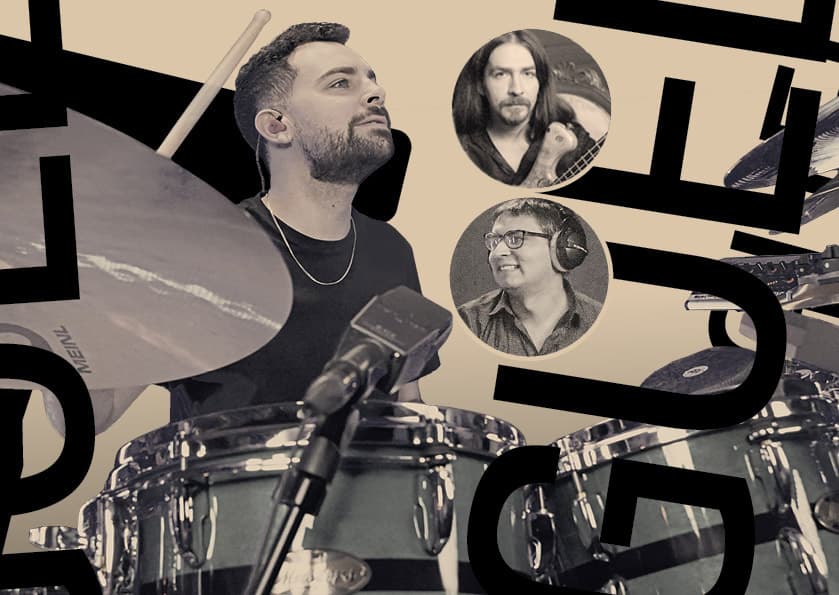
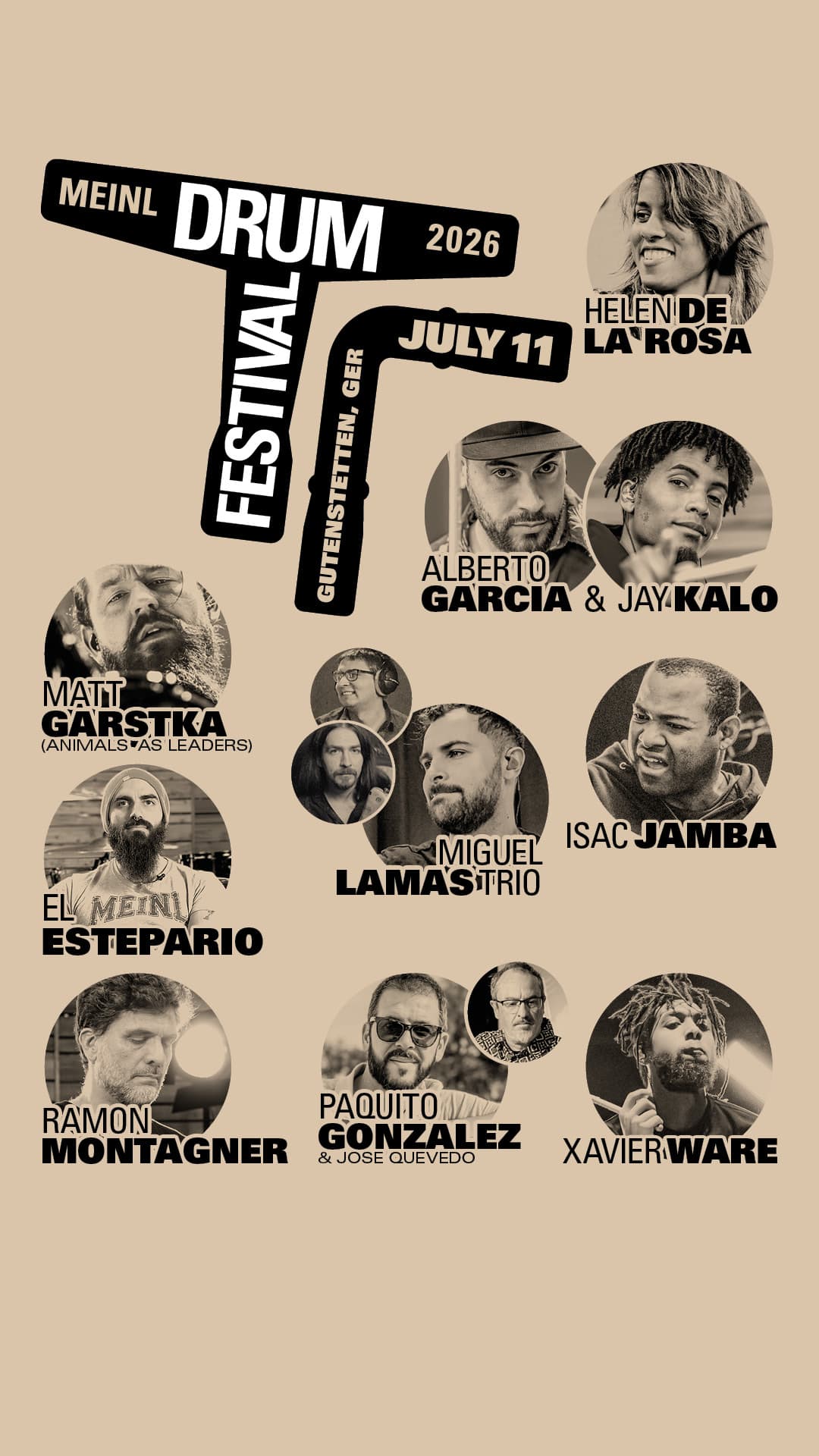
Matt Garstka and El Estepario Siberiano on the same Meinl bill tell you exactly what kind of drumming festival this is: one built around contrast, not just celebrity. The 2026 edition lands on July 11 in Gutenstetten, Germany, with a lineup that runs from progressive metal and social-media chops to latin, flamenco, fusion, jazz, gospel, and modern session work.
A lineup that reads like a map of the scene
The official artist list is broad enough to feel less like a roster and more like a snapshot of where modern drumming lives right now. Matt Garstka, El Estepario Siberiano, Ramon Montagner, Xavier Ware, Helen De La Rosa, Isac Jamba, Miguel Lamas Trio, Jay Kalo, Alberto Garcia, and Paquito Gonzalez & Jose Quevedo all sit under the same banner, but they come from very different corners of the instrument.
That matters because the festival is not selling one school of playing. It is putting technique, personality, and audience connection in the same frame, whether the player comes from prog precision, Latin vocabulary, church-rooted feel, or the polished language of session work. For drummers, that is the real hook: the lineup suggests a room where style boundaries are porous and the conversation is happening between languages, not inside them.
Why Garstka and El Estepario belong in the same conversation
The title pairing is not accidental. Drums & Percussion frames Matt Garstka as “extreme rhythmic architecture,” while El Estepario Siberiano represents the social-media generation. Put those two ideas side by side and you get a clean picture of the current split in drumming culture: one lane built on deep structural control, the other on speed of reach, visual identity, and the kind of online presence that turns a solo into a clip before the cymbal decay is done.
That contrast is exactly what makes the pairing interesting for serious players. Garstka signals the kind of playing that rewards close listening, metric detail, and the clinic-room mindset. El Estepario brings a different kind of tension, where charisma, camera awareness, and sheer velocity matter as much as the notes themselves. Together they show how modern drumming now lives in two places at once, onstage and online, and the best players have learned to speak both dialects fluently.
The deeper roster carries the real musical range
The festival’s strongest cross-genre argument shows up in the rest of the bill. Jay Kalo brings a Havana-to-New York story that starts at Cuba’s National School of Art and includes a breakout performance with Wynton Marsalis and the Jazz at Lincoln Center Orchestra in New York. Alberto Garcia pushes even farther across borders, working as a percussionist, composer, producer, and educator while bridging jazz, flamenco, Afro-Cuban, and Brazilian traditions, with teaching posts in Mannheim and Basel.
Ramon Montagner is given both a mainstage set and a masterclass slot, which says a lot about how the festival sees him. He is there as a performer, but also as an educator and author, the kind of player who can turn a crowd into a classroom without losing the pulse. Xavier Ware adds another generation and another pathway into the instrument, with a background shaped by church music, formal theory, and the kind of polished technique that translates cleanly from the bandstand to the lesson room.
Helen De La Rosa widens the picture again. Drums & Percussion points to her arena and studio credentials, and her résumé includes work with Alejandro Sanz, Shakira, Juan Luis Guerra, and Victor Wooten. That mix of pop scale, Latin fluency, and high-level musical adaptability fits the festival’s larger pattern perfectly: this is a bill that treats versatility as a skill, not a compromise.
The remaining names keep that breadth from narrowing into a handful of familiar talking points. Isac Jamba, Miguel Lamas Trio, and Paquito Gonzalez & Jose Quevedo round out a lineup that leans into ensemble identity as much as solo display. Even without reducing each act to a single label, the structure is clear enough: this is a gathering where trio formats, collaborative billing, and individual statement pieces all have room to breathe.
Gutenstetten is not just a venue, it is the point
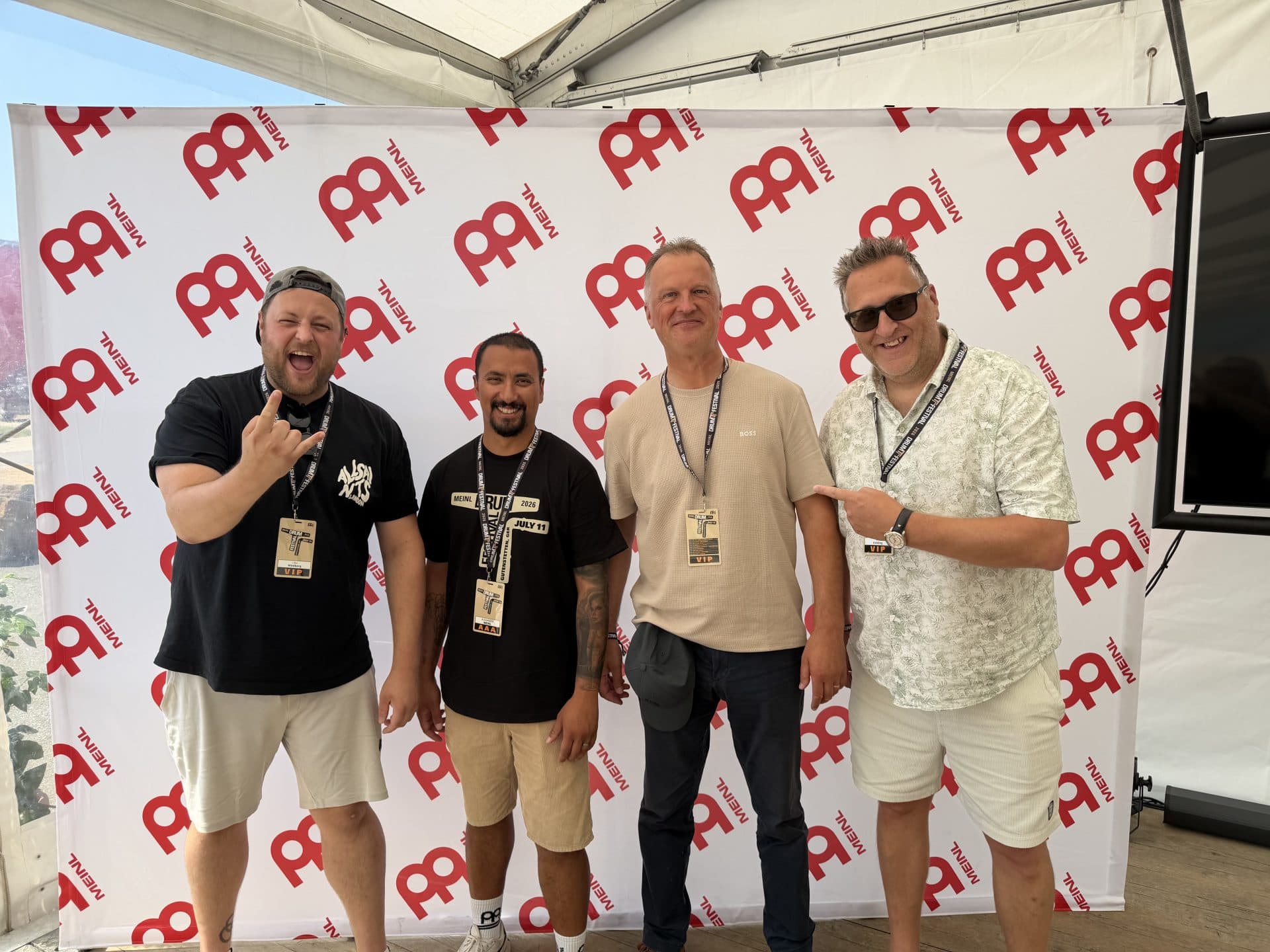
Meinl’s own history gives the festival extra weight. The company says the first Meinl Drum Festival took place on September 10, 2005, on its own premises in Gutenstetten and drew approximately 1,000 drummers and percussionists from across Europe. Archived festival history also shows editions in 2008, 2013, 2015, and 2023, which makes the 2026 return feel less like a one-off showcase and more like a recurring homecoming.
That matters because Meinl is not presenting the event from a distance. It describes itself as a family-owned manufacturer and distributor of musical instruments based in Gutenstetten, and the festival sits in that same ecosystem. The setting helps explain why the event can feel both branded and communal at once, like an open door into the company’s center of gravity rather than a trade-show sidebar.
What to watch for if you care about the drum set, not just the poster
The clearest must-watch moments are the ones where different drumming identities are placed in the same visual field. Garstka and El Estepario Siberiano are the obvious collision point, because the contrast between deep rhythmic architecture and social-first flash is built into the pairing itself. Ramon Montagner’s split between mainstage performance and masterclass also deserves attention, because that usually means the same hands that are entertaining the crowd will be unpacking the vocabulary moments later.
Jay Kalo and Alberto Garcia push the conversation toward lineage and musical depth, while Helen De La Rosa brings the proof that modern session drummers can move comfortably between pop scale and high-level musicianship. Add Xavier Ware’s church-to-theory route, and the festival starts to look like a survey of how drummers actually get forged now: through schools, scenes, tours, cameras, clinics, and the long work of translating one groove into many contexts.
Practical notes for the day
- The festival takes place on July 11, 2026, in Gutenstetten, Germany.
- Children up to and including 12 years old receive free admission with proof of age.
- A security check takes place at admission.
- Parking is at the ticket holder’s own risk.
That is what makes the 2026 Meinl lineup feel sharper than a standard artist roll call. It is a room where a clinic player, a social-media phenom, a Latin fusion educator, and a church-shaped technician can all share the same stage without feeling out of place, and that is exactly where contemporary drumming has been heading.
This article was produced by Prism’s automated news system from verified source data, official records, and press releases, then run through automated quality and moderation checks before publishing. The system is built and supervised by the people who set the standards it runs under. Read our full AI policy.
Did this article answer your question?