MusicRadar updates drummer headphones guide for practice, tracking, and live use
Protecting your hearing while keeping the click loud enough to trust is the whole game here. The updated guide frames drummer headphones as working gear for practice, tracking, and live rigs.
The real job of drummer headphones
The best drummer headphones do two things at once: they keep the volume of acoustic drums from chewing up your ears, and they let you hear the information that keeps a take or a set together. That means the click track, the backing tracks, and the module detail all have to stay clear while the room stays under control.
MusicRadar’s updated guide treats that problem like a real part of drumming life, not a side note. The focus is on serious players who move between home practice, studio tracking, loud stage environments, and electronic-drum use, sometimes in the same week. In that world, headphones are not an accessory. They are part of the kit.
Why drummer headphones are different
A pair of regular consumer headphones can sound fine in a quiet room and still fall apart the moment a snare and ride cymbal enter the picture. Drummer-specific models have to balance sound isolation, comfort, durability, and usable monitoring, because the player has to stay in time and protect hearing at the same time.
That is the central tradeoff the guide keeps coming back to. Maximum isolation helps when a guitar amp is dimed or when you are trying to hear a metronome over the kit, but the headphones still need to sit comfortably through a full rehearsal or session. If the headphones clamp too hard, fatigue becomes its own problem. If they isolate poorly, the whole point disappears.
Match the headphones to the job
Home practice
For bedroom shedding, the biggest win is simple: you can practice longer without letting the acoustic volume dominate the room. The guide’s framing makes it clear that isolation headphones are now normal tools for this kind of work, not something reserved for studio obsessives.

This is where convenience starts to matter. Some players want a straightforward wired setup, while others care more about ease of use with an electronic kit. The right choice depends less on brand mythology and more on how often you sit down, put the headphones on, and get straight to work.
Studio tracking
In the studio, headphones become part of the performance workflow. You are not just listening for fun, you are locking to a click, hearing backing tracks, and staying aware of the details from the module or playback rig without bleeding that sound into the microphones.
That is why low-latency, stable monitoring matters so much when you are tracking. The guide’s practical angle reflects how drummers actually work in recording situations: if the monitoring feels vague or delayed, the take gets harder, and if the isolation is weak, the whole room starts fighting the headphones instead of using them.
Loud stage environments
On stage, the problem gets more immediate. A drummer may need to hear the click, the backing tracks, or the rest of the band while dealing with an already loud acoustic source right at ear level. In that setting, isolation is not a luxury. It is part of keeping the show together and protecting hearing at the same time.
The guide’s broad approach fits live use because it recognizes that drummer needs are often contradictory. One player wants maximum isolation, another wants low-latency wired monitoring, and another wants a more convenient setup that can move easily between rehearsal and performance. That tension is exactly why a one-size-fits-all answer never really works for drummers.
Electronic kits and hybrid rigs
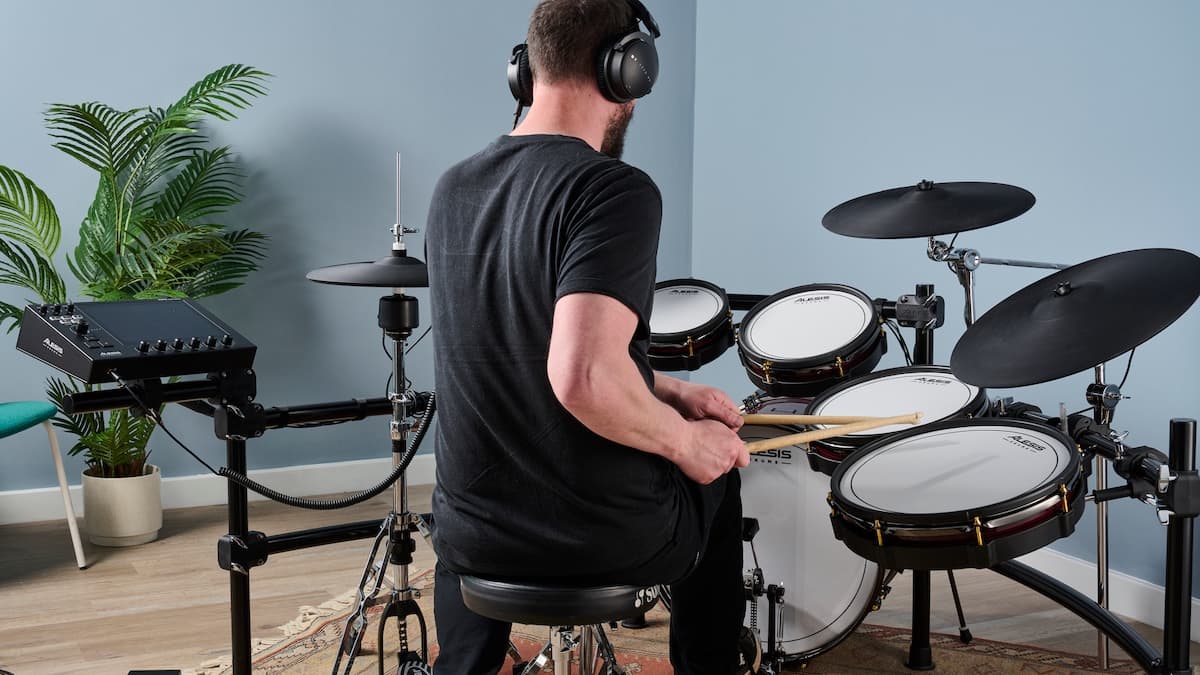
The modern drummer is often moving between acoustic and hybrid setups, and that changes what headphones need to do. With electronic kits, the priority can shift toward convenient monitoring of module sounds, while still keeping the outside world at bay. In a hybrid room, you might be hearing both acoustic shells and electronic textures in the same set, which makes clarity and isolation equally important.
This is where the guide feels especially current. It reflects a drumming culture in which hearing protection, portability, and monitoring quality all have to be solved together, not one after the other. The fact that the article is aimed squarely at serious drummers says a lot about where the market is now.
What the shortlist says about the market
The guide highlights products such as Vic Firth Bluetooth Isolation Headphones, which is a useful signal on its own. It shows how broad the category has become, stretching across wired, wireless, and studio-monitor styles rather than staying locked into a single idea of what drummer headphones should be.
That breadth matters because different gigs and practice spaces call for different priorities. Bluetooth can make practice feel easier and less cluttered. Wired monitoring still appeals when exact timing and stable playback are the priority. Studio-monitor styles sit in between, aiming to translate detail cleanly while staying practical for long sessions.
The bigger shift in drumming life
What makes the updated guide useful is not just the product shortlist. It reflects a bigger change in the way drummers think about daily work. Isolation headphones are no longer an odd purchase for a special session, they are part of normal drumming life, whether you are shedding in a bedroom, recording in front of microphones, or trying to hear a metronome over a loud band.
That shift also explains why the guide reads as both gear advice and a safety reminder. The modern drummer is expected to solve hearing protection, portability, and monitoring quality in one move, and the best headphone choice is the one that fits the real use case in front of you. In 2026, that is what practical drumming gear looks like.
This article was produced by Prism’s automated news system from verified source data, official records, and press releases, then run through automated quality and moderation checks before publishing. The system is built and supervised by the people who set the standards it runs under. Read our full AI policy.
Did this article answer your question?