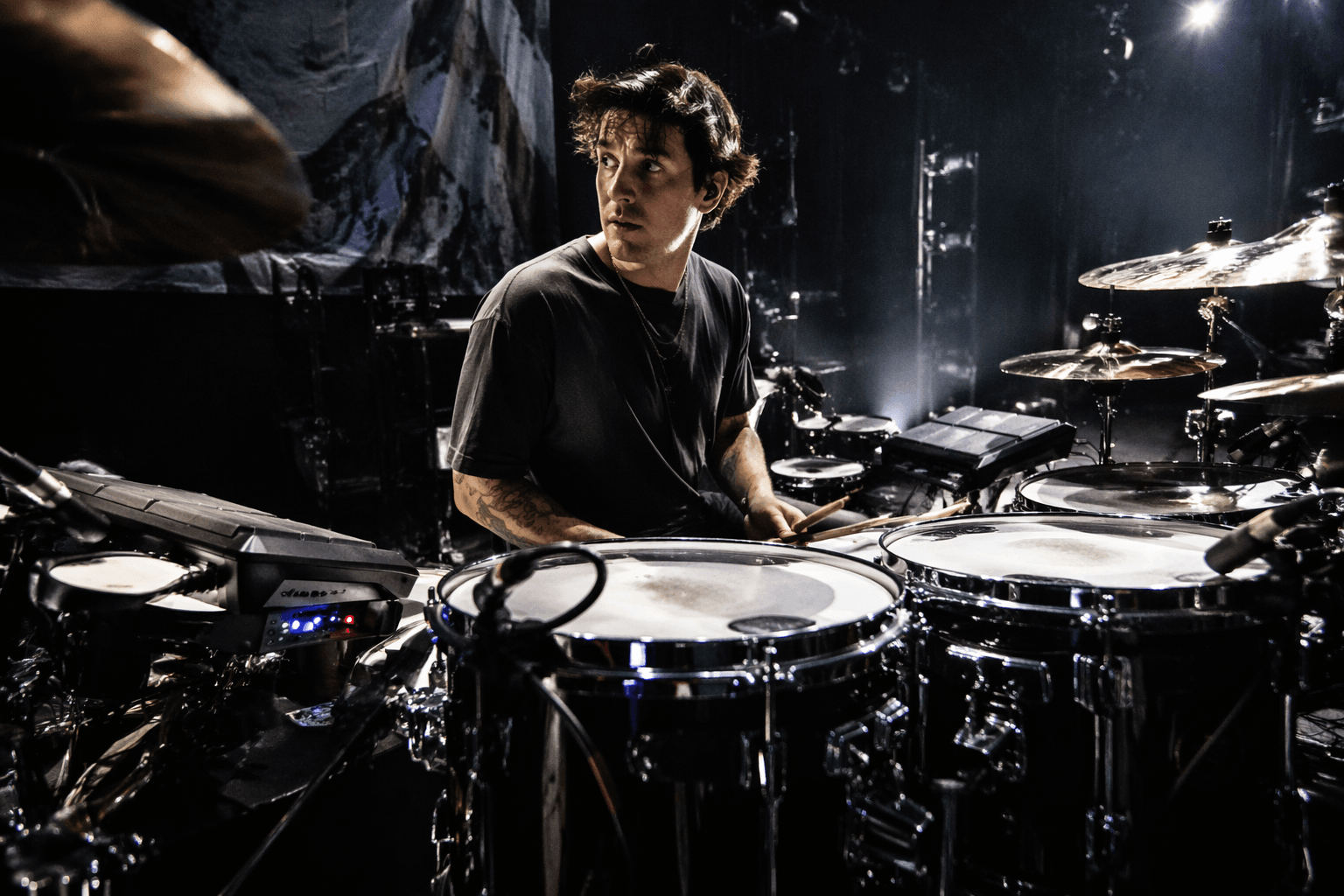
Sick Drummer Magazine spotlights Tim Powell’s rise in extreme metal drumming
Tim Powell’s climb from Panama City to Squassation shows how extreme metal still rewards ear-trained drummers, scene tips, and hard-earned miles.

Tim Powell’s climb into the extreme-drumming conversation came less from a classroom pedigree than from scene traffic, the kind that starts when one player points another toward a great performance and the whole underground pays attention. Sick Drummer Magazine first noticed him while building its 2025 Favorite Drumming Albums list after Tomasz Pilasiewicz of Gorgasm flagged Powell’s playing, and that tip turned into a closer look at a drummer now tied to Squassation, the Gulfport, Mississippi band formed in 2023 whose first full-length arrived last October on New Standard Elite.
Powell’s route to that point began in Panama City, Florida, when his older brother needed a drummer for a death metal band and gave him his first practical path into the instrument at age 14. He never took formal lessons. Instead, he learned by ear, soaked up technique from the side of the stage at shows, and later picked apart ideas on forums once he became active in the mid-2000s. That mix of live observation and repetition still sits at the center of how a lot of extreme-metal drummers build their chops, and Powell’s story lays that out plainly.
His résumé also stretches deep into the underground circuit. In 2007, Powell moved to Ohio to join Embalmer and also filled in for Decrepit, adding another layer of road-tested credibility before leaving Embalmer after the release of a two-song promo that later resurfaced in discography form. Those credits matter in a scene where precision is only part of the job; endurance, adaptability, and the ability to walk into another band’s language count just as much.
Powell’s warm-up routine is as functional as his background. He stretches his fingers and wrists, works on the snare while mimicking kick patterns on the floor, runs through most of the set, and then tries to stay relaxed before showtime. He also names a wide range of influences and current favorites, a reminder that the modern death-metal ecosystem runs on peer recommendation, online discovery, and cross-band respect as much as any formal training. Powell fits the current moment because he represents exactly what listeners are rewarding now: players who bring technique, scene memory, and the kind of timing that only comes from years spent watching, listening, and hammering it out in real rooms.
This article was produced by Prism’s automated news system from verified source data, official records, and press releases, then run through automated quality and moderation checks before publishing. The system is built and supervised by the people who set the standards it runs under. Read our full AI policy.
Did this article answer your question?