Pal-Chemy Program Pairs Percussionists and Clarinetists in Transformative Chamber Duets
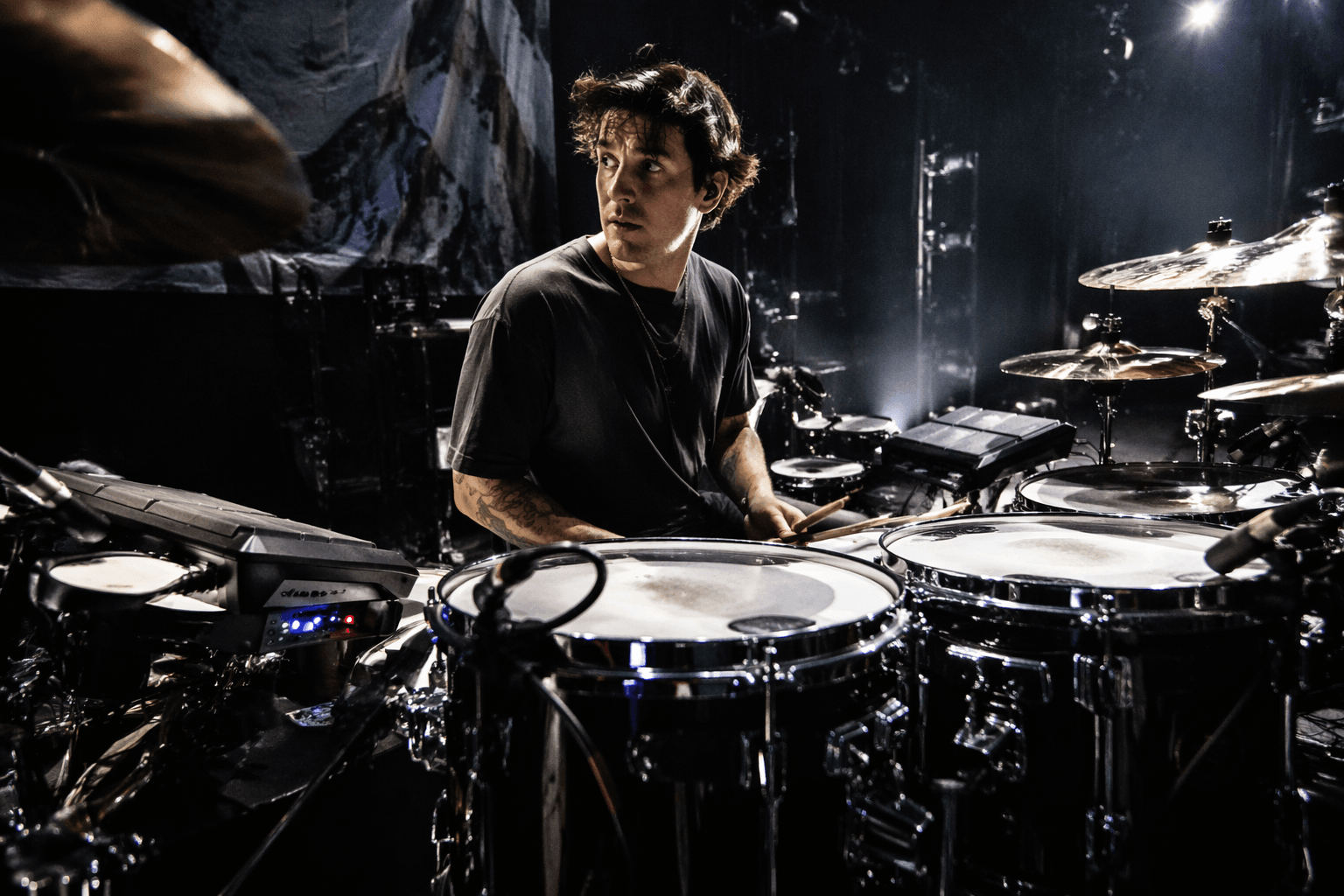
A clarinet-percussion duo program called Pal-Chemy is changing how percussionists think about chamber music — and what they steal from it can transform any small-ensemble gig.
The name says it all, if you let it sit for a second. Pal-Chemy: part friendship, part transformation, entirely serious about what two instruments can do to each other when the right players are in the room. The program, profiled in West Side News, pairs clarinetists with percussionists in a curated series of chamber duets, and while it might sound like a conservatory novelty, the ideas it surfaces are directly usable by anyone who has ever tried to share a stage with a single melodic instrument and wondered exactly where they fit.
The answer, it turns out, is everywhere and nowhere obvious. That tension is exactly the lesson.
The Alchemy Concept: Turning Friends' Music Into Gold
Pal-Chemy frames its mission around the metaphor of alchemy, the ancient idea that base materials can be transformed into something precious. In this context, musical collaborators turn "friends' music into gold," a formulation that balances artistic synergy with genuine personal connection. The program is not simply about booking a clarinetist and a percussionist in the same room; it is about designing a context in which the two instruments genuinely change each other, where the clarinet's warm, sustained tone reshapes how you hear the drum's attack, and vice versa.
That reframing matters. Most percussionists approach a melodic-instrument duo from a service mentality: keep time, stay out of the way, support the "real" melody. Pal-Chemy pushes back on that instinct. The repertoire it presents, which spans transcriptions, newly commissioned works, and arrangements built specifically to exploit timbral contrast, treats the percussionist as an equal voice with distinct coloristic responsibilities.
Two Instruments, Infinite Colors: The Role of Tuned Percussion
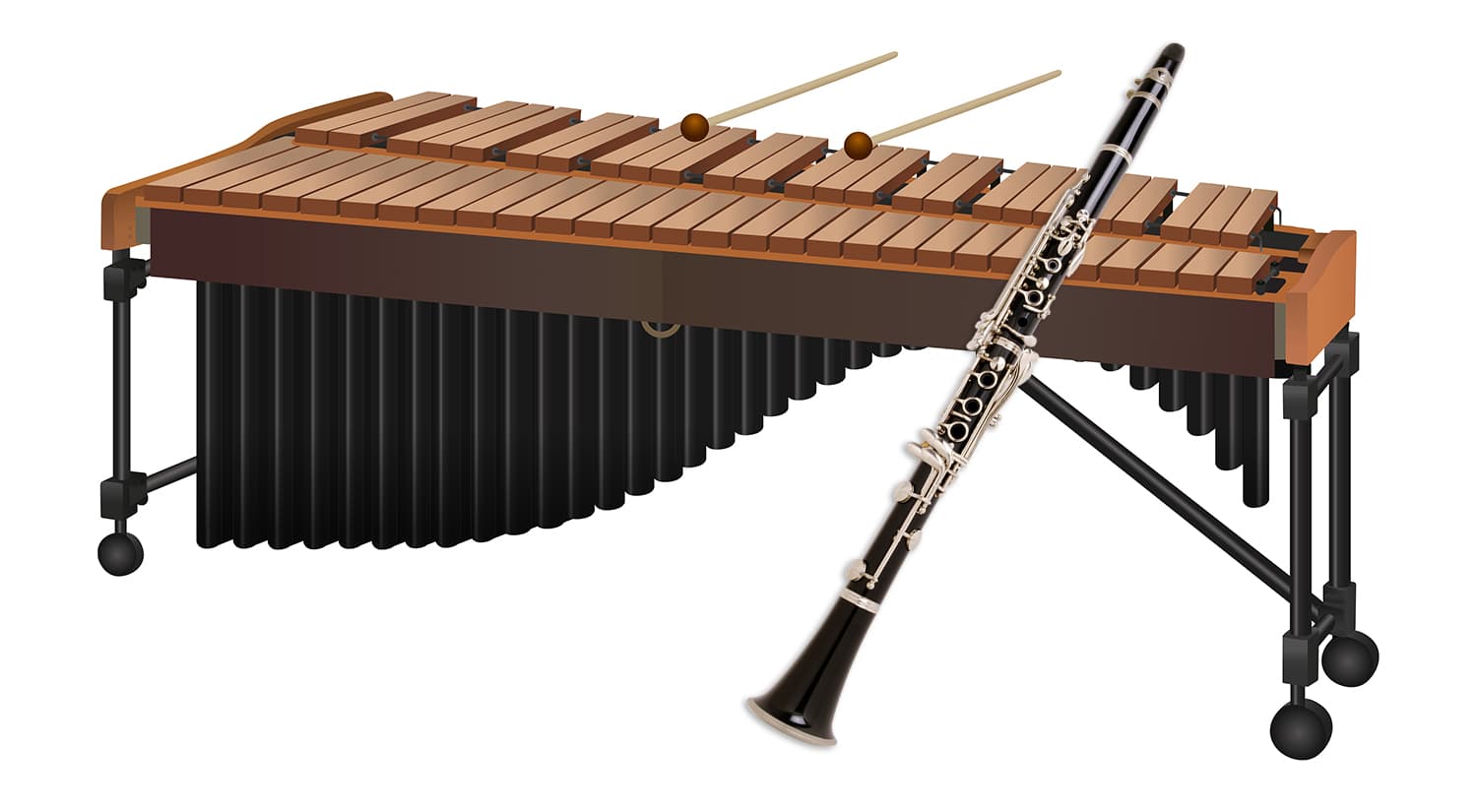
One of the most practical things Pal-Chemy puts on the table is the use of tuned percussion instruments like marimba and vibraphone to give the percussionist genuine melodic standing. In certain pieces within the program, the percussionist carries the melodic line entirely, while in others, melodic lines are woven above percussive textures in a layered interplay of attack and sustain.
For drummers working on their kit vocabulary, this is the first big steal: the marimba and vibraphone are not cheat codes for sounding "musical." They are case studies in how timbre, the actual sonic character of a note, functions as a compositional tool. A vibraphone note blooms after the mallet strike and fades with the motor's shimmer. A marimba note dies almost immediately after impact. The clarinet's tone, by contrast, can swell, thin, and breathe in ways no mallet instrument can replicate. Understanding those differences in sustain profiles gives you a map for how to place your own attacks relative to a wind player's phrases.
On the kit, you are always making timbre decisions, whether or not you name them that. The difference between a crash and a ride, between rim shot and brush on snare head, between open hi-hat and a tight choke, these are all timbral choices. Pal-Chemy's repertoire models how to make those choices in conversation with a single sustained voice rather than in the abstract.
Balancing Attack vs. Sustain: The Core Technical Challenge
When you are one of two instruments on stage, there is nowhere to hide, and the imbalance between attack-heavy percussion and sustain-heavy winds becomes immediately audible. The percussionist's sound arrives sharp and decays; the clarinetist's tone can be shaped across its entire duration. This means that in a Pal-Chemy-style duo, the percussionist must think in phrases, not hits.
Here is a rehearsal approach that applies directly to any small-ensemble situation:
1. Record a run-through and listen back with the melody muted. Ask whether the percussion part tells a coherent story on its own, with rises, falls, moments of tension, and release.
2. Identify every moment where your attack volume exceeds the natural sustain level of the wind instrument's current phrase. Those are your first edits.
3. Practice matching your dynamic arc to the phrase shape, not just the bar line. If the clarinet is building through a four-bar crescendo, your energy level should track that build, not just land on the climax.
The goal is not to erase the percussive attack. It is to make the attack serve the melodic narrative instead of interrupting it.
Space as a Compositional Tool
Pal-Chemy's programming underscores something veteran chamber percussionists know and hobby drummers often overlook: silence is not dead air. In a duo with a single melodic instrument, every rest in the percussion part is an opportunity for the melodic voice to breathe without competition. The program's emphasis on timbral interplay assumes that percussionists understand when their presence is the point and when their absence is.
This is harder than it sounds on the kit. Kit drummers are trained, through years of band playing and pop music, to maintain near-constant rhythmic coverage. In a clarinet-percussion context, dropping out for two full bars is not laziness; it can be the most expressive thing you do. Let the clarinet finish its thought. Resist the fill. Come back in with a color that comments on where the melodic line just landed.
The practical rehearsal note: map your rest positions before you rehearse the notes. Know exactly where you plan to be absent, and treat those absences as composed choices, not afterthoughts.
Cueing Transitions: The Percussionist as Narrator
One of the most underrated roles the Pal-Chemy model assigns to the percussionist is narrative: the responsibility to signal when the musical story is shifting. Because the clarinet is the primary melodic voice, transitions between sections, mood changes, and tempo inflections often need to be communicated by the percussionist, whose attacks are rhythmically precise and immediately legible to an audience's ear.
Practically, this means learning to cue with your body and your instrument simultaneously. A shift in stick grip from tip to shoulder, a move from a closed to open hi-hat, a subtle accelerando in a fill pattern: these are all readable signals that a melodic partner can track without a conductor. In a Pal-Chemy-style duo, the percussionist is functionally the section leader for transitions even when the clarinetist carries the melody.
Rehearse cues explicitly. Stop and isolate each transition point. Ask your melodic partner what they feel from your physical and sonic cues, because what reads in your mind as "obvious" often needs to be amplified by at least half a dynamic step before it registers across the stage.
Beyond Volume: Nuance as the New Percussion Currency
What makes Pal-Chemy relevant to the broader drumming community is what it signals about where contemporary chamber programming is heading. Local arts organizations and concert presenters are actively embracing nontraditional pairings precisely because they present percussion in contexts that emphasize nuance rather than volume. The program sits within a growing trend: winds-and-percussion duos that offer audiences striking timbral contrasts and a more intimate window into what percussionists can actually do.
For hobby drummers, that trend is an invitation. The skills Pal-Chemy foregrounds, coloristic decision-making, dynamic restraint, melodic awareness, phrasing across time rather than just through it, are transferable to any small-ensemble setting: a jazz trio, a folk duo, an original project with a single vocalist. The clarinet is just the occasion. The transformation is the point.
This article was produced by Prism’s automated news system from verified source data, official records, and press releases, then run through automated quality and moderation checks before publishing. The system is built and supervised by the people who set the standards it runs under. Read our full AI policy.
Did this article answer your question?