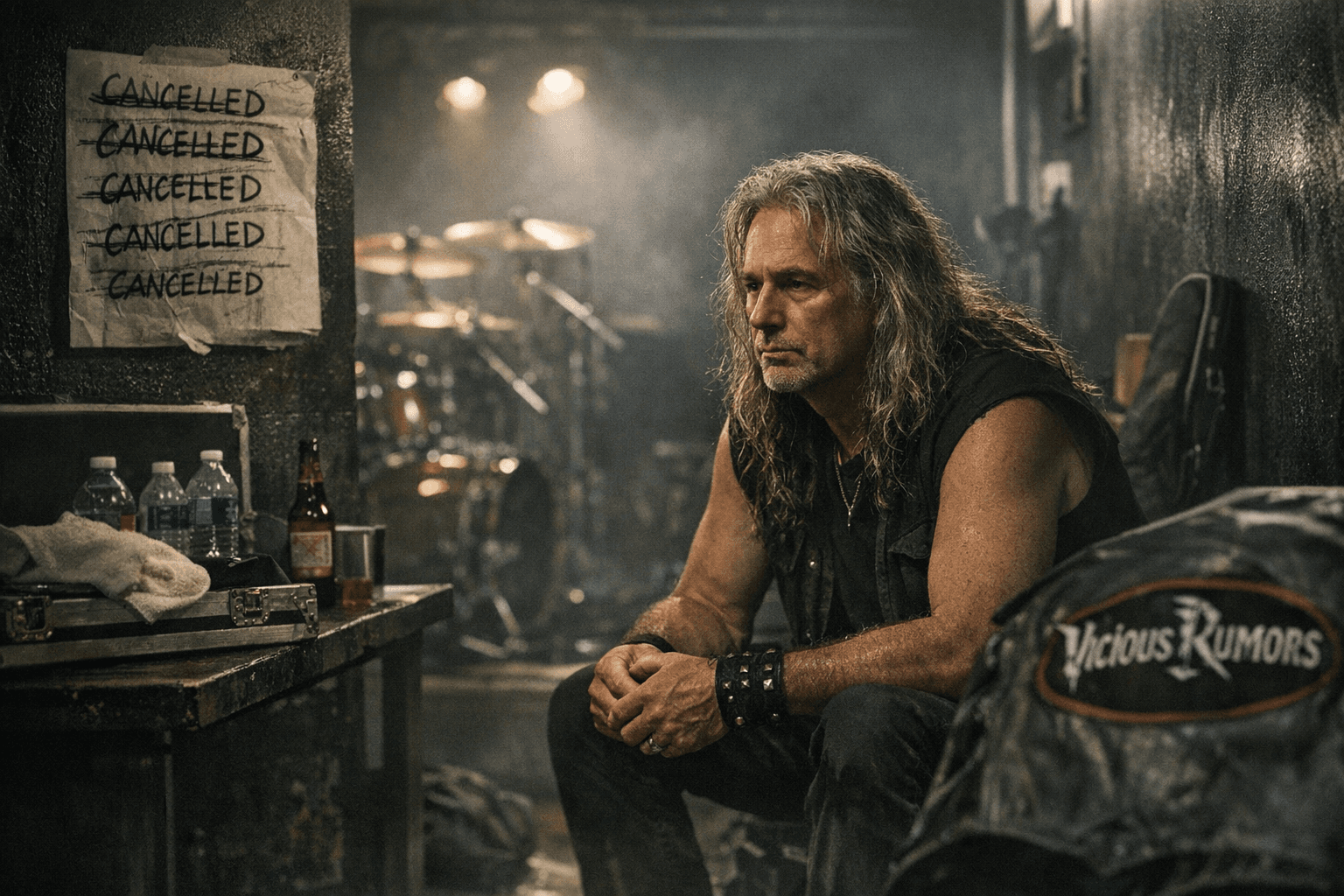
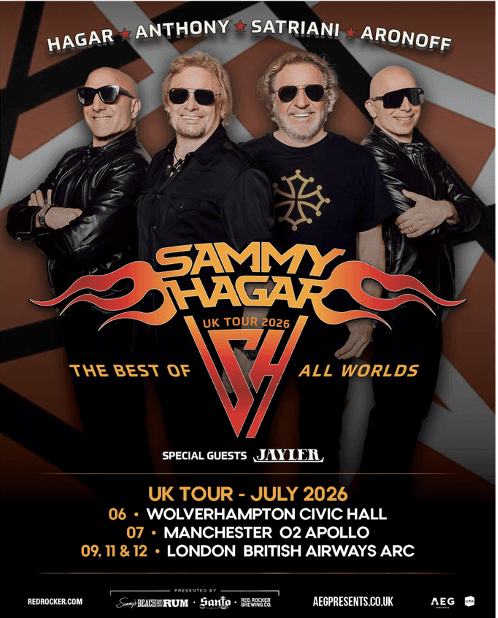
Richie Faulkner defends touring legacy bands, spotlighting Scott Travis and lineup change debate
Richie Faulkner argued legacy bands should keep touring if fans still buy tickets, and Scott Travis’s role shows why the rhythm section still decides what feels real.

Richie Faulkner used a familiar flashpoint to make a blunt case for the modern legacy-band model: if a long-running act can still fill rooms and people want the show, then the lineup should not be the first thing to kill the tour. His comments landed squarely in the middle of the fight over what audiences owe a classic band after the original members are gone, retired or simply no longer on the road.
The Judas Priest guitarist’s point matters because Priest is not speaking from the sidelines. The band’s official lineup still centers on Rob Halford, Ian Hill, Glenn Tipton, Scott Travis and Faulkner, and the group says it has more than 50 years in music and 50 million records sold behind it. Priest is also deep into its current Invincible Shield era, which arrived on March 8, 2024, and the band announced a North American run with Alice Cooper on April 15, 2025. That is the practical reality Faulkner was defending: a catalog band still working, still selling, and still putting its current players in front of a crowd that wants the songs.
For drummers, Scott Travis is the clearest reminder that authenticity in a legacy act is no longer just about who stood there on the first album cover. Travis has to carry the feel, the punch and the authority of Priest’s material night after night, and that is where a lot of these debates live or die. If the current rhythm section hits hard enough to make the songs land, many fans accept the change. If the back end feels thin, the whole show can sound like a tribute to itself.
Rush is the cleanest comparison. Geddy Lee and Alex Lifeson announced the 2026 Fifty Something tour in celebration of Rush’s music, legacy and the life of Neil Peart, and the response was strong enough to add more 2026 dates in several cities. That return says plenty about what fans will accept after a band has already said it would not tour again without all three classic members. The demand did not disappear when the lineup changed; it reappeared when the music still felt worth showing up for.
That is the harder truth underneath Faulkner’s argument. Some bands keep their identity because the remaining players can still deliver the catalog with force and conviction. Others lose the plot the moment the missing member was the one anchoring the whole machine. In a scene built on legacy, the drummer is often the difference between a living band and a museum piece.
Know something we missed? Have a correction or additional information?
Submit a Tip