San Jose State schedules multiple percussion recitals in busy May lineup
Three percussion recitals pack San José State’s May calendar, turning the Music Building Concert Hall into a proving ground for junior and senior players.
Three dates that put percussion front and center
San José State’s May recital calendar gives percussion fans something concrete to circle: Juniper Tran’s Junior Percussion Recital on May 4 at 7:30 pm, Nadja Ryan’s Junior Percussion Recital on May 9 at 12 pm, and Andrew Kuykendall’s Senior Percussion Recital on May 12 at 7:30 pm. That is a tight run of student performances, not a one-off appearance, and it tells you immediately that percussion is doing real work inside the school’s spring performance cycle.

The useful part is how visible the schedule makes the department’s rhythm. These recitals sit inside a crowded end-of-semester slate that also includes piano, violin, horn, cello, jazz, and vocal performances, which means the percussion program is sharing the same public stage as the rest of the music school. For Bay Area drummers, that matters: it is the kind of calendar that shows a campus functioning as a live, working scene rather than a closed classroom.
The names on the page also matter. Junior recitals from Tran and Ryan signal that percussion students are being asked to step up before they reach the end of the degree. Kuykendall’s senior recital marks the finish line, and that combination of junior and senior milestones in the same month is the clearest sign that the percussion track is not casual side activity. It is built around public performance, repeated exposure, and real evaluation.
What the recitals say about the training pipeline
SJSU’s School of Music makes the structure plain: percussion lessons concentrate on snare drum, keyboard percussion, timpani, and multiple percussion. That gives these recitals a broader meaning than just “student concert.” When a department teaches across that range, each recital becomes a snapshot of a player’s technical and musical reach, from keyboard mallet work to timpani control to the sort of multi-setup coordination that every serious percussionist knows can make or break a performance.
The academic expectations behind the calendar are just as important. Current-student guidance says music majors must present recitals as part of their degree work, and some degrees require both junior and senior recitals. The instrumental-performance area is even more direct, saying students are required to prepare both a junior and senior recital. In other words, the May cluster is not decorative programming; it is built into the degree path itself.
The 2025-26 undergraduate handbook sharpens that point further. During the junior year, Bachelor of Music students in Jazz Studies, Performance, and Composition must perform a public solo recital presenting at least 30 minutes of music. That requirement explains why a junior recital carries real weight in the middle of a crowded semester. It is not just a showcase, it is a degree milestone, and the calendar shows several students hitting that mark in public.
That structure gives percussion students repeated chances to refine repertoire, manage nerves, and learn how to project in front of an audience. It also makes the public recital hall part of the lesson plan, which is exactly the kind of system that produces stronger players. When a school asks students to stand up, play through a substantial set, and do it again later in the program, it builds stage habits that translate far beyond campus.
Why the campus setup turns May into a percussion hub
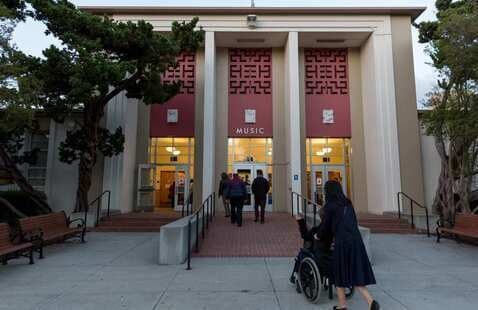
The venue side of this story is bigger than it first looks. The Music Building Concert Hall holds 545 people, which is large enough to make these student recitals feel public in the best sense. That capacity helps explain why so many spring performances land there, because a room that size can absorb the churn of an end-of-year recital season without making each event feel cramped or improvised.
The Music Building also has 36 soundproof practice rooms, which is the sort of detail that tells you a lot about what happens behind the performances. You do not get a healthy recital pipeline without somewhere to practice marimba runs, tighten snare passages, or piece together a multiple-percussion setup without driving everyone else insane. Those rooms are part of the infrastructure that turns recital dates into finished performances.
SJSU’s ensemble life adds another layer. The school offers a Percussion Ensemble, and the Wind Ensemble includes percussion students among its membership. The school also describes its ensembles as having a long and distinguished reputation for performances at home, on tour, and at state and national conferences. That makes the percussion calendar feel less isolated and more like one piece of a larger performance ecosystem, where students are learning both solo responsibility and ensemble discipline.
Put all of that together and the May lineup reads like a practical map of how the school operates. The Concert Hall gives students a public platform, the practice rooms give them space to build the work, the ensembles give them ensemble chops, and the recital requirements force the whole system to produce actual performances. For drummers, that is the real story here: San José State is not just scheduling recitals, it is showing how a university can function as a local hub for emerging percussionists who need stage time, repertoire, and a room full of listeners before they graduate.
This article was produced by Prism’s automated news system from verified source data, official records, and press releases, then run through automated quality and moderation checks before publishing. The system is built and supervised by the people who set the standards it runs under. Read our full AI policy.
Did this article answer your question?