Speed-A-Beat uses roller bearings to rethink bass drum pedal control
Speed-A-Beat swaps pedal friction for nine steel bearings, but the real test is whether that free motion exposes better technique or just changes the feel under your shoe.

The lure of Speed-A-Beat is simple: what if the bass drum pedal stopped fighting your foot? John Crocken’s patented universal roller-ball module replaces the usual friction under the shoe with free-spinning steel bearings, then asks a very drummer-specific question: can that setup actually "double" foot speed, or does it only make a different kind of motion feel easier?
That is why this is more than a gadget story. The module is built for players who care about mechanics, efficiency, and whether hardware can meaningfully improve the connection between body and pedal. In a scene where technique debates never really die, Speed-A-Beat lands right in the middle of the old argument: speed comes from the player first, but the interface still matters.
What Speed-A-Beat actually changes
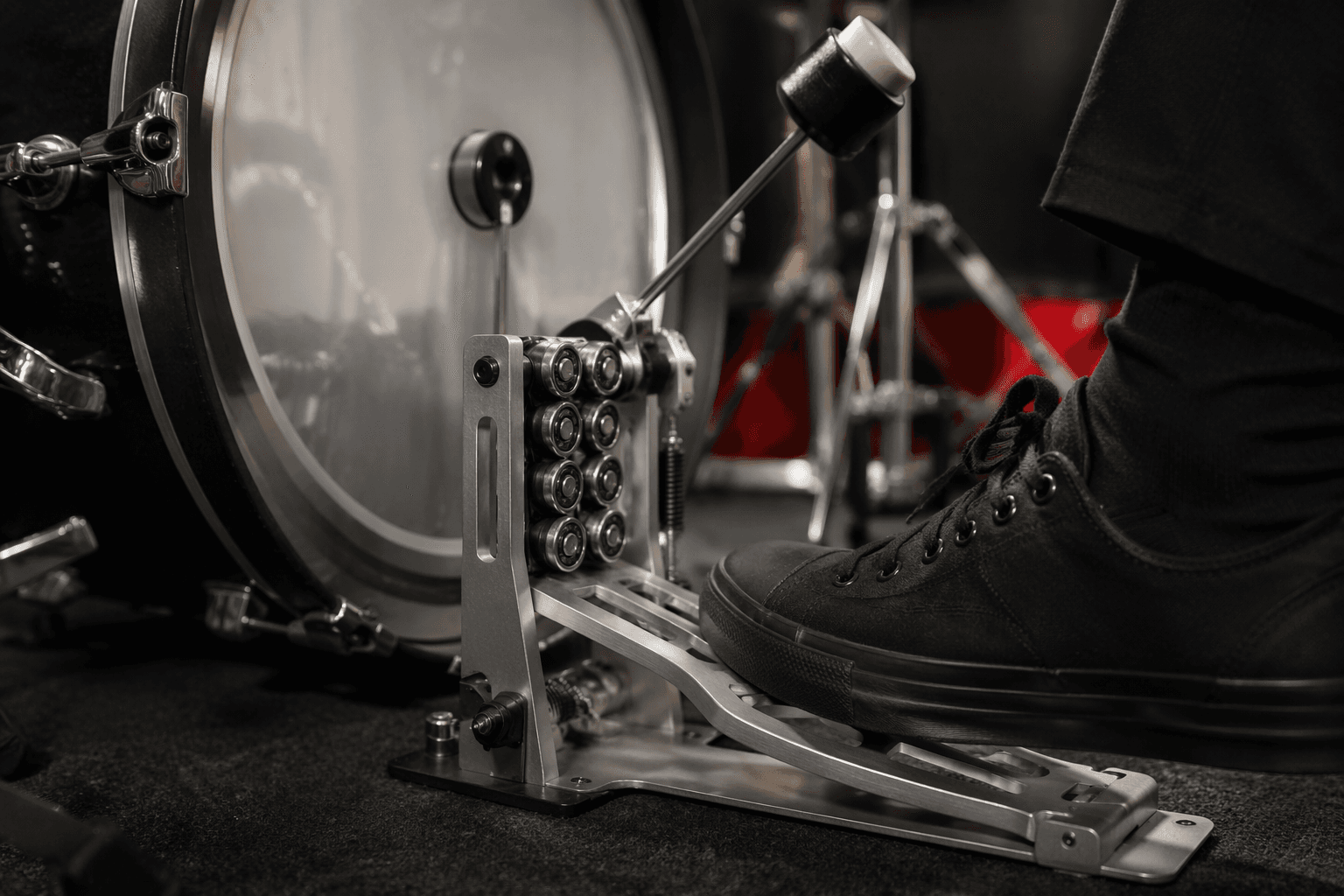
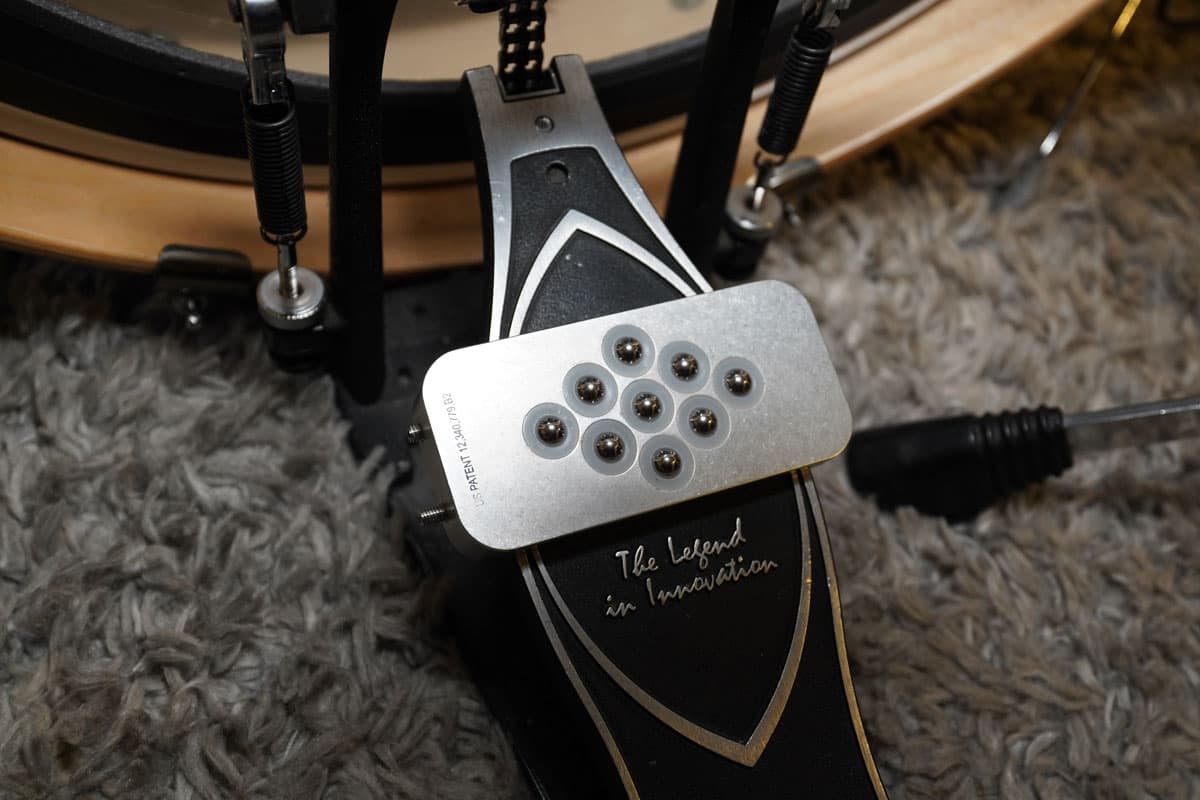
Speed-A-Beat mounts to most modern bass drum pedals, so it is not a one-off science project tied to a single footboard. The core assembly is an aluminum block with nine steel bearings, secured with hex-key set screws, and the whole point is to replace ordinary drag with rolling contact.
Because the bearings are omnidirectional, the foot is not limited to a straight-ahead track. It can move forward and back, side to side, and with more swiveling than a traditional footboard usually allows. That is the part drummers will either find intriguing or immediately suspect, because pedal feel is never just about speed. It is also about stability, rebound, and whether your foot has enough reference to keep accents and doubles clean.
For players who have already dialed in a compact, efficient motion, that low-friction feel could make fast passages seem less blocked. For players who rely on the resistance of a conventional board to locate the stroke, it could feel like stepping onto something too loose, too slick, or too detached from the usual feedback loop.
Why Crocken’s idea has real drum-world roots
Crocken is not presented as some outsider with a random invention. His name already carries weight for drummers who know the well-balanced hand-latched sticks associated with Jim Chapin and Max Roach, which gives the roller-ball module a craft lineage instead of a novelty-only vibe.
The deeper historical hook is Sanford Moeller. Crocken’s concept was sparked by a self-contained roller pedal built by Moeller, and that matters because Moeller’s reputation in drumming has always been tied to natural motion and efficiency. Modern Drummer’s broader coverage traces Moeller’s thinking back to his observation of Civil War snare drummers, which helped shape the Moeller approach into a system built around bounce, release, and economy.
That same lineage runs through Jim Chapin, who helped translate and popularize those ideas for generations of drummers. Chapin’s 1948 book, *Advanced Techniques for the Modern Drummer*, sits right in that conversation: the body should work with motion, not against it. Speed-A-Beat is basically the pedal-version of that argument, only with bearings instead of a rudimental pad.
The history behind the hardware race
The pedal itself has always been a response to a practical problem, not just a product category. Modern Drummer’s pedal history coverage places bass drum pedal development back in the 1890s, when bands were squeezing into orchestra pits and players needed a way to control the bass drum without giving up mobility or musical precision.
That history is worth remembering because it keeps the Speed-A-Beat conversation honest. Drummers have been chasing mechanical advantages for more than a century, but the best ideas usually survive because they solve an actual playing problem. A pedal that reduces resistance can be a real help if it lets the foot move more cleanly, but it can also expose bad habits faster. A device that promises more speed has to be judged on whether it improves usable control, not just how exciting it feels for the first five minutes.
How to judge whether it helps your playing
If you want to know whether a roller-ball module is worth your money, test it like a tool, not a toy. The question is not whether it feels different. It is whether it makes real phrases easier, more consistent, or less tiring.
Try it against the exact problems you already know you have:
1. Play short bursts of 16ths at a tempo you already control on a normal pedal.
2. Check whether the same figure feels lighter, cleaner, or simply less anchored.
3. Test side-to-side and swiveling motion, because the bearing layout allows movement most boards do not.
4. Watch for control on starts and stops, not just top speed.
5. Listen for whether your doubles stay even when the foot is moving with less friction.
That last point matters. If the module genuinely reduces waste in the motion, the difference should show up in cleaner bursts and less effort at the same tempo. If your technique is already efficient, the module may not magically create new speed so much as reveal whether your current motion is truly compact. That is the more useful promise here: not replacement, but diagnosis.
Who is most likely to benefit
The strongest case for Speed-A-Beat is for drummers already obsessed with foot mechanics, especially players who like to experiment with how little resistance they can get away with. If you practice fast-foot vocabulary, want to compare different ankle paths, or are curious how much pedal drag is limiting your current setup, this module gives you a very direct way to investigate.
It is a less obvious fit for players who need a firm, familiar reference point under the shoe, or who want the pedal to feel like a stable extension of the leg. The more you depend on tactile resistance to shape your stroke, the less likely you are to hear this as an upgrade. And that is exactly why the product is interesting: it forces a real question about whether your speed lives in the body, the pedal, or the friction between them.
Speed-A-Beat does not escape the old drummer truth that technique still has to do the work. But by replacing a conventional pedal surface with nine steel bearings and a freer path of motion, it offers a sharp test of where your efficiency really comes from. If the foot already knows what to do, the module may help it move with less drag. If it does not, the bearings will not save you.
This article was produced by Prism’s automated news system from verified source data, official records, and press releases, then run through automated quality and moderation checks before publishing. The system is built and supervised by the people who set the standards it runs under. Read our full AI policy.
Know something we missed? Have a correction or additional information?
Submit a Tip