Vic Firth's 40 Essential Rudiments Hub Offers Drummers a Complete Learning Resource
Vic Firth's rudiment hub covers all 40 P.A.S. International Drum Rudiments with play-along tracks, five-level application exercises, and Dr. John Wooton's lesson videos.
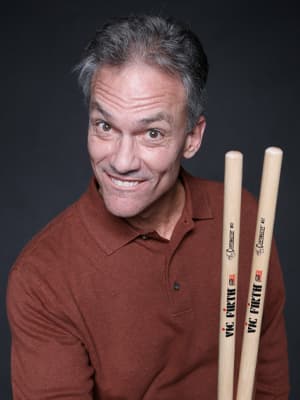
Vic Firth's drum rudiment education hub packs everything a snare player needs to systematically conquer the Percussive Arts Society's 40 International Drum Rudiments into one structured, freely accessible resource. Anchored at vicfirth.com/education/rudiments.php, the page pairs a 14-page downloadable PDF with exclusive online play-along audio playlists, application exercises graded across five levels, and full lesson videos from Dr. John Wooton. Whether you're just starting to develop your chops or drilling high-tempo patterns for a competitive ensemble, the hub is designed to meet you exactly where you are.
How the Hub Is Structured
The resource organizes the 40 rudiments into four canonical categories drawn directly from the P.A.S. framework: Roll Rudiments, Diddle Rudiments, Flam Rudiments, and Drag Rudiments. A filter system on the site lets you jump straight to any group, and a "Select a Rudiment to Get Started!" prompt keeps the entry point simple. A printable PDF poster of all 40 rudiments is also available for download, making it easy to post a reference sheet in a practice room or rehearsal space.
Tracking Progress from Bronze to Diamond
Every rudiment on the hub comes with play-along audio playlists that progress through graduated difficulty levels, from Bronze up to Diamond, plus an "open-close-open" option that builds tempo control by moving from slow to fast and back again. Each rudiment also carries an Application Exercise in five distinct levels, meaning you always have a concrete next step rather than simply looping the same pattern indefinitely. That five-level structure is what separates this resource from a plain notation sheet: it turns each rudiment into a miniature curriculum of its own.
I. Roll Rudiments
The Roll Rudiments section opens the document on page 2 and is the most expansive category, spreading across the first several pages of the 14-page PDF. It breaks into three sub-groups.
*Single Stroke Rudiments* cover the Single Stroke Roll, the Single Stroke Four, and the Single Stroke Seven. These are the foundational patterns where pure alternating strokes are developed, and each carries its own application exercise to push players beyond rote repetition.
*Multiple Bounce Rudiments* come next, and this is where exercises author Mark Wessels steps in with a specific technical note. Wessels, who authored the application exercises and performed the play-along files throughout the hub, writes: "In order to play the multiple bounce roll with a high quality of sound, speed is not a determining factor." That's a critical reminder for anyone who has chased speed at the expense of tone control, and it reframes how you should approach this particular rudiment from the first repetition.
*Triple Stroke Roll* appears on page 3, accompanied by the resource's metronome range framework. Tempo markings across the hub span five ranges: m.m.=50-75, m.m.=70-100, m.m.=80-110, m.m.=100-150, and m.m.=140-190, providing a clear roadmap for building speed incrementally through the play-along tracks.
*Double Stroke Rudiments* begin on page 4 and constitute the largest single sub-section in the entire document. The Double Stroke Open Roll leads off, followed by the Five Stroke Roll (with separate duple and triplet applications), the Six Stroke Roll, the Seven Stroke Roll (again with duple and triplet applications), the Nine Stroke Roll, Ten Stroke Roll, Eleven Stroke Roll, Thirteen Stroke Roll, Fifteen Stroke Roll, and the Seventeen Stroke Roll. The duple and triplet splits on the Five Stroke and Seven Stroke Rolls are particularly useful: they show how the same pattern transforms rhythmically depending on the subdivision, which is directly applicable to both marching and concert snare contexts.
II. Diddle Rudiments
Landing on page 7, the Diddle Rudiments section covers four essential patterns: the Single Paradiddle, Double Paradiddle, Triple Paradiddle, and the Paradiddle-Diddle. Each carries its application exercise, and the group collectively forms the backbone of sticking vocabulary that bleeds into virtually every other style of drumming, from funk grooves to rudimental solos. Mastering these four opens up a significant portion of the stick control language used in both drumline and kit playing.
III. Flam Rudiments
The Flam Rudiments section runs from page 8 through page 11 and is the second-largest category, covering eleven distinct rudiments. It opens with the foundational Flam itself, then builds outward into the Flam Accent, Flam Tap, and Flamacue before moving into compound patterns. The Flam Paradiddle, Flammed Mill, and Flam Paradiddle-Diddle each layer grace-note technique onto sticking sequences that require both hands to coordinate across different stroke types. The Pataflafla and Swiss Army Triplet represent some of the more stylistically distinctive rudiments in the set, widely heard in corps-style drumming, while the Inverted Flam Tap and the Flam Drag close the section with patterns that test how cleanly a player can shift flam orientation mid-sequence. Application exercises follow every one of these eleven patterns.
IV. Drag Rudiments
The Drag Rudiments section begins on page 11 and runs through page 13, listing nine rudiments. The section opens with the Drag itself, which notably carries three separate application labels: a standard application, a Platinum Level application, and a Diamond Level application. That explicit tiering on the very first drag pattern signals that this is where the hub pushes more advanced players hardest.
From there, the section moves through the Single Drag Tap and Double Drag Tap before arriving at The Lesson 25, a classic rudimental piece-within-a-rudiment that has been a staple of rudimental pedagogy for generations. The Single Dragadiddle, Drag Paradiddle #1, and Drag Paradiddle #2 follow on page 12, combining drag technique with paradiddle sticking in increasingly complex combinations. The section closes on page 13 with the Single Ratamacue and Double Ratamacue, two patterns defined by their distinctive triplet-based drag-into-single-stroke shape.
Dr. John Wooton's Lesson Videos and the 4-Tier Learning Sequence
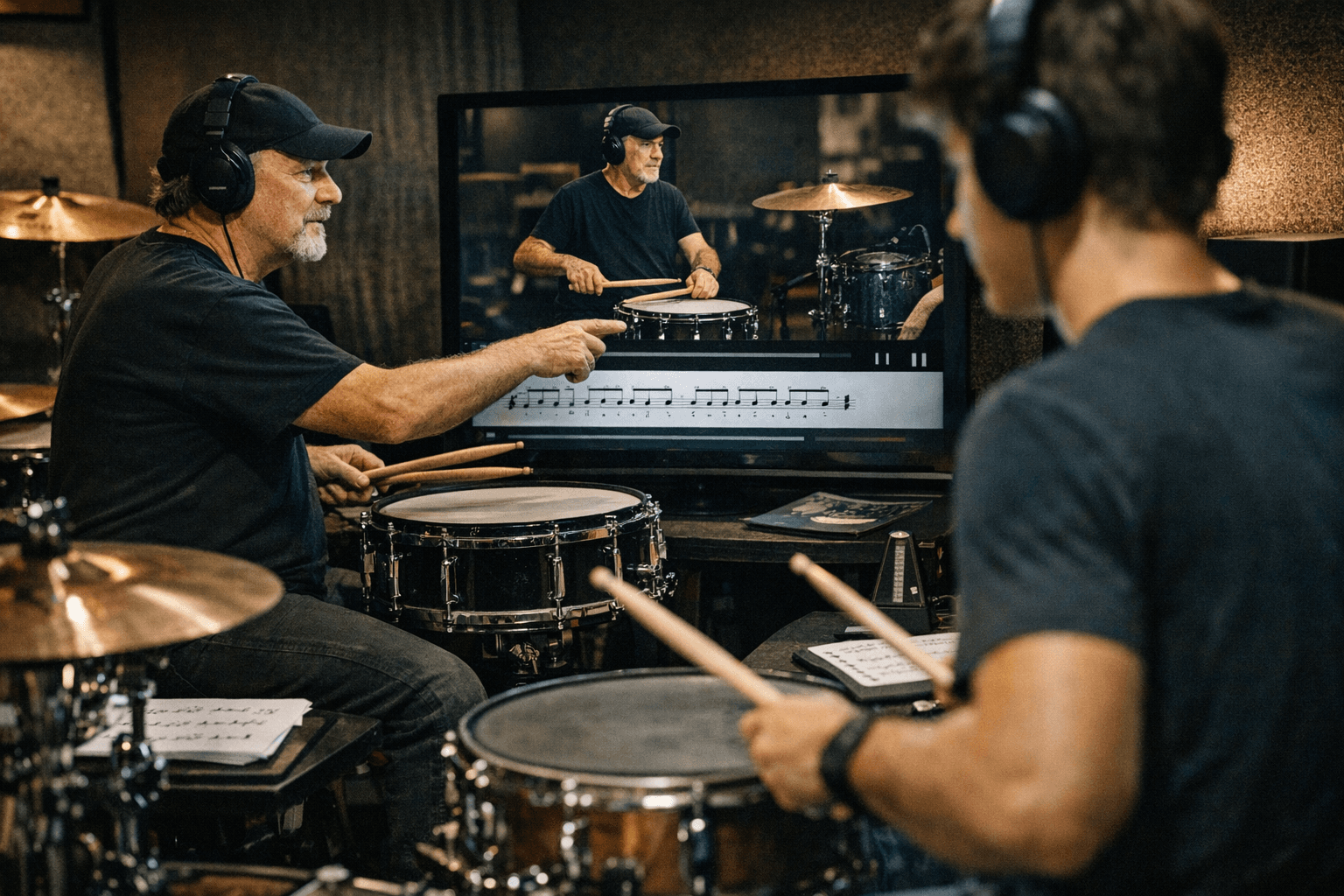
Rather than simply listing rudiments and leaving players to figure out sequencing on their own, the hub recommends a specific learning framework developed by Dr. John Wooton, who provides all of the lesson videos and rudiment breakdowns on the site. Two videos in particular are flagged for anyone new to rudimental practice: "How to Learn and Practice the Rudiments" and "The Real Rudiments." These are positioned as essential context before diving into the list itself.
The hub's own guidance puts it clearly: "Instead of working your way through the rudiments in order that they appear on the list, consider John's '4 Tier' Rudiment Learning Sequence which will help guide you as you progress from one to the next." The tier system "approaches the most fundamental rudiments first, providing you with a base on which to build. Each successive tier adds on the basic skills learned in the previous tier." This is a meaningful distinction from how many players approach rudiment study, and it reflects a genuine pedagogical philosophy rather than a simple checklist.
Supplemental Books Referenced in the Lessons
The hub points toward two books worth having on your stand. The first, The Drummer's Rudimental Reference Book, is described as "packed full of lessons and exercises. Neatly organized into 41 different sections, this book covers rudiments, one-handed exercises, stick control, timing, relaxation, odd-groupings, back sticking, & tenor drumming. A must for the private instructor and band director!"
The second, Dr. Throwdown's Rudimental Remedies by Dr. John Wooton, is "a fantastic compilation of rudimental exercises written and collected throughout the years by Dr. John Wooton. Included is an accompanying DVD of Dr. Wooton performing many of the exercises and etudes. An enormous amount of downloadable play-along tracks are included on the DVD as well as insightful philosophies from Dr. Throwdown, himself!" For anyone investing serious time in rudimental development, both books extend the hub's content significantly beyond what a web page alone can provide.
Taken together, the 40 rudiments, the graduated play-along tracks, Mark Wessels' application exercises, Dr. Wooton's video lessons, and the downloadable PDF poster make Vic Firth's hub one of the most complete single-destination practice tools available to snare drummers working through the P.A.S. canon.
Know something we missed? Have a correction or additional information?
Submit a Tip