Vinnie Colaiuta on Saving Music From AI, Decline, and Existential Threats
Vinnie Colaiuta, widely called the greatest living drummer, sat down with Christendom to confront the forces threatening music's survival head-on.
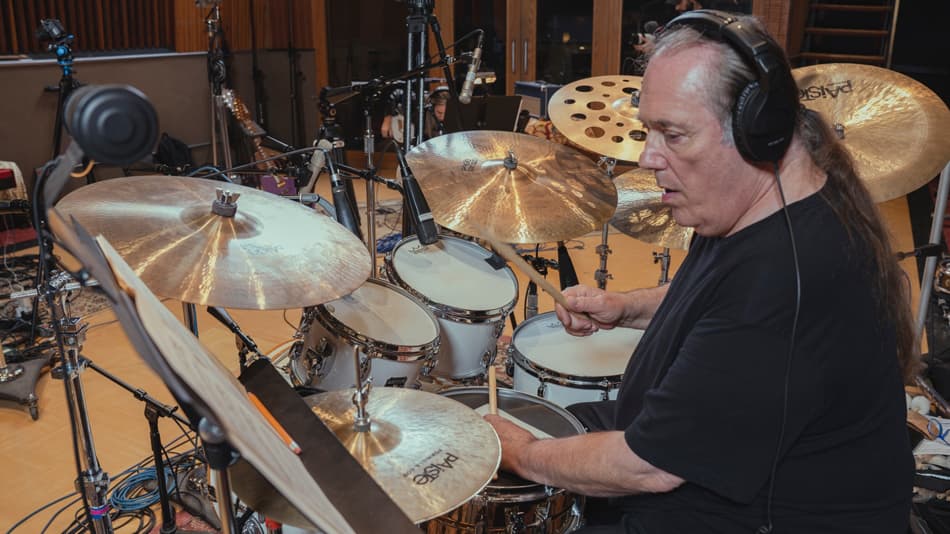
Few conversations in recent memory carry the weight of what Christendom captured when they sat down with Vinnie Colaiuta. The platform, which has been building a catalog of culturally charged content under its "War on Beauty" banner, describes the session plainly and without qualification: "It was an incredible honor to sit down with the greatest living drummer, Vinnie Colaiuta, to discuss the importance of music to humanity and what we can do to ensure its survival in the face of an overall decline in quality, AI, and other threats." That framing alone tells you everything about the stakes the interview sets for itself.
Who Is Vinnie Colaiuta and Why Does This Conversation Matter
If you've spent any real time behind a kit or studying the drummers who shaped modern music, Colaiuta needs no introduction. His reputation spans decades of session work with artists across virtually every genre, and his technical command alongside his musicality has earned him a place in the conversation about the greatest drummers who ever lived. Christendom's characterization of him as "the greatest living drummer" is the publisher's own superlative, but it reflects a widely held sentiment in the drumming world. When someone with that depth of experience and perspective speaks about the state of music, it lands differently than the usual industry hand-wringing.
The interview, titled "Vinnie Colaiuta on Talent, AI, and the Future of Music," appears in Christendom's recent episodes alongside a companion piece called "Vinnie Colaiuta on How to Save Music," suggesting the conversation was substantial enough to warrant more than a single installment. Video for the production was shot by Harry Davis, and the content lives within the Christendom platform's growing library of cultural commentary.
The Threats Colaiuta Is Talking About
The interview centers on three interlocking concerns, each one serious enough on its own, and genuinely alarming in combination.
The first is a broad decline in quality. The research materials frame this as an "overall decline in quality," a phrase that will resonate with any working drummer who has watched the music industry compress, commodify, and algorithmically optimize what gets made and heard. The concern isn't abstract nostalgia; it's a structural argument about what happens to craft when the incentive systems around music stop rewarding depth.
The second threat is AI encroachment. This is the most urgent and contested terrain in contemporary music right now, and Colaiuta's perspective as a drummer carries specific weight here. Rhythm and groove, the core of what a drummer contributes, are exactly the elements AI systems have become increasingly competent at generating. Christendom's recent episodes list also includes a separate episode titled "Gucci's AI ad campaign and the future of art," signaling that this question of machine-generated creativity is a recurring preoccupation for the platform. The intersection of AI and drumming specifically raises questions about session work, about the economics of live performance, and about whether the subtle human imperfections that make a drum track breathe can be replicated or rendered irrelevant by generative tools.
The third category is described as "other existential threats," a deliberately open-ended phrase that suggests the conversation goes beyond any single culprit. Whether that encompasses streaming economics, the erosion of music education, cultural devaluation of instrumental skill, or something else entirely, the framing points to a systemic problem rather than a single bad actor.
What Christendom Is Trying to Do With This
Christendom frames its work under the heading "Follow the War on Beauty," with distribution across Twitter/X, Instagram, TikTok, and Rumble. That phrase, "War on Beauty," is doing a lot of cultural work. It positions the platform not as passive observers of decline but as active combatants against it, which gives the Colaiuta interview a mission-driven context beyond a simple celebrity sit-down. The platform also references book recommendations and includes a Goodreads presence in its content ecosystem, suggesting an audience that engages with culture seriously and across multiple disciplines.
The Colaiuta interview slots into a broader editorial vision. Alongside episodes on saving music, there are weekly rosary episodes, a conversation about books and education, and that Gucci AI ad campaign piece. It's an eclectic but coherent worldview: that beauty, craft, and meaning are under pressure from multiple directions simultaneously, and that the response has to be equally wide-ranging.
What Drummers Specifically Should Take From This
For anyone who sits behind a kit, the conversation Colaiuta is having on Christendom maps directly onto daily professional reality. AI drum tracks are already being used in commercial productions. Session work has contracted sharply over the past decade. Streaming platforms pay fractional royalties that make it nearly impossible for working musicians to sustain careers based on recorded output alone. The "decline in quality" framing isn't just a philosophical complaint; it's a description of a market that has been restructured in ways that disadvantage musicians who spent years developing real technique.
Colaiuta's participation in this kind of conversation also signals something important about where the defense of music has to come from. It's not going to come primarily from policy or from platform decisions. It comes from musicians themselves making the case, loudly and publicly, that what they do matters, that it cannot be replicated by a generative model, and that the stakes of losing it extend well beyond the music industry. The title "How to Save Music" is not hyperbole; it reflects a genuine belief that something essential is at risk.
Where to Find the Interview
The full conversation is available through Christendom, with video credited to Harry Davis. Colaiuta maintains an Instagram presence and a podcast of his own, both referenced on the Christendom episode page. The platform operates under the Christendom copyright, active from 2024 through 2025 and continuing into the present cycle.
For drummers who have been watching the AI conversation unfold with a mix of anxiety and uncertainty, hearing Colaiuta engage it directly is exactly the kind of intervention the moment calls for. The conversation isn't finished; if anything, Christendom's decision to split the material into at least two distinct episodes suggests there's more ground to cover than a single sitting can contain.
This article was produced by Prism’s automated news system from verified source data, official records, and press releases, then run through automated quality and moderation checks before publishing. The system is built and supervised by the people who set the standards it runs under. Read our full AI policy.
Did this article answer your question?