Critical Role Campaign 4 reunites its three tables in chaotic fashion
Episode 26 brings Campaign 4’s split tables back together, and the mess is the fun: every faction’s half-formed clues finally collide.
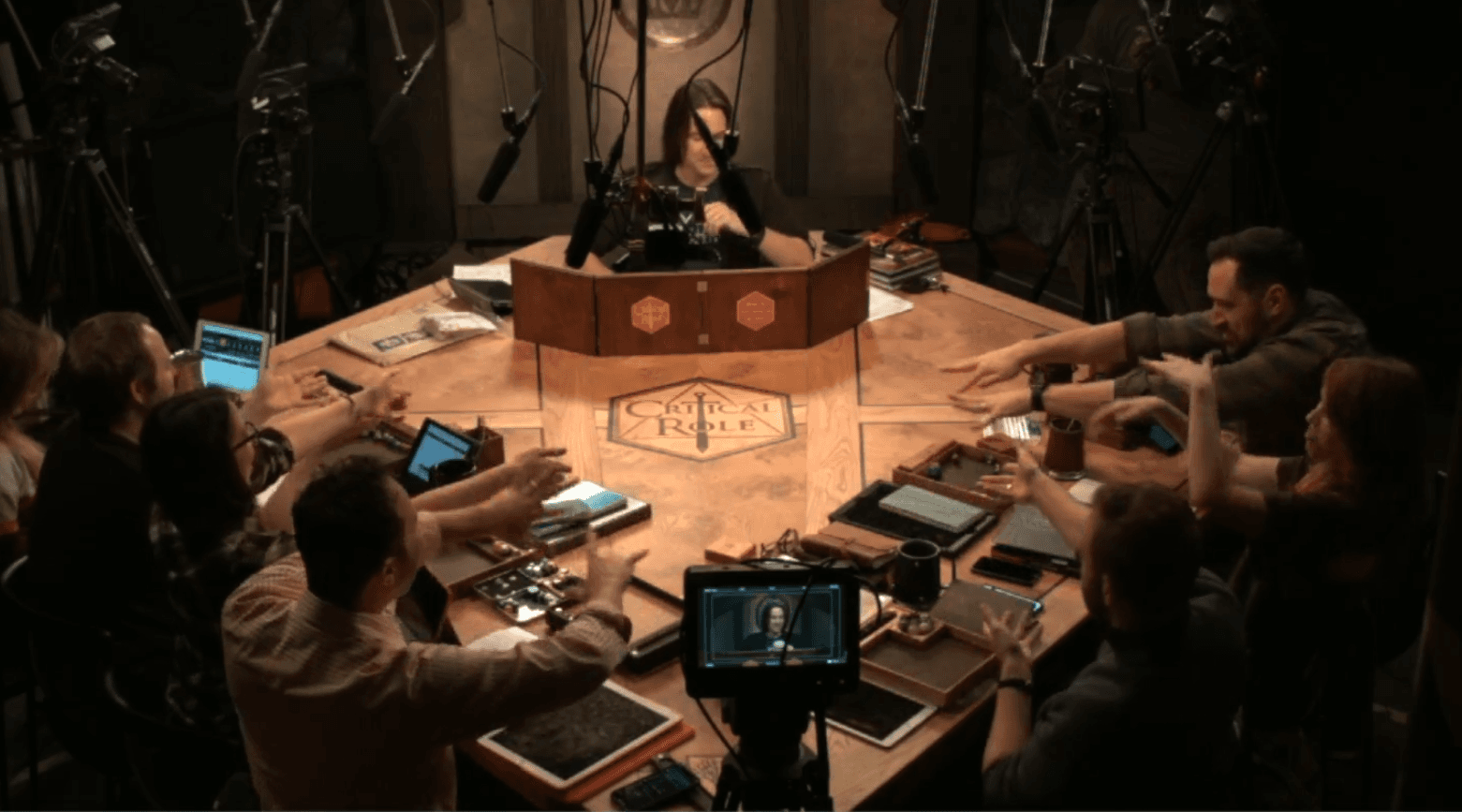
The reunion is the whole show now
Critical Role Campaign 4 finally gets back to the thing that makes a big D&D table sing: nobody knows everything, everybody has a piece, and the second those pieces hit the same map the whole room starts talking over itself. Episode 26 works because the three strands that had been running separately now smash together in full-view chaos, turning what could have been a routine crossover into the kind of messy, communal table play fans remember best.

That is the payoff of a structure that spent months making itself useful. The West Marches-style setup gave Campaign 4 a cleaner, more manageable shape for a 13-player cast, but it also separated the cast into distinct lanes. Episode 26 restores the noisy, improvisational energy that only shows up when all the players are forced to react to one another in real time, catch up on different discoveries, and decide, together, which problem matters most.
How Campaign 4 set the board
Campaign 4 launched on October 2, 2025, with Brennan Lee Mulligan in the Game Master chair and Matthew Mercer stepping into a player role for the first time in Critical Role’s main campaign. That alone made the season feel like a change of gear, but the actual architecture went further: Critical Role built the story around three rotating tables, the Soldiers, the Seekers, and the Schemers, and announced that the campaign would use Dungeons & Dragons 2024 rules with some homebrew layered in.
The setting matters just as much as the structure. Campaign 4 is set in Aramán, not Exandria, and the official framing leans hard into a world shaped by the fallout of dead gods and the political shockwave of Thjazi Fang’s execution. Critical Role describes Aramán as a place where sorcery comes from the “graveyard of the gods,” which gives the whole campaign a harsher, mythic texture than a standard fantasy map. It is the sort of setup that invites faction play, competing agendas, and grudges that keep echoing after the dice stop rolling.
The rollout itself helps explain why the reunion feels so earned. The first four episodes functioned as an “Overture,” giving the cast a chance to establish tone and pressure before the show split into its three tables. That opening stretch was the prologue; the real experiment began when the cast scattered, each group carrying a different corner of the story.
Why the split tables actually worked
West Marches-style play can sound clinical when you describe it on paper, but in practice it gave each table room to specialize. The Soldiers, the Seekers, and the Schemers were not just alternate cameras on the same story. They were three separate engines for clue gathering, character friction, and problem-solving, each one feeding the eventual collision.
The cleanest example comes from the episode 26 beats Polygon highlights. The Soldiers were dealing with Cyd Pridesire’s petrified body, a problem that immediately forces the table into that wonderful D&D space where grief, logistics, and magical theory all sit on the same initiative tracker. The Seekers were digging into House Tachonis, which means politics, lineage, and whatever kind of family rot hides behind an apparently respectable name. The Schemers, meanwhile, were tangled up in a false resurrection tied to Murray’s portent dice, which is exactly the kind of weird, rule-adjacent table drama that makes actual play feel alive instead of scripted.
That is the real advantage of the format: each group comes back with a different kind of mess. One table brings raw emotional fallout, another brings lore, another brings a magical complication that nobody can quite untangle without debate. Put them in the same room and suddenly the campaign is no longer a set of parallel tracks. It is one tangled board state.
A few specific things make this structure work so well:
- The split tables let each party develop its own tone without losing the ensemble.
- The reunion gives the cast a reason to compare notes instead of just chasing one objective.
- The audience gets to watch information become leverage, not just exposition.
- The comedy lands harder because half the joke is watching one table react to another table’s bad decisions.
Episode 26 is the format paying off
Episode 26 matters because it is not just a crossover. It is the first big proof that Campaign 4 can use fragmentation as fuel instead of treating it like a compromise. The players have to catch up on what each group learned while apart, and that instantly changes the rhythm of the table. Conversations get longer. Decisions get noisier. People interrupt, clarify, second-guess, and derail each other in ways that feel exactly like a real game night after one player missed three sessions and another one walked in with a theory nobody else has heard yet.
That is where Campaign 4 feels most like classic Critical Role, even with all the structural experimentation around it. The emotional logic is still plain D&D: the party can split, the plot can branch, but eventually the table has to reunite and decide what the shared truth is. When the Soldiers, Seekers, and Schemers come back together, the campaign stops being three elegant lanes and becomes one gloriously cluttered group project.
For viewers who tune in for real, messy table play, that is the good stuff. The reunion does not smooth the campaign out. It makes it wobblier, funnier, and more dangerous in exactly the right way. Campaign 4 spent its first act proving it could manage the chaos; episode 26 proves it can cash it in. When all three tables finally pile into one scene, the whole campaign starts looking like a natural 20 waiting to spill off the edge of the table.
This article was produced by Prism’s automated news system from verified source data, official records, and press releases, then run through automated quality and moderation checks before publishing. The system is built and supervised by the people who set the standards it runs under. Read our full AI policy.
Did this article answer your question?

