D&D Beyond Maps lets Dungeon Masters prep less and play more
D&D Beyond’s official Maps VTT is built for the moments when you need tokens, distance, and initiative without the weight of a full tabletop suite.
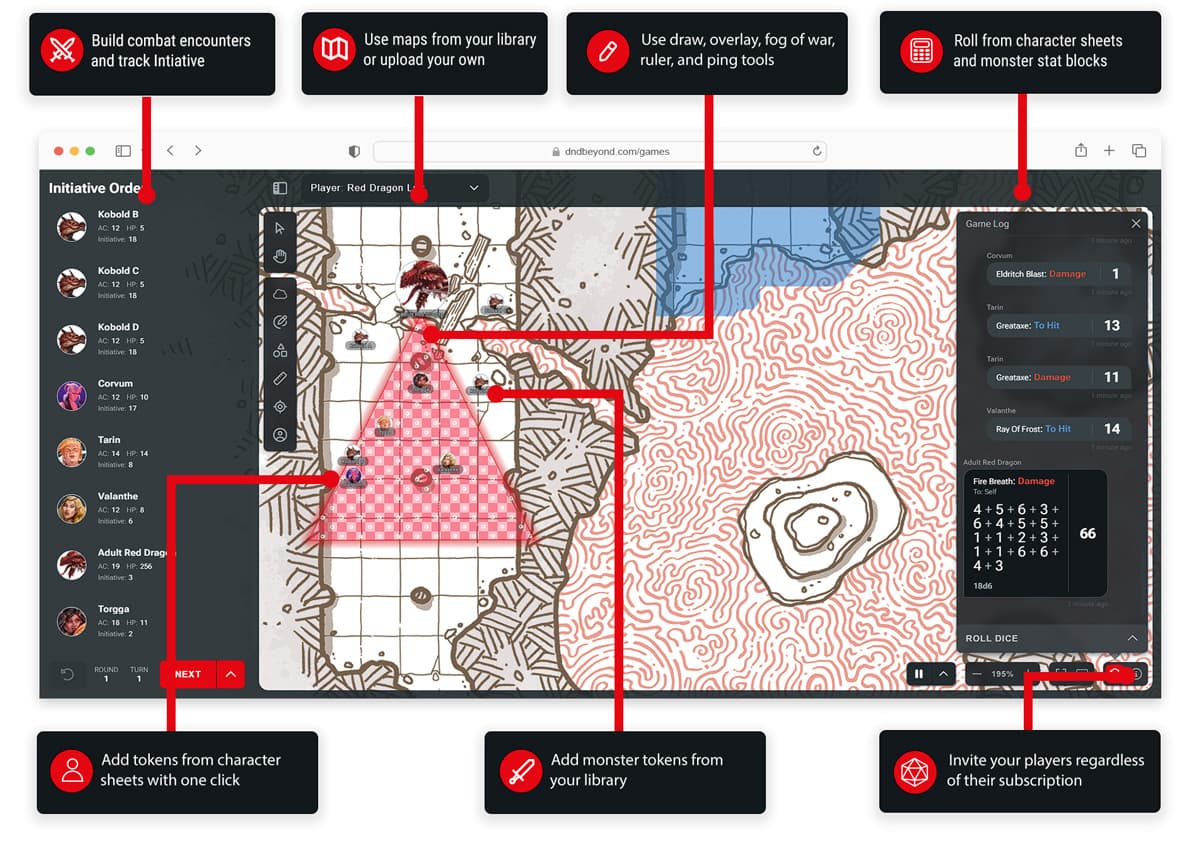
D&D Beyond Maps tracks position, reveals rooms, measures range, and runs initiative without pulling your table into a heavier virtual tabletop. It is D&D Beyond’s official option for combat that needs structure but not much ceremony. It is built to make prep lighter, whether the session is happening online, around a kitchen table with a projector, or in a hybrid game where some players are remote and others are in the room.
The simplest official path to a mapped encounter
Maps is D&D Beyond’s official Dungeons & Dragons virtual tabletop. It lives inside the rest of the D&D Beyond ecosystem instead of sitting off to the side. Your maps, monsters, player sheets, and other owned assets can all come together in one encounter space, which cuts down on tab switching and duplicate setup. For a DM who already uses D&D Beyond to manage books and characters, that integration means fewer tools, fewer handoffs, and less time spent building the scene before anyone rolls initiative.
That makes Maps especially useful when theater of the mind starts to creak. If the fight depends on exact movement, line of sight, or where the fighter is standing relative to the door, the tool gives you a shared visual reference without demanding the full machinery of a sprawling VTT. It is also lighter than many third-party platforms, which can be great for automation-heavy play but often bring a steeper learning curve, more setup, and more browser clutter than a group wants for a quick encounter.
What a DM actually does inside it
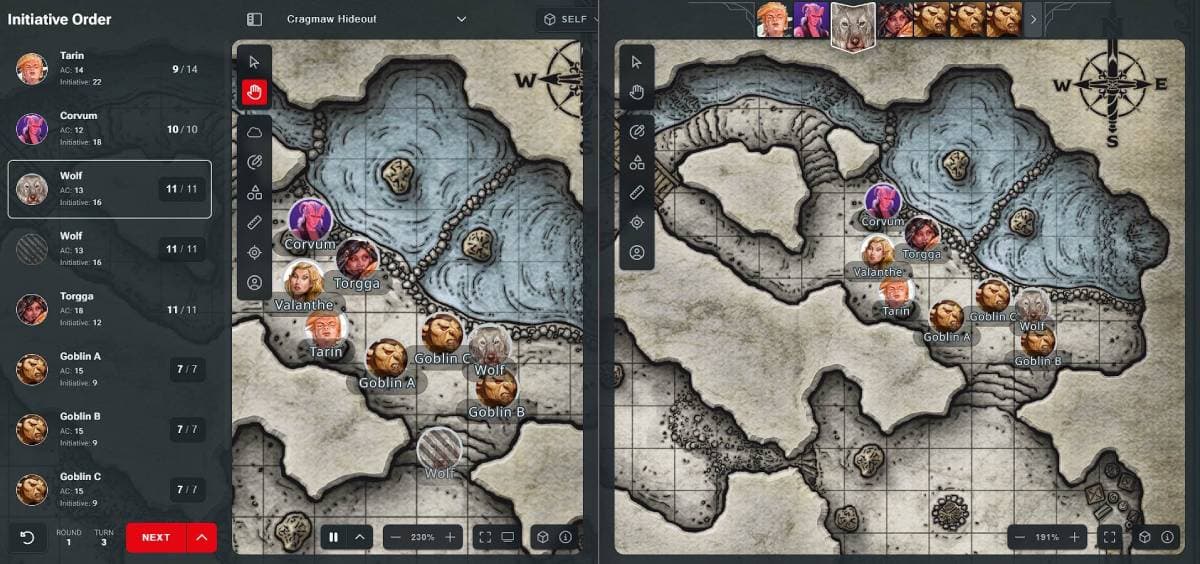
The workflow is aimed squarely at encounter running. You can use official maps, bring in third-party maps, upload your own, scale them correctly, and drop in monster and player tokens. Once the fight starts, Maps supports the kinds of actions that matter in the middle of a busy combat round: measuring distances, marking and pinging areas, setting fog of war, hiding and revealing tokens, and adding colored borders so everyone can tell who is who at a glance.
It also folds in initiative tracking and direct rolling from monster stat blocks, which is where the tool starts feeling less like a map viewer and more like a combat desk. Maps ties into a shared Game Log, so dice rolls from a character sheet or from inside Maps can stay visible in one place. Quickplay maps with pre-built encounters give you another speed lane when you need a scene on the table fast, not after a half hour of setup.
Built for online, in-person, and hybrid tables
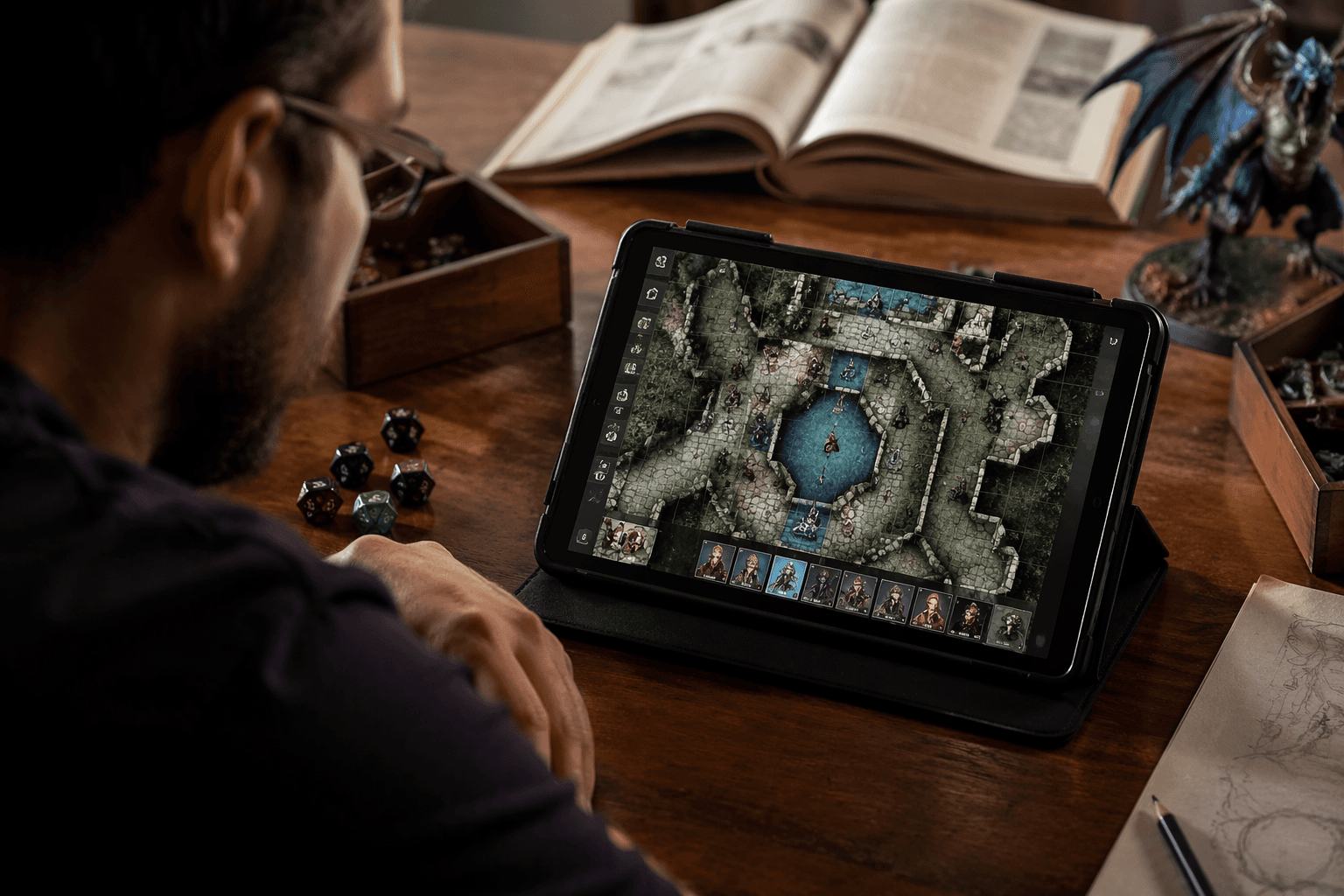
Maps is browser-based and works for both online play and in-person use. That means the same encounter space can support a remote campaign across time zones, a local game with a big display on the table, or a mixed group where one player is on video and the rest are seated together. Players can connect through free D&D Beyond accounts and control their own tokens, which removes one more bit of DM babysitting from the process.
Anyone with a D&D Beyond account can explore the basic features without a subscription, and free accounts can host game sessions in Maps.
From alpha to a real combat tool
Maps launched in alpha in September 2023, then moved into beta when combat encounters and initiative tracking were added. D&D Beyond’s updates have continued to add encounter-running features.
The majority of official adventures are now implemented in Maps, which makes it far more practical for DMs running published content. Instead of rebuilding every room from scratch, you can lean on the maps already tied to the adventure and spend your prep time on the parts that are still uniquely yours: monster tactics, secret doors, pacing, and the decisions your players will derail in the first ten minutes anyway. The June 2026 changelog shows that development is still active, with additions like Journals edit mode for DMs, player token resizing, initiative auto-updates when players roll, and manual token-initiative editing.
What free access gets you, and where Master Tier still helps
The newer free Maps experience is a major shift from the older subscription-only model. A Master Tier subscription is no longer necessary for basic use, and registered accounts can work with core Maps features without paying extra.
Master Tier still adds useful extras, though: homebrew monsters on Maps, custom map uploads, and 10GB of storage for custom maps. Registered accounts can access basic rules monster tokens plus nine basic maps and nine animated versions.
Accessibility and device support
Maps was designed with accessibility in mind from the start. Its base components use tabindex and keyboard navigation, with proper headings, descriptive alt text, and links available at launch. Planned improvements include audio cues, high contrast mode, and themes.
It also works in a browser on mobile devices, though it was not initially optimized for phone or tablet screens.
This article was produced by Prism’s automated news system from verified source data, official records, and press releases, then run through automated quality and moderation checks before publishing. The system is built and supervised by the people who set the standards it runs under. Read our full AI policy.
Did this article answer your question?