How concentration limits the strongest spells in Dungeons & Dragons
Concentration is D&D’s hidden spellcasting throttle: one failed save, one extra concentration spell, and a whole battle plan can collapse.
The biggest limiter on Dungeons & Dragons spell combos is not spell slots, it is concentration. One character can hold only one concentration spell at a time, and the moment they cast another one, the first spell ends immediately. That single rule changes how you pick spells, where you stand, and how hard you protect your caster when the fight starts turning messy.
The one-slot rule that keeps spellcasting balanced
Concentration sits inside the core 5th edition spellcasting framework, not off to the side as a niche edge case. Wizards of the Coast includes it in the 2018 Basic Rules PDF, D&D Beyond presents it on its Basic Rules spellcasting page, and D&D Beyond’s dedicated explainer, “How Concentration Works in Dungeons & Dragons,” treats it as a central part of play. The 2024 D&D Beyond Rules Glossary still lists concentration as a defined rules term, which is a clear sign that the mechanic remains part of the current rules vocabulary.
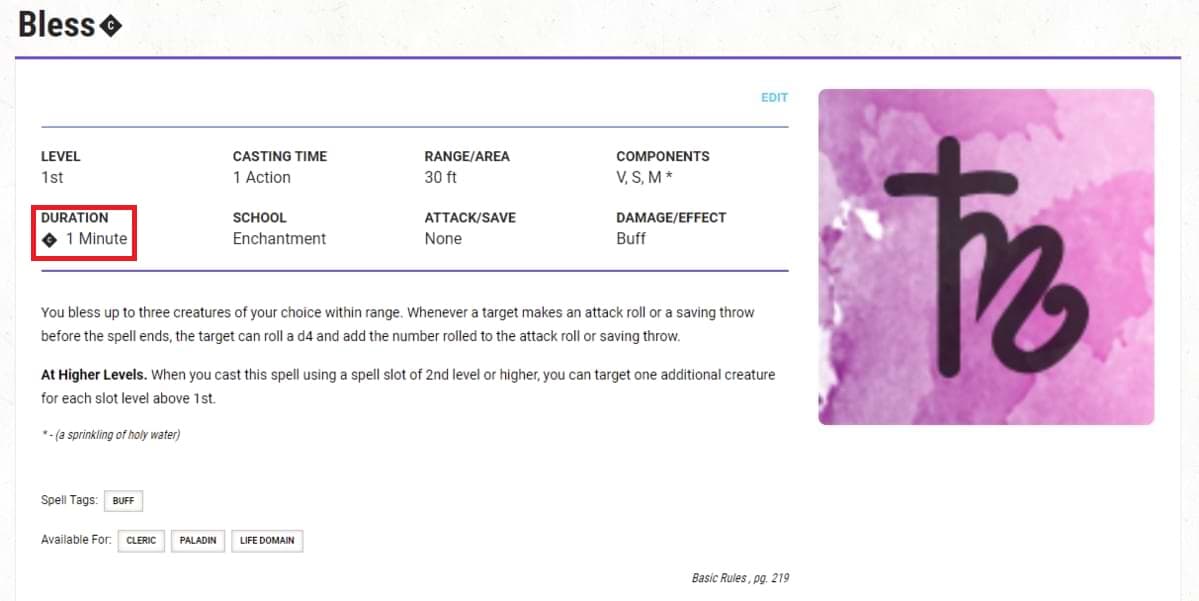
That matters because the rule reaches across the spellcasting classes that lean on long-lasting effects: wizard, cleric, druid, ranger, bard, sorcerer, and warlock. Every time one of those characters chooses a spell like bless or invisibility, they are not just spending a slot. They are committing their action economy to keeping that effect alive while everything else in the fight tries to knock it loose.
What actually breaks concentration at the table
The basic interruption points are simple, but they drive a lot of real table rulings. Taking damage can break concentration if the caster fails a Constitution saving throw, and becoming incapacitated can end it outright. Roll20’s rules definition gives the save DC as 10 or half the damage taken, rounded down, which is why even a modest hit can turn into a dangerous moment for a backline caster.
That means concentration is not passive bookkeeping. It is an active defense layer that the DM checks whenever a caster gets tagged, and the question is always the same: does the spell survive the hit, or does the effect drop right now? If the answer is no, the fight can swing immediately, whether the spell was haste, fly, spirit guardians, hex, or hunter’s mark.
The spells that make the tradeoff obvious
Concentration exists to keep the strongest ongoing spells from stacking into absurd combinations. Bless, invisibility, haste, fly, hold person, polymorph, spirit guardians, hex, and hunter’s mark all compete for the same single slot of attention. Once one is active, the caster is making a bet that the effect will stay relevant long enough to matter.
That bet is why concentration shapes encounter tactics so heavily. A player casting spirit guardians is not just choosing damage, they are choosing a position and a risk profile. A ranger maintaining hunter’s mark is not just chasing extra numbers, they are deciding whether staying on that target is worth the pressure on their Constitution save. The rule keeps long-duration buffs, control effects, and battlefield shaping spells from combining without limit, and that is exactly why it is one of the main balancing systems in modern D&D.

Why Constitution, War Caster, and positioning matter so much
Constitution becomes more valuable than many new players expect because every hit can force a concentration save. That is why feats such as War Caster come up so often in actual play: they are not flashy optimization picks, they are direct tools for keeping a key spell online. Class choices and build choices that improve Constitution saves do the same quiet work.
Positioning, cover, and timing matter just as much as spell selection. If you cast a concentration spell while exposed, you are asking the enemy to make a saving throw check part of their offense. If you stay behind cover, time the spell after enemies have spent their best burst, or avoid unnecessary hits, you are protecting the one slot that keeps your plan alive. That is the hidden rhythm of concentration play: pick the spell, then protect the spell.
The rulings that decide whether a combo works
Most concentration disputes at the table come down to a handful of exact calls. First, is the spell a concentration spell at all. Second, if you cast another concentration spell, the previous one ends immediately. Third, did the caster take damage, and if so, did they make the Constitution saving throw required to hold it together. Fourth, is the caster incapacitated, which ends concentration regardless of how good the spell would have been otherwise.
Those rulings are why concentration is such a clean limiter on the strongest spell interactions. Two concentration spells do not overlap, and any combo that depends on both staying up at once fails on contact with the rule. The DM does not need a long argument tree to settle it; concentration decides the interaction before the second effect can even settle on the battlefield.
Why the rule has stayed at the center of play
The continuity is part of the story. Concentration appears in the 2014 Basic Rules, stays in the 2018 Basic Rules, and remains in the 2024 Rules Glossary. That continuity explains why players keep talking about it: it is the throttle that keeps spellcasting exciting, risky, and balanced without letting the best buffs and control spells run away with the fight.
At the table, concentration is the moment when a spell stops being a line on the character sheet and becomes something the whole battlefield can threaten. The best casters do not just ask what spell is strongest right now; they ask whether they can keep that one spell standing long enough for the round to matter, and that is where the real roll begins.
This article was produced by Prism’s automated news system from verified source data, official records, and press releases, then run through automated quality and moderation checks before publishing. The system is built and supervised by the people who set the standards it runs under. Read our full AI policy.
Did this article answer your question?