Lincoln Library Hosts Beginner-Friendly Dungeons & Dragons Game for Teens
Lincoln Public Library will host a two-hour D&D session for ages 11 to 17, with Midsummer Games supplying the dice, monsters and miniatures. The game runs April 22 at 2 p.m.
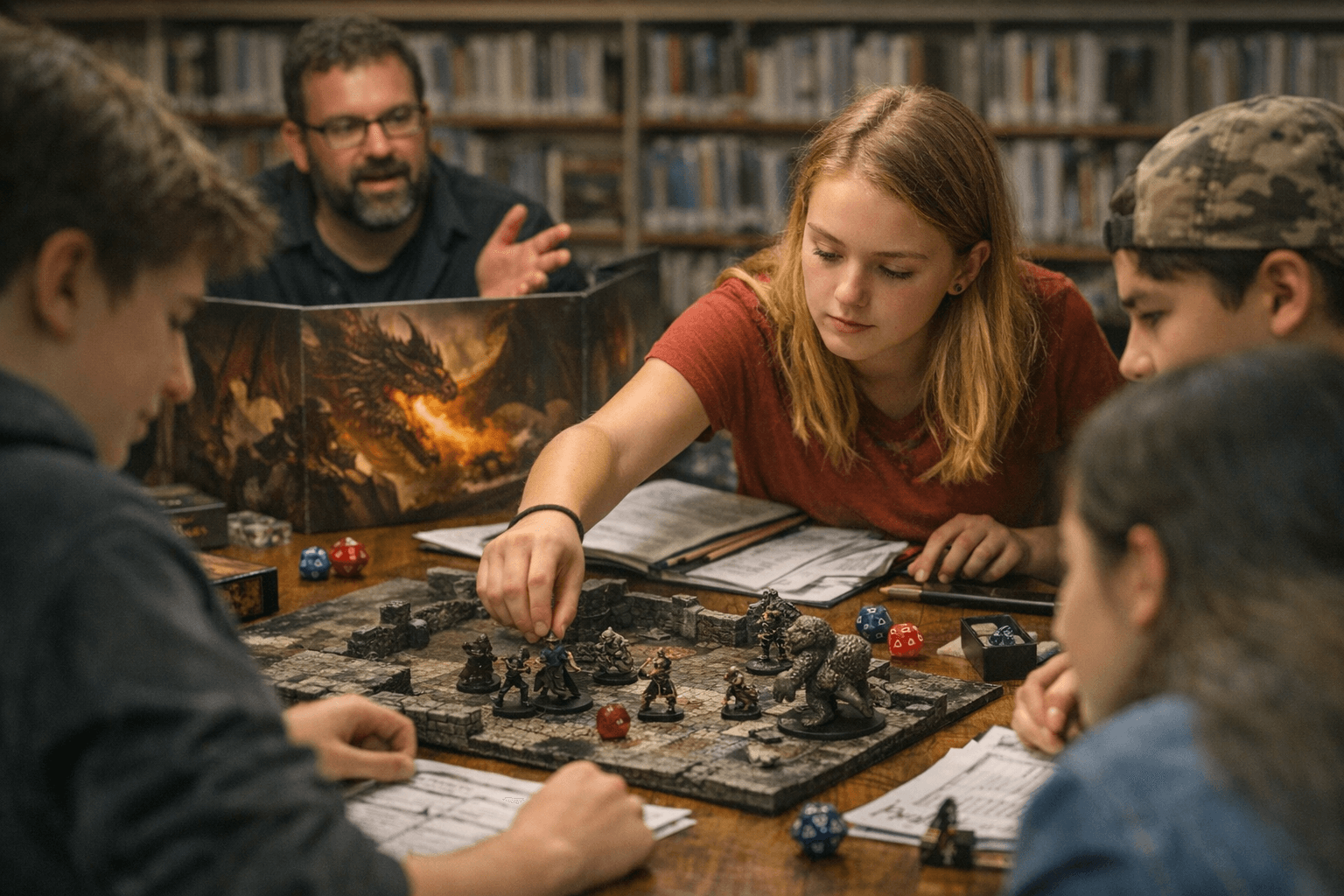
Lincoln Public Library is giving teens a low-cost way into Dungeons & Dragons with a two-hour beginner-friendly session at 2 p.m. on Wednesday, April 22, 2026. The game is set for ages 11 to 17 and will take place at 145 Old River Road in Lincoln, Rhode Island, making the library a public, in-person entry point for young players who want a table without having to build a home campaign first.
The listing frames the program as a “special 2 hour game” of Dungeons & Dragons, and Midsummer Games will be there with dice, monsters and miniatures for the session. The message to attendees is simple: “All you need to bring is your imagination.” That combination lowers the usual barriers to entry. Teens do not need to show up with a Dungeon Master, a rulebook collection or prior campaign experience, and parents do not need to piece together a private game night around transportation, materials or host space.
Programs like this fit a model that public libraries have already embraced. An American Library Association Games & Gaming Round Table report says most library D&D sessions run 1.5 to 2 hours, and a follow-up report notes that they often work well as demo-style programs rather than full traditional campaigns. Another ALA report described one weekly library game in Aberdeen, Maryland, that drew roughly 15 to 20 teens each week, a sign that short-form tabletop play can become a steady draw when the structure is clear and the barrier to entry is low.
The appeal reaches beyond the hobby itself. Edutopia has pointed to tabletop role-playing games like D&D as a way for students to build social interaction, reading comprehension and critical thinking skills, while also strengthening creative problem-solving through play. At Lincoln Public Library, that means a two-hour session can do more than introduce a few teens to initiative rolls and saving throws. It can give middle- and high-school players a supervised place to collaborate, tell stories and test out a game that might otherwise feel too complicated or too private to join.
This article was produced by Prism’s automated news system from verified source data, official records, and press releases, then run through automated quality and moderation checks before publishing. The system is built and supervised by the people who set the standards it runs under. Read our full AI policy.
Did this article answer your question?