Sandy Petersen says 1974 D&D’s vagueness sparked creative house-ruling
Sandy Petersen says 1974 D&D's vagueness made house rules inevitable, and that mess is still the DNA behind today's rulings-over-rules arguments.
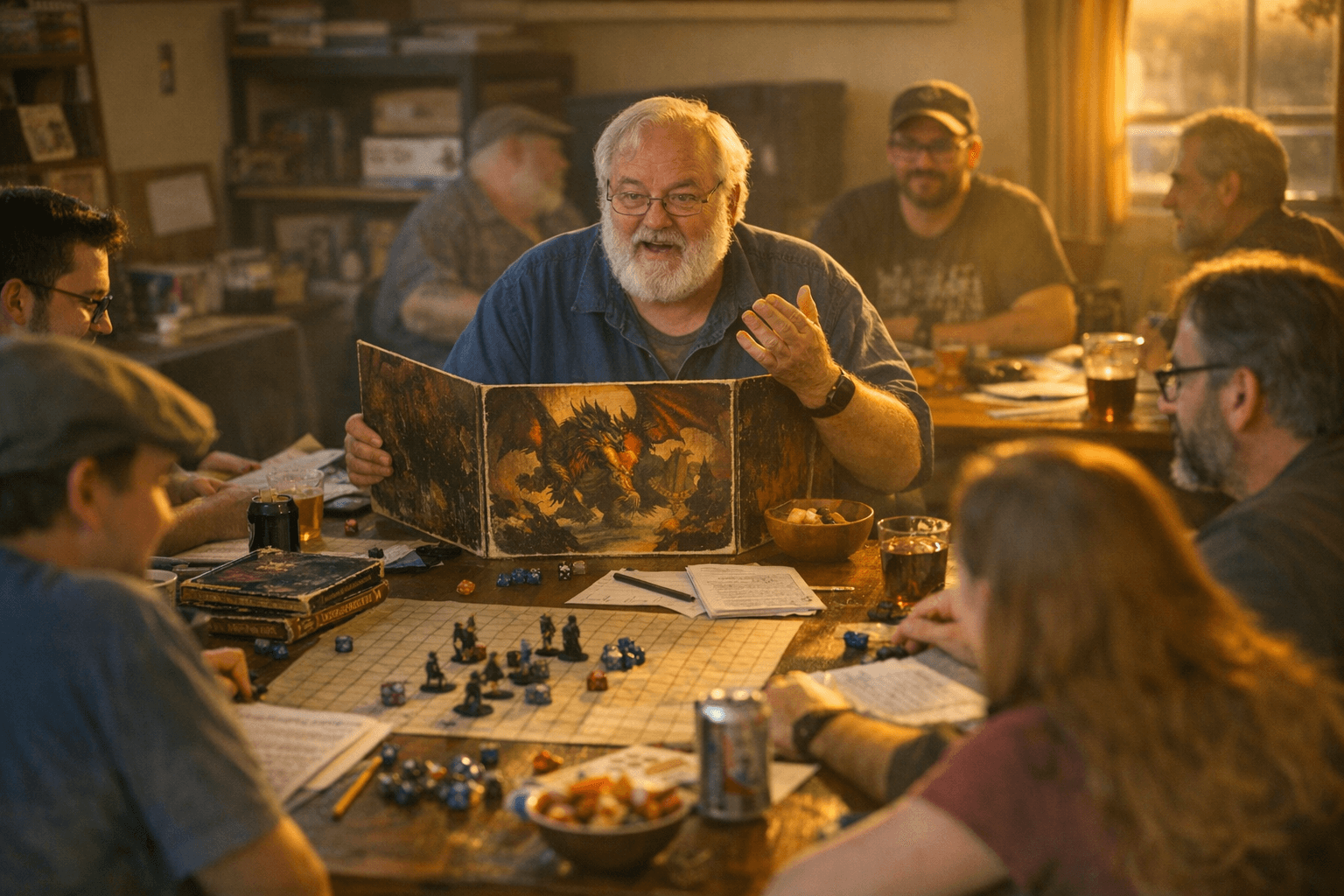
**Sandy Petersen's read on the first D&D box is simple: the vagueness was the point.** In his telling, the 1974 rules left so much unsaid about combat, magic, classes, and adventures that players had no choice but to improvise, and that improvisation is what made the game feel alive.
The original game left huge blanks
Early Dungeons & Dragons did not arrive as a polished machine with every gear labeled. It gave groups a rough framework, then forced them to decide how attacks resolved, how spells behaved, what a class really meant in play, and how an adventure even functioned at the table. That kind of looseness can look sloppy from a distance, especially if you are used to rules-heavy editions, but Petersen's point is that the gaps were where the game started to breathe.
That matters because the earliest version of D&D was not just a set of mechanics. It was an invitation to complete the rules yourself. The result was a game that could be wildly different from one table to the next, not because people were ignoring the design, but because the design practically demanded that they finish it.
House rules were the engine, not the exception
Petersen treats house-ruling as a core feature of the 1974 game, not a cleanup job added later. When the rules are this sparse, every group becomes its own design studio. One table may rewrite combat so it moves faster, another may alter magic so spells have sharper limits or stranger edge cases, and another may decide that classes only make sense after play has already begun.
That is where the game gets its strange energy. The same loose structure that frustrates players who want clarity also gives other tables room to build something personal, specific, and hard to copy. Petersen's comparison to doujin works fits because the spirit is the same: a shared starting point turns into a highly local creation, shaped by the people making it.
The practical effect is easy to see. A D&D campaign stops being just the text on the page and becomes a record of what that group cared about enough to change. That is why old campaigns are often remembered less for strict rules fidelity and more for the weird fixes, table customs, and one-off rulings that made them distinctive.
Why the old argument still shows up at modern tables
The same tension Petersen describes in 1974 is still one of the loudest arguments in D&D culture today. Every time a group praises "rulings over rules," they are celebrating the same flexibility that early players had to invent for themselves. Every time another player asks for tighter wording, cleaner procedures, or better support from the system, they are reacting to the burden that freedom can place on the DM.
Homebrew sits right in the middle of that divide. For some tables, it is the best part of the hobby because it lets the campaign respond to the people actually playing it. For others, it can feel like unpaid development work, with the DM patching holes instead of simply running the game. Petersen's history of 1974 D&D explains why both reactions are so stubborn: the game was born in ambiguity, and that ambiguity trained players to expect different things from the same rulebook.
Edition debates echo the same fault line. One side wants a game that trusts the table to finish the design. The other wants a game that does more of that work in advance so play stays consistent and less dependent on interpretation. Neither position is strange. They are just different answers to the question at the center of D&D since day one: who finishes the game, the designers or the table?
What the 1974 lesson means now
The staying power of D&D may come from the fact that it never fully solved that argument. Petersen's view suggests that the original looseness was not a defect to be erased, but a creative pressure that pushed players to shape the game into something their group could own. That is why modern D&D can still feel radically different from one table to another even when everyone is using the same brand name and the same core books.
It also explains why the hobby keeps circling back to the same fights. Loose rules create freedom, but they also create friction. Tight rules create stability, but they can flatten the weirdness that makes a campaign feel handmade. D&D has always lived in that gap, and the gap is part of the reason it keeps surviving every edition shift, every homebrew wave, and every argument over what the game should be.
Petersen's takeaway is not that vagueness is automatically good. It is that the first version of D&D treated the rulebook as a starting point, not a cage, and that attitude still shapes the way people play. Every time a DM rewrites a monster, patches a spell, or makes a call on the spot, they are working in the same tradition that started in 1974: rules on paper, game at the table.
This article was produced by Prism’s automated news system from verified source data, official records, and press releases, then run through automated quality and moderation checks before publishing. The system is built and supervised by the people who set the standards it runs under. Read our full AI policy.
Did this article answer your question?

