Secrets of the Tome Reveals Lore-Driven Subclasses for Spellcasters
Secrets of the Tome turns spellcaster subclasses into discovered lore, not just build choices, and that shift could make A5E’s magic options feel fresher than standard 5E design.
A subclass drop that works like a story reveal
Secrets of the Tome is shaping up to be more than another hardcover packed with character options for Level Up: Advanced 5th Edition. Its arcane-themed archetypes are built for the game’s core spellcasting classes, artificer, bard, cleric, druid, sorcerer, warlock, and wizard, but the preview makes one thing clear: these are meant to feel like discoveries inside the campaign, not just entries on a menu.
That matters because the book is pushing against the usual subclass model. Instead of treating class choice as a clean level-up decision, Secrets of the Tome frames each archetype as a lost tradition, a secret order, or a forgotten magical lineage that survives in obscure manuscripts, hidden mentors, and the memories of strange NPCs. For players who want their caster to feel tied to the world, that is a much stronger hook than a purely mechanical add-on.
What these archetypes add for spellcaster fans right now
The immediate payoff is thematic depth. A player who chooses one of these archetypes is not just changing spell access or class identity in the abstract. The subclass is meant to come with a built-in piece of setting history, which gives spellcaster fans a reason to care about where their power came from and who knows about it.
That approach is especially appealing for tables that already lean into magical institutions, old tomes, and hidden lineages. A bard tradition can feel like a surviving songbook. A warlock path can feel like a half-buried pact preserved by rumor. A wizard archetype can feel like the last copy of a school of thought that almost disappeared entirely. The preview suggests that every one of these classes gets that same treatment, which makes the whole spellcasting lineup feel more specific and more alive.
Why this feels different from core 5E subclass design
Secrets of the Tome is trying to differentiate itself by making story access part of the subclass identity. The preview hints that these options can be gated by story events, quests, or mentor relationships, which is a meaningful shift from the more open-ended “pick your subclass when you level” model many players know from core 5E.

That kind of design does two things at once. First, it makes advancement feel earned in the fiction. Second, it keeps the subclass from feeling like a detached rules package. If your druid tradition is tied to a hidden teacher or your cleric archetype is tied to a recovered relic, then the subclass becomes part of the campaign’s momentum. For groups that like milestone-style progression with narrative weight, that is a real upgrade in feel.
The NPC guides are doing real design work
One of the most interesting details in the preview is that each archetype comes with an NPC who embodies the tradition. Those figures can act as guides, allies, patrons, or adversaries, and that is a clever way to make subclass lore usable at the table instead of leaving it as flavor text nobody touches.
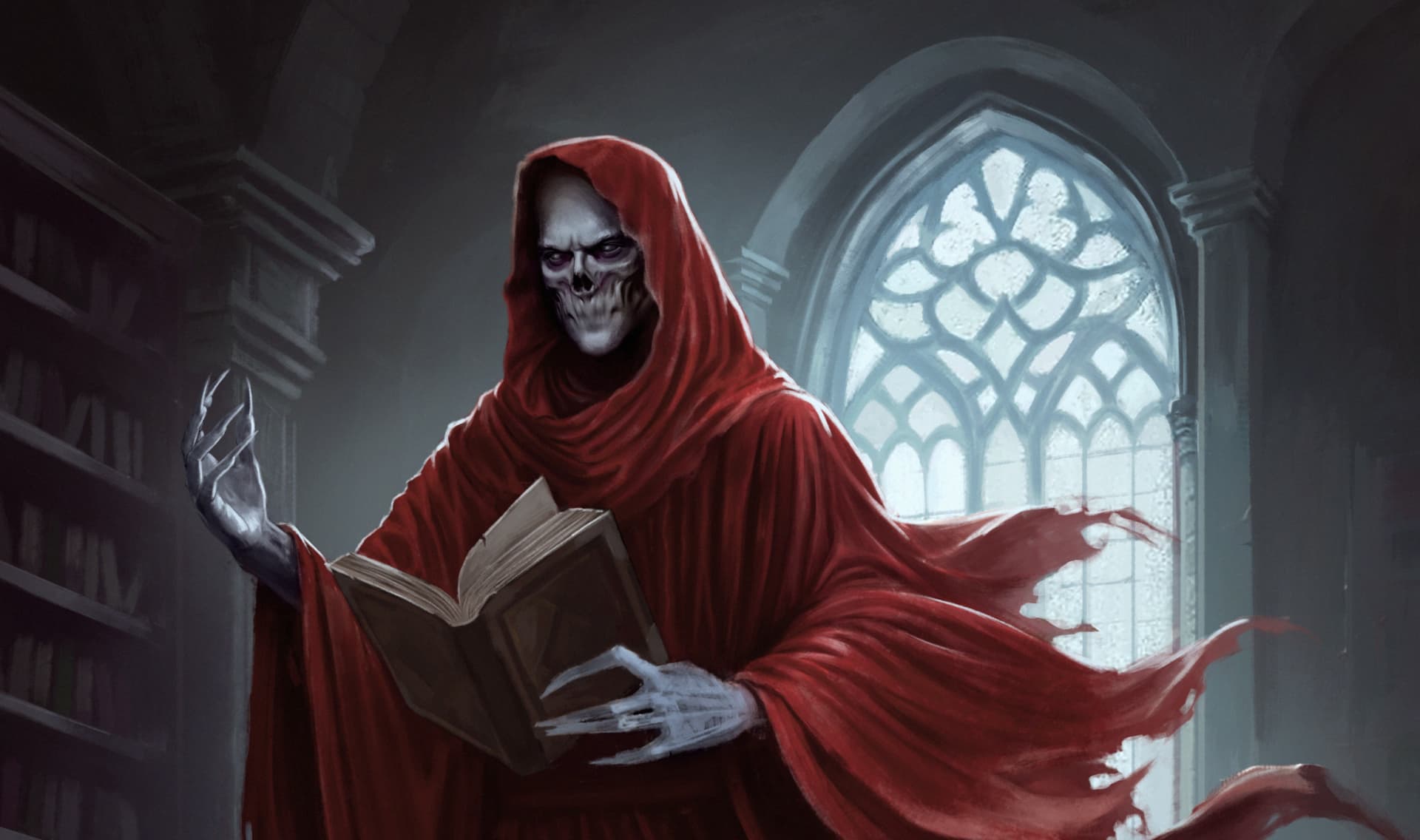
The named examples, Professor Omega, Brother Joney, Verena Astacal, and Chilblain the Lich Librarian, already tell you what kind of world this is building. These are not generic mentors. They suggest eccentric scholarship, wandering mysticism, and preserved power in unlikely places. A player who takes one of these archetypes is likely stepping into a relationship, not just a rule choice, and that gives a DM immediate story fuel.
The Wasteland gives the whole book its spine
The larger setting frame strengthens that idea. Secrets of the Tome places characters in the Wasteland, described as a cosmic dumping ground for forgotten things, where lost gods, heroes, books, and secrets slowly fade unless someone recovers them. That is a sharp conceit because it turns every subclass into part of a rescue mission for memory itself.
In practical campaign terms, that means the book is not just offering new magical identities, it is building a reason for them to exist. A tradition can survive because someone found the right manuscript in the Wasteland. A hidden order can endure because one weird NPC refused to let it vanish. A legendary teacher can matter because their knowledge is one more thing slipping into oblivion. That makes the setting and the subclasses reinforce each other, which is exactly the kind of cohesion that keeps a hardcover relevant beyond its first read.

Is it fresh enough to justify attention before release?
For spellcaster fans, yes, and for a few clear reasons. The first is novelty with purpose: these are not just new names on old archetypes. They are written as traditions with lineage, location, and social connections. The second is compatibility with Level Up: Advanced 5th Edition, which means the book is not trying to reinvent the entire game, just push its subclass system toward stronger narrative identity.
The third is the share-worthy angle. Modern fantasy supplements often promise more options, but fewer promise a built-in story engine. Secrets of the Tome seems to be saying that a subclass can come with a mentor, a mystery, and a setting hook at the same time. That is the kind of design that can change how a campaign starts, how a character grows, and how a table talks about magic.
Why spellcaster players should keep an eye on it
If you are the kind of player who wants your artificer, bard, cleric, druid, sorcerer, warlock, or wizard to feel tied to something older and stranger than a character sheet, this preview lands in the right place. It suggests a hardcover that treats magic as inherited, hunted, hidden, and worth recovering.
That is the real promise of Secrets of the Tome. It is not only adding subclass options to Level Up: Advanced 5th Edition. It is trying to make every arcane choice feel like a piece of lost history returning to the table, which is exactly the sort of idea that can earn attention before the hardcover even arrives.
This article was produced by Prism’s automated news system from verified source data, official records, and press releases, then run through automated quality and moderation checks before publishing. The system is built and supervised by the people who set the standards it runs under. Read our full AI policy.
Did this article answer your question?

