The Legend of Vox Machina emerges as a modern fantasy classic
Vox Machina turns a home game into a fantasy series that still feels live at the table, with party chaos, personal stakes, and campaign-style storytelling.

The campaign energy survived the jump to streaming
The reason The Legend of Vox Machina keeps landing with D&D players is simple: it does not flatten a campaign into polished fantasy wallpaper. It keeps the noise, the banter, the bad decisions, and the emotional baggage that make a real table session memorable, then packages all of that into a show that still works for people who have never rolled a d20. That is why it reads less like a niche adaptation and more like a mainstream fantasy series that understands how a party actually behaves when the whole world keeps interrupting their plans.
A recent feature framed that difference well by contrasting the thin slice of tabletop play most mainstream viewers got from Stranger Things with the fuller, campaign-like perspective Vox Machina offers on Prime Video. Critical Role has long treated the project as part of a larger storytelling brand, one that grew from friends playing RPGs in living rooms into an entertainment ecosystem built around stories, community, and an invitation to “pick up some dice and tell your own tales.” That philosophy is all over the animated series.
From a home game to a fandom-backed series
The roots matter here because the show did not begin as an outside studio’s idea of what D&D should look like. Critical Role says Vox Machina began as a home game before being streamed on Twitch in 2015, and the animated series is based on Campaign One. That first campaign premiered on March 12, 2015 and ran through October 12, 2017, spanning 115 episodes and giving the adaptation a deep bench of story beats, character turns, and emotional payoffs to draw from.
The animation push itself became a D&D community event. In March 2019, Critical Role launched a Kickstarter for a 22-minute special with a $750,000 goal, then blew past expectations by raising $11,385,449 from 88,887 backers. Amazon followed by ordering two 12-episode seasons in November 2019, turning what started as a fandom-driven experiment into a major streaming property with real staying power.
That history helps explain why the show feels campaign-shaped instead of novel-shaped. It has room for detours, side jokes, and character friction because it came from a format where those things are not distractions. They are the session.
Why the party feels like a table, not a superhero lineup
Vox Machina works because its center of gravity is the party, not the plot summary. The world of Exandria, created by Dungeon Master Matt Mercer, gives the series its fantasy texture, but the group at the middle keeps the story grounded in the kind of chaotic teamwork D&D players recognize instantly. The characters are not presented as polished heroes who always know the next move. They are a ragtag crew whose weaknesses, jokes, and personal histories keep crashing into the fate of the realm.
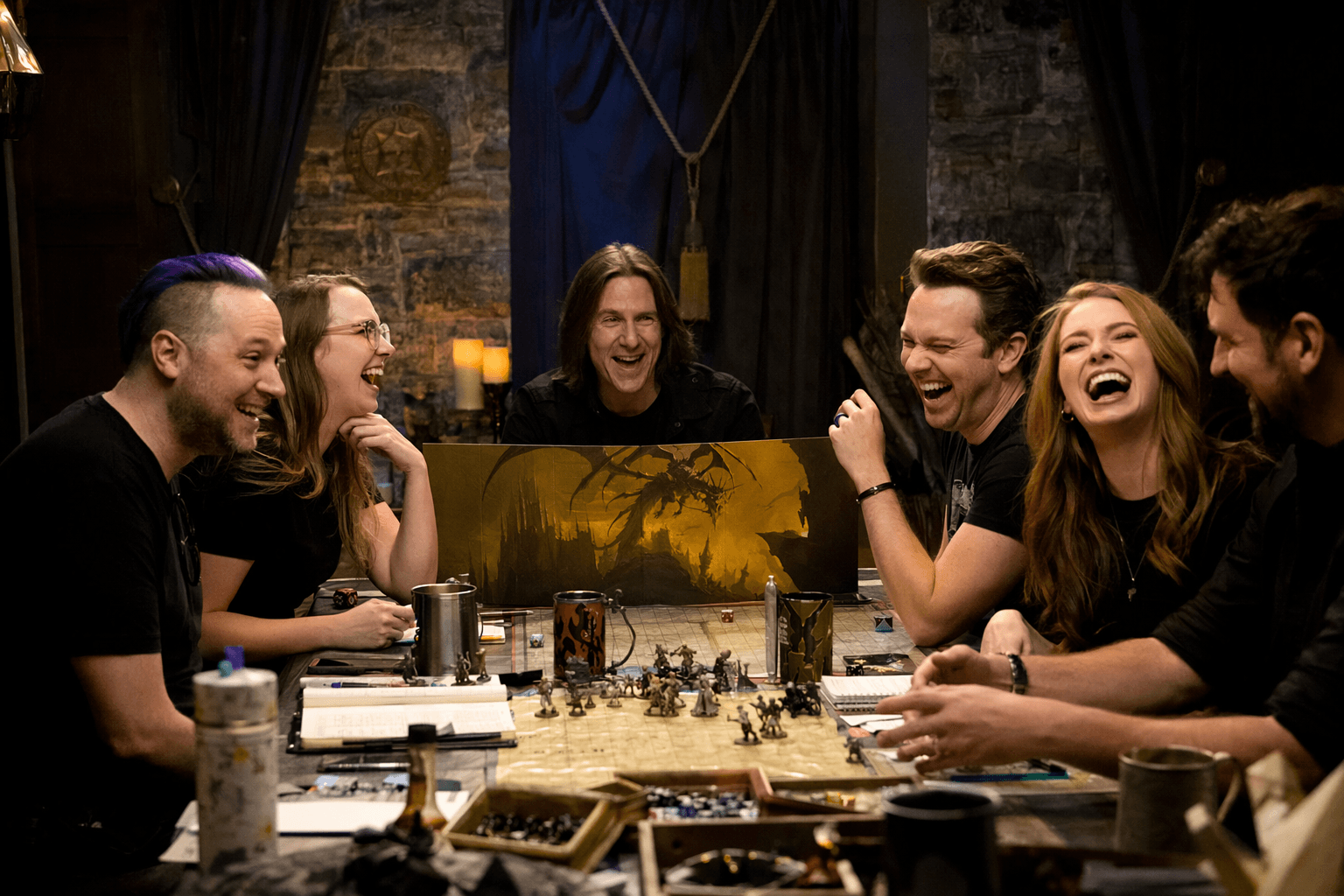
That balance is the series’ sharpest adaptation lesson. Dragons, danger, and lore matter, but they matter more because the characters are carrying their own baggage into every fight. The emotional stakes are personal before they become world-ending, which is exactly how the best campaigns tend to feel at the table: the kingdom can be on the line, but the argument in the party can still be the thing that changes the whole session.
The cast ensemble helps preserve that live-play rhythm. Matt Mercer, Sam Riegel, Laura Bailey, Travis Willingham, Marisha Ray, Liam O'Brien, Ashley Johnson, and Taliesin Jaffe all come from the original Critical Role orbit, and that shared history shows in the timing. The humor lands like people who have spent years building on each other’s bits, while the dramatic turns still leave room for the kind of messy follow-through that makes a campaign feel lived-in.
What the adaptation gets right about D&D storytelling
If you want the clearest lesson from Vox Machina, it is that a good D&D adaptation should not clean up the table too much. It should preserve the friction, the improv energy, and the sense that the story can swerve when the party decides to chase the wrong door. That is the difference between a fantasy show that merely borrows from D&D and one that understands how tabletop play actually creates momentum.
A few choices make that work especially well:
- Keep the party dynamic messy. The show does not sand down arguments, running jokes, or mismatched priorities. Those collisions make the group feel like an actual adventuring party instead of a scripted strike team.
- Treat humor as structure, not filler. The table-style jokes are not just relief between action scenes. They are part of how the characters reveal trust, insecurity, and rivalry.
- Let the world stay bigger than the episode. Exandria feels like a place with history, factions, and consequences that extend beyond one scene, which is exactly what makes it feel campaign-sized.
- Build around emotional stakes, not just lore drops. The show keeps the campaign’s core power by tying big fantasy events to the characters’ personal damage and loyalty to one another.
Those choices matter because they make the series useful as a model for anyone trying to adapt D&D for a wider audience. The trick is not to disguise the game. It is to translate the game’s energy into something a television audience can follow without losing the spark that made the original session fun.
Why it resonates beyond the table
The broader D&D moment in 2026 is part of Vox Machina’s appeal too. Critical Role is no longer just a livestream brand, and the show is no longer just a cult bonus for people already deep in the hobby. It is one of the clearest examples of how Dungeons & Dragons storytelling can travel into comics, animation, livestream culture, and fandom without losing its tabletop identity. That reach is exactly why it works as a gateway for viewers who want a fantasy story with real party chemistry instead of prestige-TV solemnity.
The reception backs that up. Rotten Tomatoes lists Season 1 at 100% on the Tomatometer and 93% on the audience score, with critics calling it an addictive treat for fans of Dungeons & Dragons-style RPGs. That combination of fan energy and broad approval is rare, and it helps explain why the series now feels less like an experiment and more like a reference point.
A campaign with room to keep rolling
The franchise is still moving, and the next stretch keeps the campaign framing front and center. Prime Video’s season page identifies Season 4 as a 2026 release, Deadline set June 3, 2026 as the premiere date, and the series has already been renewed for a fifth and final season. The Season 4 setup, with the party separated a year after the Chroma Conclave and forced to reunite when a long-slumbering evil awakens, tells you the adaptation is still thinking like a campaign arc: split the group, raise the stakes, then bring everyone back to the table.
That is why Vox Machina feels like a modern fantasy classic to D&D players. It knows the best sessions are not just about the monster at the end of the hallway. They are about the party noise, the bad plan, the clutch save, and the way a long-running story becomes unforgettable when everyone at the table is still leaning in for the next roll.
This article was produced by Prism’s automated news system from verified source data, official records, and press releases, then run through automated quality and moderation checks before publishing. The system is built and supervised by the people who set the standards it runs under. Read our full AI policy.
Did this article answer your question?

