Why Dungeons & Dragons’ Healer’s Kit is a combat lifesaver
A 5 gp Healer’s Kit can stop death saves fast, save spell slots, and keep a party from turning one bad roll into a wipe.
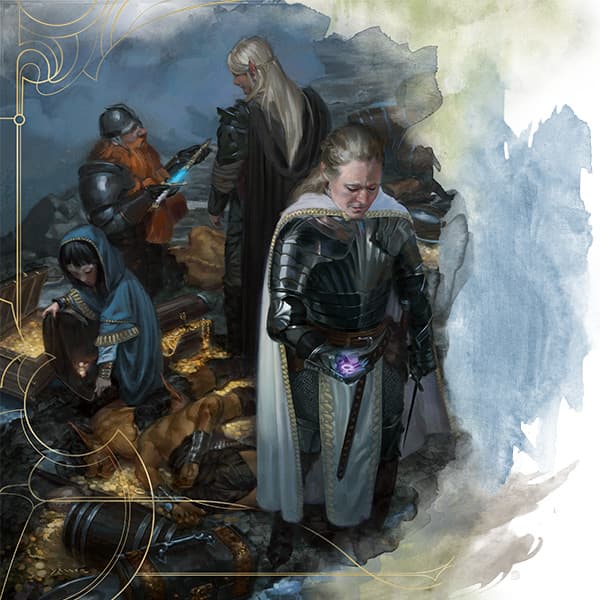
The best emergency item in Dungeons & Dragons costs 5 gp and sits in plain sight until somebody hits the floor. A Healer’s Kit lets you spend a Utilize action to stabilize an unconscious creature at 0 hit points without a Wisdom (Medicine) check, which makes it a cheap, repeatable rescue tool instead of a throwaway consumable. With ten uses in the current D&D Beyond entry, it is the kind of gear that quietly decides whether a bad round stays manageable or turns into a collapse.
Why the kit belongs in the party pack
The Healer’s Kit earns its spot because it solves a problem every table eventually meets: a character goes down, the fight is still live, and the party has to choose between offense and emergency care. At 5 gp, it is far easier to buy than another spell slot, and unlike a one-off potion, it can be used again and again until the ten uses run out. That matters most in low-level play, where one critical hit can put a front-liner on the ground and force the rest of the party to scramble.
The item also teaches a clean habit before the adventure even starts: make sure someone can act when the healer is occupied, silenced, out of range, or conserving resources. A kit in the pack means the group does not need to rely on a die roll just to keep an ally from sliding deeper into danger. For new tables, that is a concrete lesson in preparation, not theory.
What stabilization actually changes in combat
A fallen character is not just “hurt,” they are in the death-save loop. In the current rules, whenever you start your turn with 0 hit points, you make a death saving throw, and D&D combat rounds are about 6 seconds long. That short window is what makes the Healer’s Kit so useful: one action can stop the countdown before another turn passes.
Stabilizing a creature does not bring it back on its feet. It remains unconscious, but it stops making death saving throws, which is the real emergency line. If it takes damage while stable, it stops being stable and starts making death saving throws again. If nobody heals it, the creature eventually regains 1 hit point after 1d4 hours, but most tables will never want to wait that long when a fight or a dungeon crawl is still in progress.
That is why the kit is a triage tool, not a recovery tool. It does one job well: buys time. In practical play, that can mean the difference between the party ending the encounter with a downed ally and ending it with a dead one.
The low-magic answer to the same problem
Spare the Dying is the cleanest comparison point. In the current rules, the spell targets a creature within range that has 0 hit points and is not dead, and the target becomes stable. Its cantrip upgrade doubles the range at levels 5, 11, and 17, which makes it flexible across a long campaign. The spell and the kit solve the same problem, but they do it with different resource budgets.
That difference is exactly why the Healer’s Kit is so valuable. A cantrip slot or prepared spell is a magical investment; a kit is mundane gear that keeps working until the uses are gone. If the cleric needs to save magic for Healing Word, Cure Wounds, Bless, or another spell that changes the fight, the kit lets another character handle stabilization without spending a spell slot at all. In a tight battle, that preserves turn economy and magical resources at the same time.
Why the 2024 rules context matters
D&D Beyond’s 2024 labeling separates the game into “5e” for the 2014 core rules and “5.5e” for the updated 2024 core rules. That matters because the Healer’s Kit, death saving throws, and related healing language now live inside that updated rules family on the platform. The 2024 Player’s Handbook had local game store early access on September 3, 2024, and its official release date was September 17, 2024, which gives the gear a place in the current core conversation rather than an old side rule.
That newer rules context also sharpens how players read the kit at the table. It is not a niche backup item hidden behind a corner case. It sits inside a modern rules set where combat, equipment, and healing are all part of the same fast-moving loop, and its value becomes clearer when you see how quickly 0 hit points can become a crisis.
Battle Medic turns the kit into a healing engine
The Healer’s Kit matters even more if the party includes the Healer feat. In the 2024 discussion of that feat, Battle Medic lets a creature within 5 feet expend one use of a Healer’s Kit, roll a Hit Point Die, and regain hit points equal to that roll plus the healer’s proficiency bonus. That pushes the kit beyond emergency stabilization and into active recovery.
That interaction changes how a table thinks about resources. Instead of asking only, “Can we stop the death saves?”, the party can also ask, “Can we patch this character up enough to stand back in the fight?” It is a small item with a surprisingly wide footprint, especially when a healer wants to stretch every resource across a long adventuring day.
What it teaches at the table
For beginners, the kit clarifies three rules at once: what 0 hit points means, how death saves work, and why stabilization is not the same as healing. For DMs, it is an easy way to teach emergency priorities without drowning the table in rules text. One character can drop, another can spend a Utilize action, and everyone sees how the round’s 6-second clock changes the scene.
That is the real reason the Healer’s Kit deserves to be packed before the adventure starts. It is cheap, it has ten uses, it stops the death-save clock, and it lets the party answer danger with preparation instead of panic. When the dice turn ugly, the right 5 gp can keep the table in the fight long enough for the next roll to matter.
This article was produced by Prism’s automated news system from verified source data, official records, and press releases, then run through automated quality and moderation checks before publishing. The system is built and supervised by the people who set the standards it runs under. Read our full AI policy.
Did this article answer your question?