Harris hawk meets families in Appomattox library falconry program
A Harris hawk named Agnes turned a library lawn into a hands-on falconry classroom, showing families how outreach can build the hobby’s future.
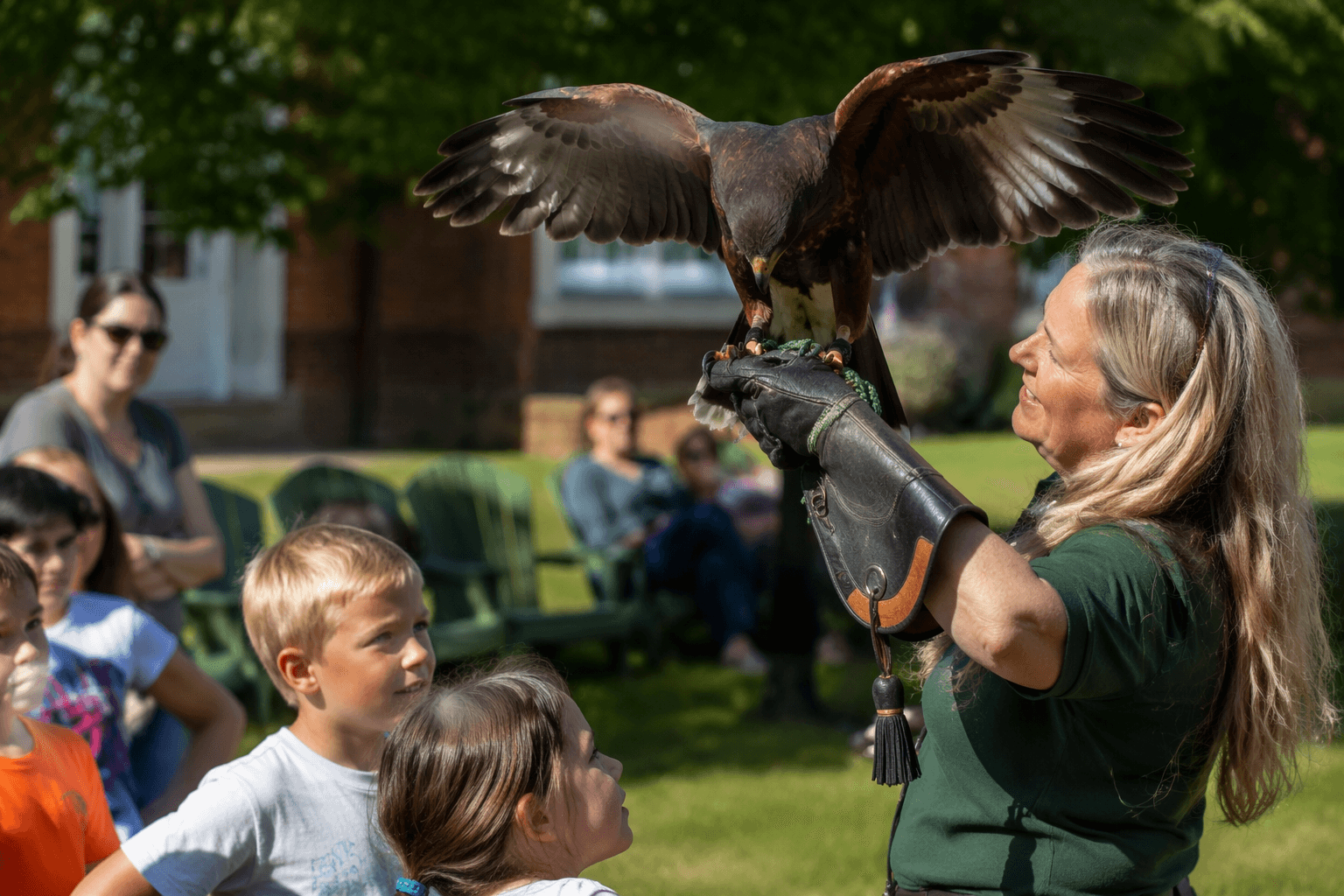
A Harris hawk named Agnes turned the Jamerson Memorial Library lawn into an easy entry point for falconry, where families could ask questions, take photos, and see raptor care up close. Rodney Stotts used the June 26 program in Abbitt Park to make the human-bird partnership feel immediate, not exotic, while explaining what raptors are and why their individual needs matter.
Falconry in a place built for questions
The setting mattered as much as the bird. Jamerson Memorial Library in Appomattox, Virginia, framed the program as part of a summer schedule that runs several days each week for kids and adults, which made the hawk visit feel less like a special-effects show and more like another doorway into learning. Starting at 1:00 p.m. in Abbitt Park, the event invited people who might never make it to a field meet or a traditional falconry day to stand within earshot of a live bird of prey and ask the questions that usually stay unspoken.
That is where falconry outreach does its best work. In a library context, the hawk becomes a teaching tool for environmental concerns, raptor behavior, and the practical side of handling a bird that depends on structure, trust, and close observation. The program gave library patrons a chance to encounter falconry as community education first, spectacle second.
What Rodney Stotts brought to the lawn
Stotts is not presenting falconry as a novelty. His organization describes him as a Master Falconer, and he calls falconry “the oldest sport on Earth,” defining it as the art of training hawks to hunt in cooperation with a person. He also says falconry “saved my life,” a line that captures how personal this work is for him and why the educational side carries such weight.
His background gives that message credibility. Audubon has noted that Stotts spent nearly a decade training and apprenticing to trap, care for, and teach raptors to hunt alongside humans. That same reporting identifies Harris’s hawks as his bird of choice, a detail that fits the Appomattox program neatly: Agnes was not just present, she represented the species Stotts knows best.
Stotts has also worked beyond one-on-one falconry instruction. He served as director of raptor conservation and youth empowerment at Wings Over America and as raptor program coordinator for Earth Conservation Corps. Those roles explain why his demonstrations land as outreach, conservation messaging, and mentorship all at once.
Why a Harris hawk works so well for public outreach
Harris hawks are a natural fit for this kind of program because they help make the partnership in falconry visible. A bird like Agnes can stand in front of families and turn abstract ideas into something they can watch: the bird’s behavior, the handler’s timing, the way attention and trust shape every movement. That makes it easier for newcomers to understand what falconry actually asks of the falconer, beyond the romantic image people may have picked up from books or films.
Stotts and Agnes used that visibility to talk about predatory birds, environmental concerns, and what it means to work as a team with a bird of prey. The library event listing also said he would explain what raptors are, how they are cared for, and their individual needs. That is the kind of instruction that can change how a first-time visitor thinks about hawks and eagles altogether, because it replaces distance with specifics.
A meet-and-greet that still stayed true to the craft
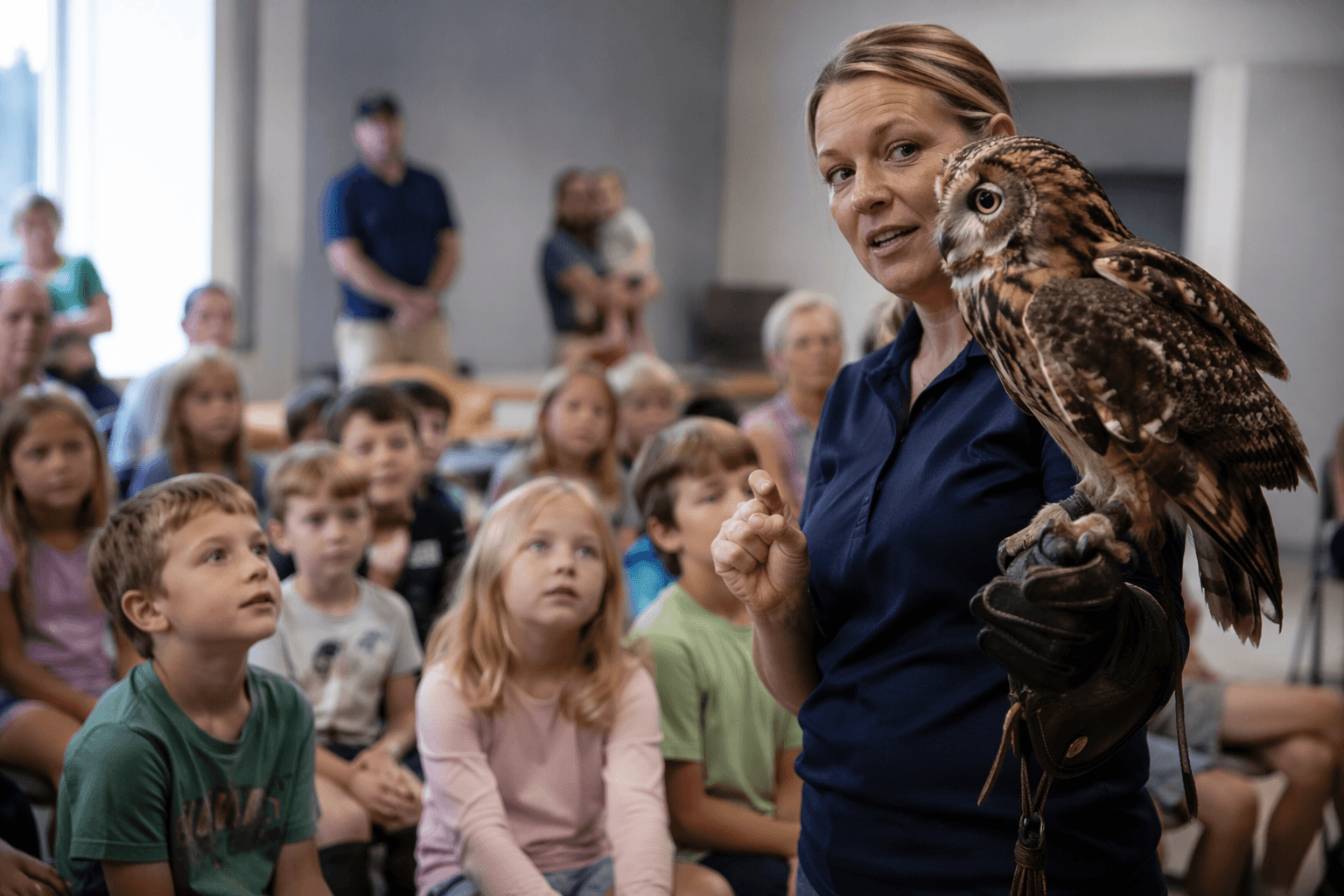
The Appomattox program was built as a meet-and-greet style educational event, but the format did not flatten the subject. Rodney and Agnes answered questions, and patrons were given the chance to take photos, which kept the atmosphere relaxed without losing the substance. That combination matters in falconry outreach: people remember the bird first, then they remember the explanation that came with it.
Jamerson Memorial Library’s event page made the educational emphasis clear from the start. The program was presented as a live birds-of-prey showcase with facts about raptors, their care, their individual needs, and whatever else patrons wanted to ask. That is the right shape for public-facing falconry because it meets curiosity where it lives, then gives it something real to hold onto.
A public image that helps the future of the hobby
Programs like this do more than fill an afternoon. They show falconry as an act of stewardship, not just a private pursuit, and they give people a place to see the craft up close without needing prior knowledge or a connection inside the hobby. For a local library, that kind of access matters because it puts a master falconer and a Harris hawk in front of children, parents, and regulars who may be meeting the discipline for the first time.
That is also how the pipeline grows. Rodney’s Raptors says the nonprofit began when requests for falconry lessons and demonstrations grew out of an environmental education program, which is a familiar path in the hobby: one good demonstration creates another question, then another, until outreach becomes its own engine. By the time families left Abbitt Park, falconry had already done what it does best in public settings, which is make a hard-won, deeply skilled practice feel approachable without losing any of its discipline.
Agnes did not just visit a library lawn. She helped turn a summer program into a small, vivid lesson in how raptors, handlers, and communities can learn to share the same space.
This article was produced by Prism’s automated news system from verified source data, official records, and press releases, then run through automated quality and moderation checks before publishing. The system is built and supervised by the people who set the standards it runs under. Read our full AI policy.
Did this article answer your question?