Ohio raptor program shows the hands-on work behind falconry
Ohio’s raptor program shows falconry’s real work: handling, husbandry, and the leather gear behind the glove.

The most useful falconry lesson at Cowan Lake was not a flight, but the work that comes before one. Ohio’s Department of Natural Resources put the spotlight on a behind-the-scenes raptor program that tied public education to the daily craft of caring for birds of prey, showing how much of falconry lives in handling, housing, feeding, and steady routine.
What the Cowan Lake program put on the table
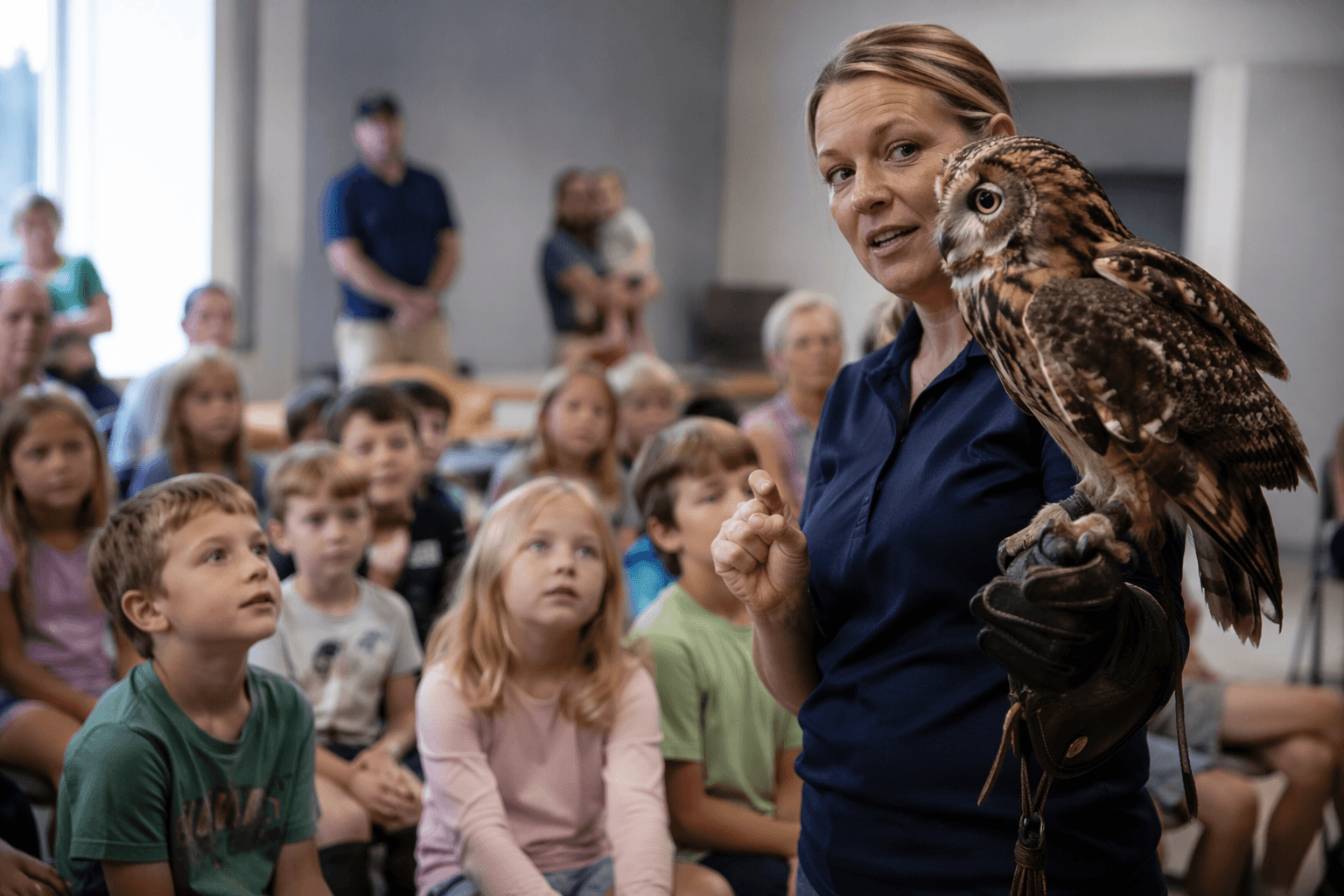
The June 18 session ran from 1:00 to 3:00 p.m. at the Nature Center, with participants told to meet there for the program. ODNR listed Erin Shaw as the park naturalist, said all were welcome, and added the usual safety note that children must be accompanied by an adult and that recreation programs can be inherently dangerous. Those are small details on paper, but they tell you exactly what kind of event this was: not a demo built around spectacle, but a guided look at how raptor work is actually done.
The program description spelled out the work in plain terms. Visitors were set to learn daily raptor care, safe handling routines, feeding, enclosure upkeep, and the specialized equipment used in falconry and educational bird programs. That mix matters because it reflects the real operating rhythm of any bird-of-prey program, whether the bird is being managed for education, public demonstration, or the tighter demands of regulated hunting falconry.
Where public education and falconry overlap
For falconers, the value in a state-run program like this is the way it exposes the invisible half of the craft. Reading body language, keeping stress low, working cleanly on the glove, and maintaining the housing are all part of the same discipline, and ODNR’s framing made that connection explicit by centering care, handling, feeding, and enclosure maintenance rather than just the bird in motion. The point was not to flatten falconry into a wildlife lesson, but to show how much of the skill set starts long before a hawk ever leaves the fist.
The education piece also widened the lens to stewardship. ODNR said the program would explain why proper care matters and how raptors help teach wildlife, conservation, and responsible stewardship. That places the birds in a broader public-facing role, where they become living examples of species behavior and habitat needs, while also keeping the line clear between educational handling and the more regulated, field-driven tradition of hunting falconry.
Leather work, gear, and the craft side of the sport
One of the most falconry-specific parts of the listing was the mention of leather crafting. ODNR said participants would explore how falconry equipment is made from leather crafting, which connects the program directly to the traditional gear culture surrounding the sport. For anyone who has spent time around jesses, gloves, hoods, leash work, or other handling gear, that detail is a reminder that falconry has always been as much about making and maintaining equipment as it is about training a bird.
That gear focus also gives hobbyists a practical lens for watching educational programs more critically. When a raptor is handled well, the difference usually shows up in the small things: the way the bird settles, how the handler moves, how equipment is fitted and used, and whether the enclosure work keeps the bird calm and manageable. ODNR’s description put each of those pieces in the open, which is exactly why the event read as a bridge between public outreach and real falconry practice.
What to take from a program like this
A session like the one at Cowan Lake is useful because it breaks raptor work into its working parts. It shows that the craft is not only about flying a bird, but also about daily raptor care, consistent feeding, clean enclosure upkeep, and safe handling routines that make everything else possible. That is the part casual observers usually miss, and it is the part falconers recognize immediately.
It also points to a broader role for state nature centers. ODNR framed the program as a fit for anyone interested in birds of prey, animal care, falconry, or behind-the-scenes nature center work, which makes it both an educational stop and a way to introduce new people to the discipline behind the public-facing display. In a field where the glove and the flight often get all the attention, Cowan Lake put the upkeep, judgment, and restraint front and center.
By the end of the program, the takeaway was clear: the bird on the glove is only the visible part of the work. The real story is everything that keeps that moment possible, from leather gear and enclosure care to the daily handling that turns a raptor program into a reliable piece of falconry craft.
This article was produced by Prism’s automated news system from verified source data, official records, and press releases, then run through automated quality and moderation checks before publishing. The system is built and supervised by the people who set the standards it runs under. Read our full AI policy.
Did this article answer your question?