Red-tailed hawk adapts flight during molt, inspiring drone design
Jack kept flying through molt by fine-tuning his wings and tail, complicating the idea that missing feathers automatically mean a grounded hawk.

A new UC Davis study found red-tailed hawks can keep flying with surprising strength during molt, even when gaps open in the wings and tail. Using four synchronized high-speed cameras, researchers tracked Jack, a resident hawk at the California Raptor Center, and found he trimmed the aerodynamic penalty of missing feathers with subtle changes in wingbeat motion and tail posture.
Precision should get harder, especially in low-speed maneuvers and landings, yet Jack still adjusted his tail angle right after takeoff and kept refining wing movement all the way to touchdown.
The work was published June 17 in The Royal Society Publishing. It came out of the University of California, Davis, College of Engineering and the Joan and Sanford I. Weill School of Veterinary Medicine, centered on the Center for Animal Flight and Innovation in Davis, California. The Center for Animal Flight and Innovation in Davis, California is the only facility of its kind in the United States and one of very few in the world built to capture bird flight in such detail.
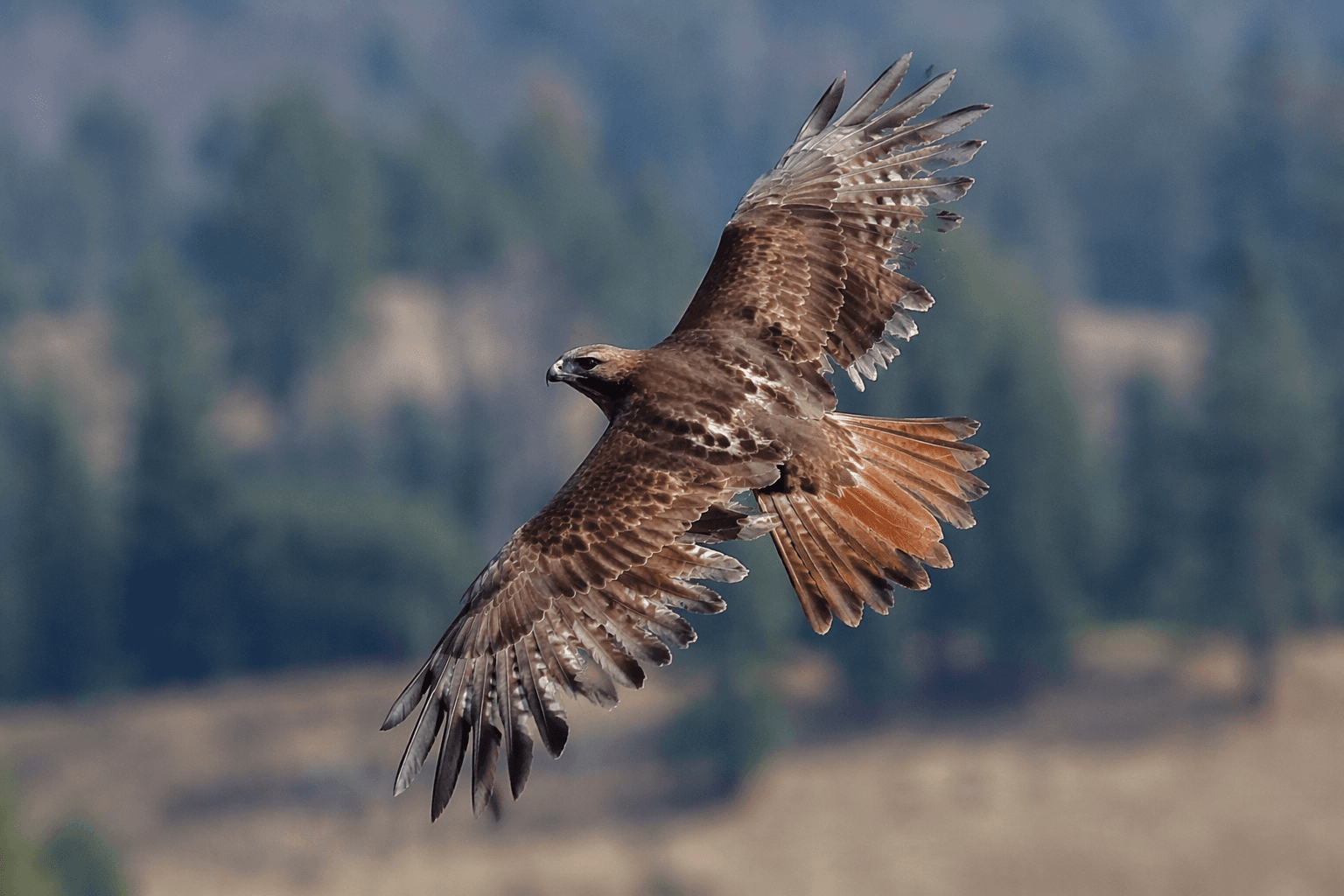
Jack is not a wild hawk. The California Raptor Center says he was brought there in 2012 as a juvenile with respiratory problems, and staff saw signs that he had already spent time in captivity. The California Raptor Center and the UC Davis Veterinary Medical Teaching Hospital together take in about 100 to 200 injured or ill raptors each year, and nonreleasable birds are used for education and research.
A bird may look compromised on the perch and still be functional in the air if the body is balancing force, posture and wing geometry in real time. A related 2018 UC Davis case showed another red-tailed hawk with six broken feathers could be repaired and released the same day, while a 2015 study found feather loss reduced flight performance in a jackdaw, especially at the slowest gliding speeds.
This article was produced by Prism’s automated news system from verified source data, official records, and press releases, then run through automated quality and moderation checks before publishing. The system is built and supervised by the people who set the standards it runs under. Read our full AI policy.
Did this article answer your question?