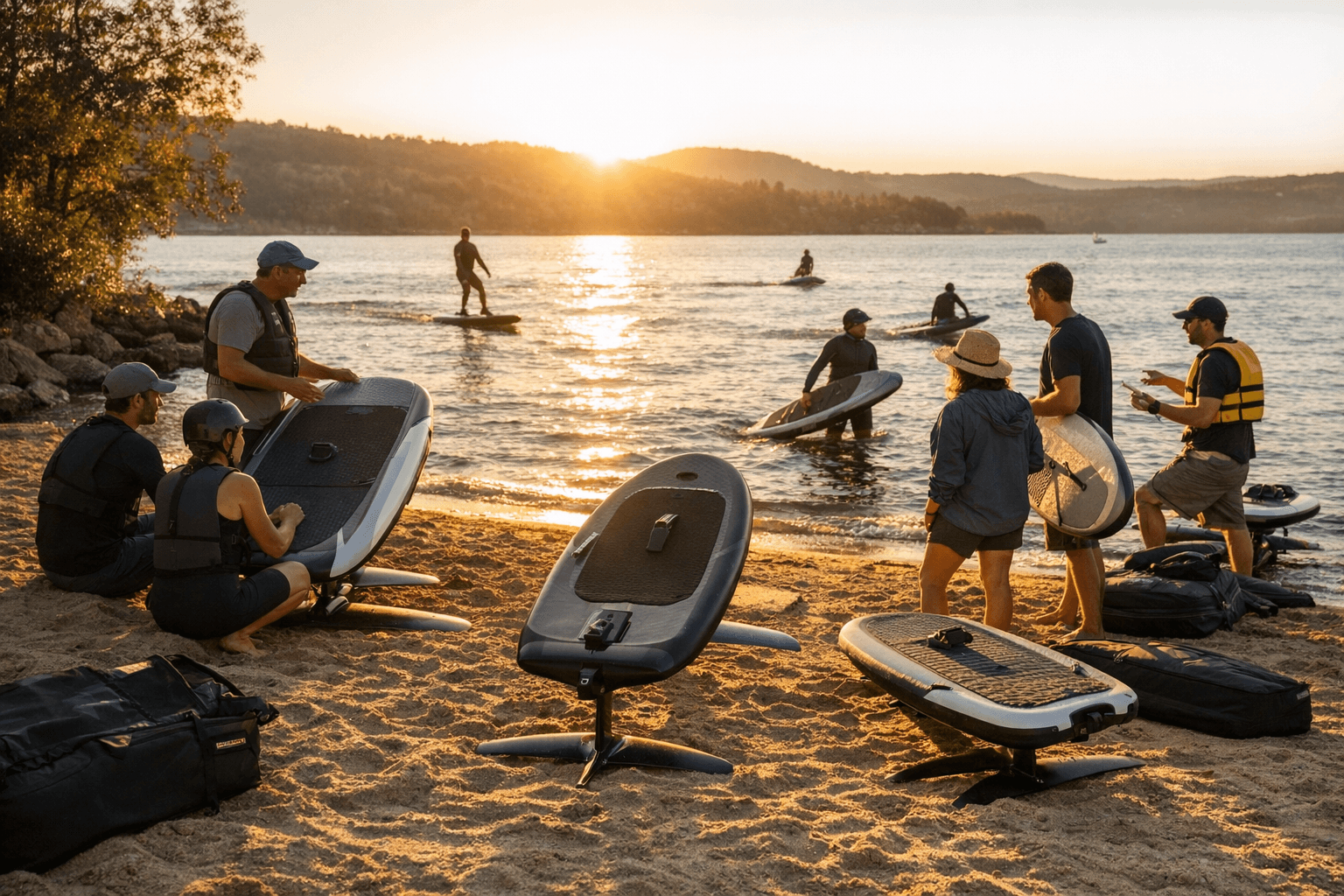
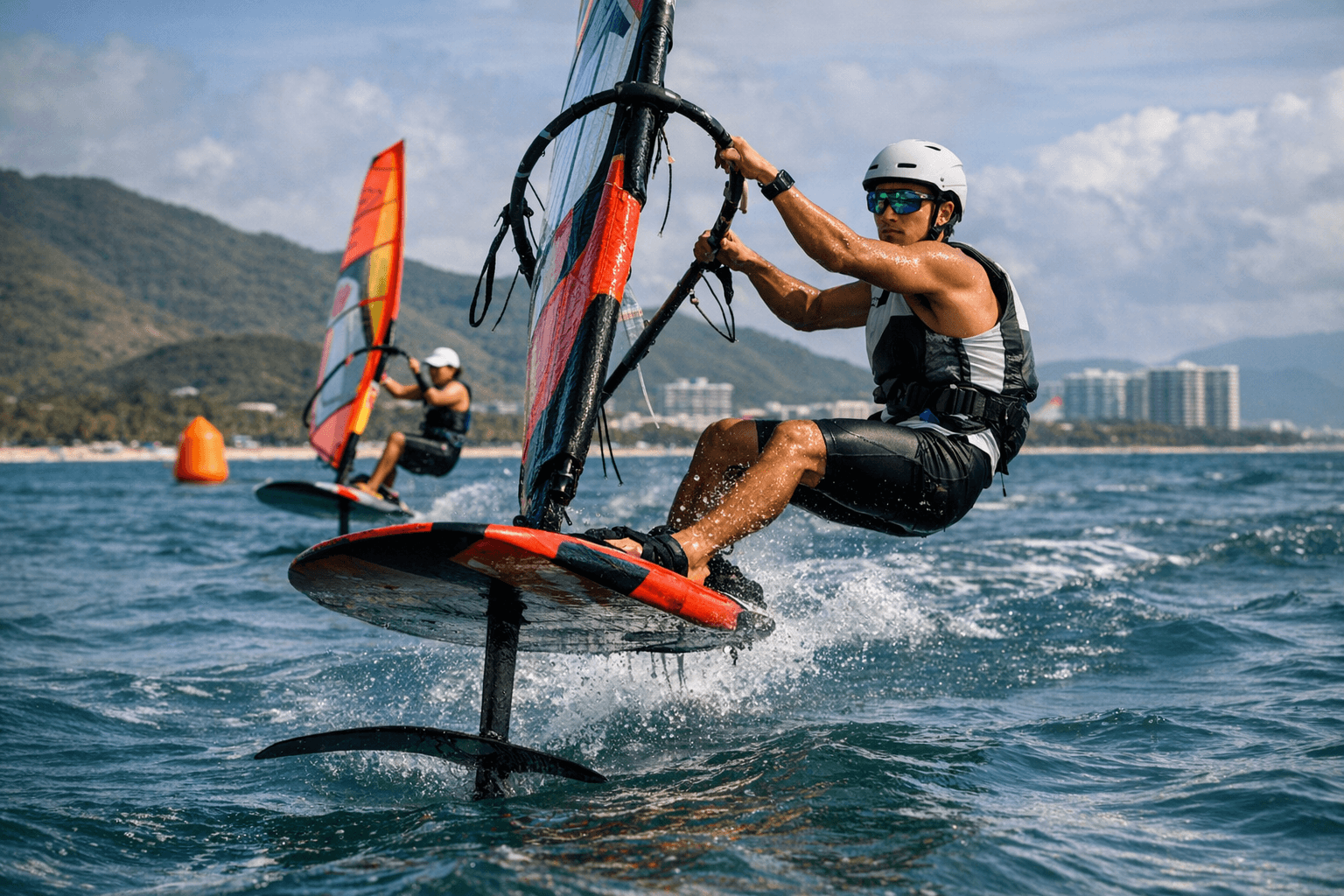
Creator builds world’s largest e-foil, testing foil design limits
A giant e-foil looks like a stunt, but it exposes the real trade-offs in launch stability, drag, and control that every rider feels on the water.
What the giant build actually teaches
The biggest takeaway from the world’s largest e-foil is not that bigger automatically means better. The value is in watching a foil platform pushed so far beyond normal rider-sized proportions that the usual assumptions about balance, lift, and control start to break down.
The short preview that surfaced on April 23, 2026 presents the project as a hands-on engineering and watercraft experiment, not a polished consumer review. The original clip frames it first as the world’s biggest hydrofoil board, then as an e-foil, and that sequence matters: the build is really about exploring what happens when a familiar foil concept is scaled up until the physics change in front of you.
Why scale changes the ride
A very large board can make the first few moments on the water easier. Standing still feels more forgiving, trimming the deck is less twitchy, and the initial launch can be more stable because the rider has more platform beneath them. For someone learning the basics, those traits sound appealing because they reduce the immediate challenge of finding balance before the foil lifts.
But the same extra size adds drag, structural load, and more demand on the motor and control system once the board is moving. The oversized platform does not just float more confidently, it asks more from every other part of the setup. That is the real lesson for actual riders: increasing board volume can help with stability, but it can also make the ride feel heavier, less responsive, and more power-hungry.
This is where the project becomes useful beyond the spectacle. It puts board volume versus responsiveness under a microscope, and it makes clear that a foil setup is always a compromise. More lift is not automatically better if it costs you maneuverability. More propulsion is not automatically better if runtime drops and the board becomes harder to manage.
The trade-offs builders usually hide
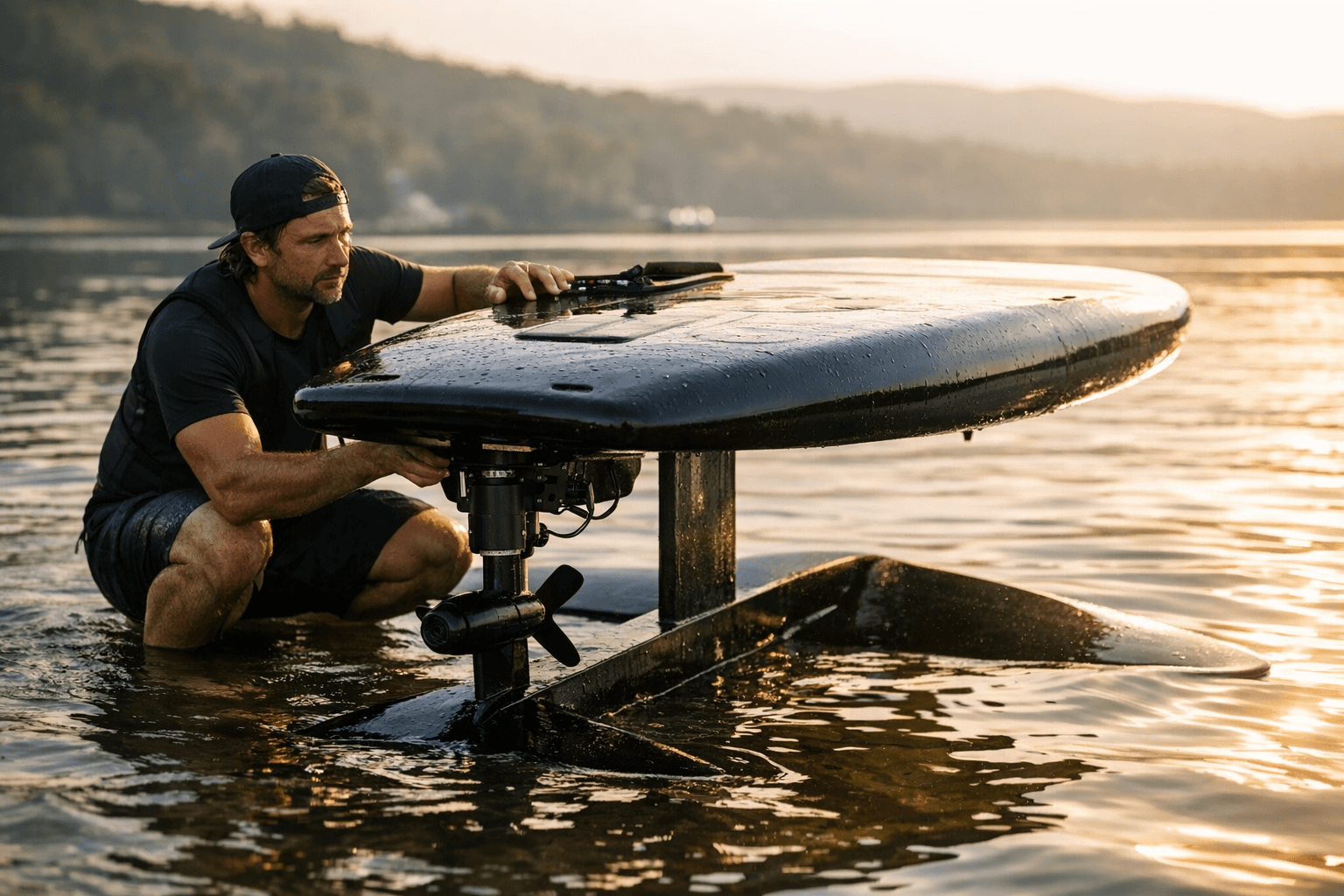
A normal e-foil leaves a lot of these trade-offs in the background because the board is sized close to the rider and the system lives inside a familiar range. A giant version exposes them. Center of gravity becomes harder to ignore, mast loading becomes more obvious, and electric-assist tuning starts to matter in a way that a standard board can partly mask.
That is why this kind of build is so interesting to DIY riders and makers. It acts like a stress test for the entire category. When the platform gets oversized, small problems get amplified, and the relationships between lift, balance, and thrust become easier to see. If the center of gravity is off, the board will tell you. If the mast is being loaded in a way the structure does not love, the build will reveal it. If the motor tuning is not matched to the platform, the mismatch shows up fast.
For anyone who likes to tinker, that is the real education hidden inside the stunt. It is not about whether the board is cool, it is about how much the build teaches you about the systems every foil depends on.
Why this is not a normal beginner platform
It is tempting to look at a giant e-foil and assume that bigger must be friendlier for newcomers. The reality is more complicated. A larger platform can help at the very first stage of getting set, especially when you are just trying to stand, trim, and get moving. That is useful if the goal is to lower the fear factor during launch.
But beginner-friendly does not always mean oversized. A board that is too large can feel unwieldy, slow to respond, and expensive to push through the water. It may offer stability, but it can also work against the clean, efficient feel that helps a rider progress. In foiling, the sweet spot is rarely about maximum size. It is about matching the platform to the rider’s goals.
That is why not every e-foil is chasing the same job. Some designs are built for stability and learning. Others are aimed at surf feel, compactness, or pumping efficiency. The giant build makes that contrast easier to see. It is not a blueprint for the everyday rider. It is a reminder that the best board is the one that solves the specific problem you actually have on the water.
What the clip does not tell you
The preview does not publish dimensions, battery capacity, runtime, or top speed, so it should be read as a concept story rather than a technical teardown. Without those numbers, the value is not in comparing specs the way you would with a retail board. The value is in observing the design logic.
That missing data matters because giant concepts can seduce riders into thinking scale alone is the answer. It is not. A bigger board may give you more room to stand, but it also changes the power budget, the structural demands, and the way the foil behaves once speed builds. If you are chasing better sessions, those are the variables that count.
Why the DIY foil scene will care
This story sits at the intersection of hobby engineering, hydrofoil experimentation, and electric watercraft culture, which is exactly why it will travel inside the DIY foil scene. A build like this invites the same questions that come up in garages, workshops, and beach parking lots: how much lift is enough, how much board volume is too much, and where does electric assist stop helping and start fighting the ride?
For riders who live in that world, the giant e-foil is not just a viral oddity. It is a reminder that foil design is always a balancing act between stability and feel, between thrust and range, and between a platform that forgives mistakes and one that disappears under your feet once it is running well.
That is the real value of the world’s largest e-foil. It is not a better everyday answer than a properly sized board. It is a louder, bigger, more dramatic way to show why the smallest details in foil design matter so much when you are the one standing on the water.
Know something we missed? Have a correction or additional information?
Submit a Tip